BANKSY
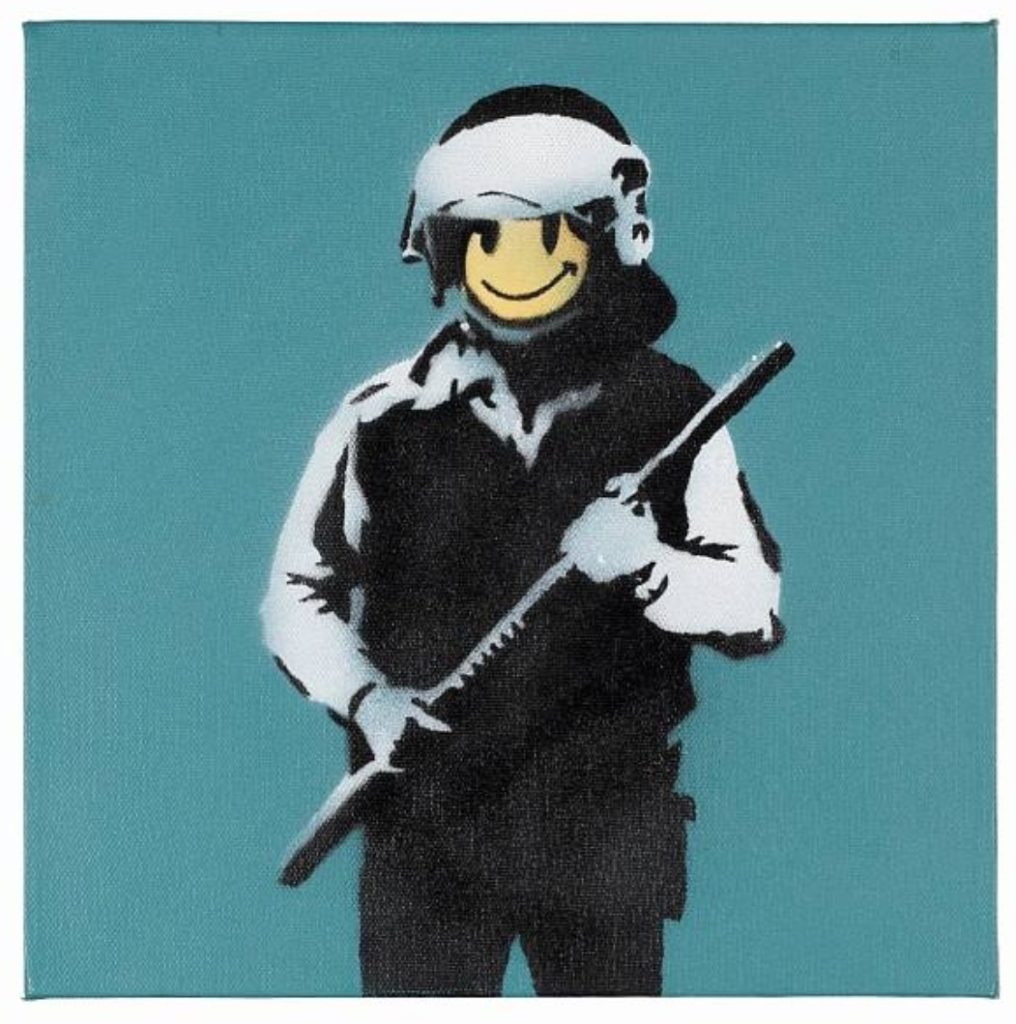
Riot Copper, 2002
Stencil spray-paint on canvas
30.5 x 30.5 cm (12×12 inches)
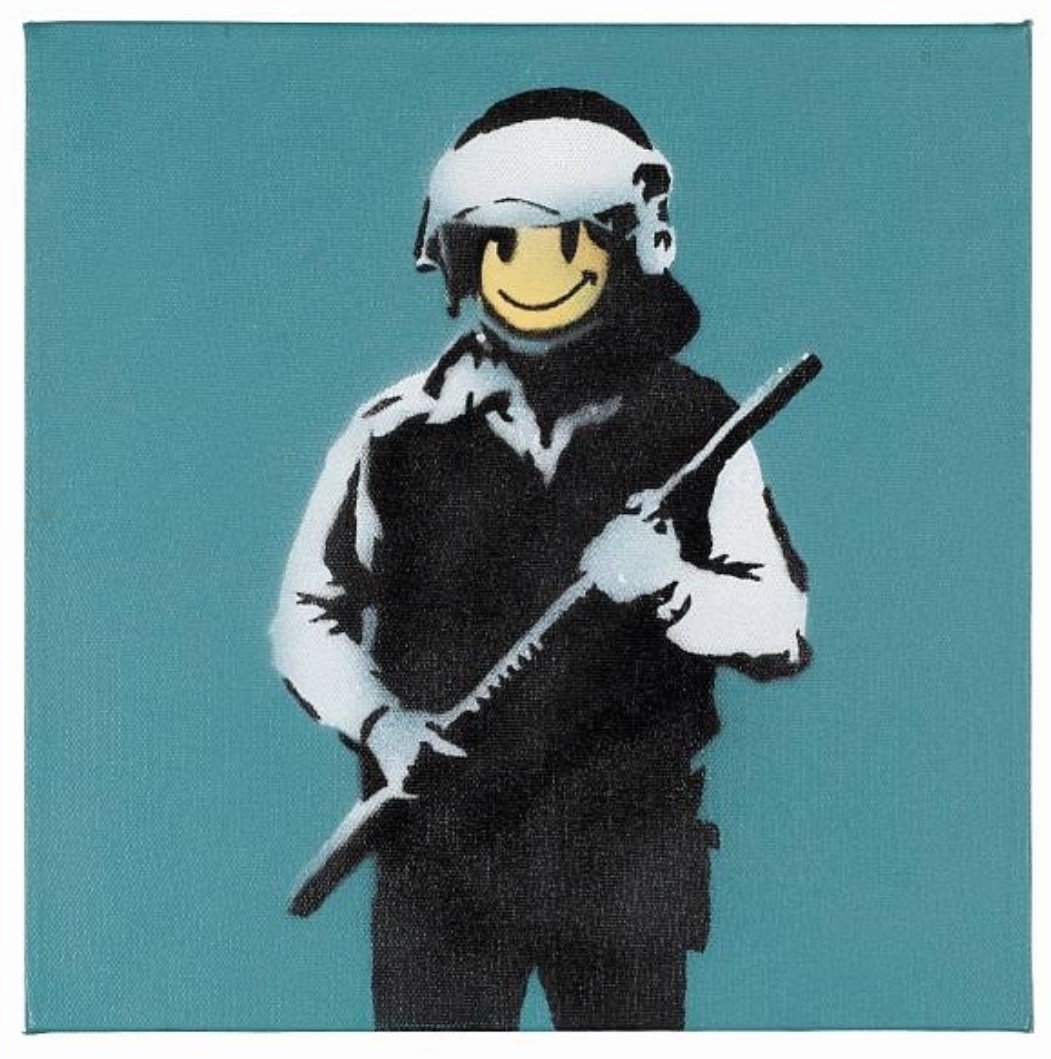
Edition of 4, each in a unique color
Stenciled “BANKSY” to the overlap
Provenance
Acquired directly from the artist
This canvas was gifted to the present owner in 2002, to thank him for his services on one of Banksy’s projects. The vendor, a colorist for the Moving Picture Company, assisted the artist with a music video for R’n’B group, Black Twang. This image was produced in an edition of four, each with a different colored background.
Auction History
| Bonhams London 5 February 2008 Estimated Not Disclosed | Price Realized |
Catalogue Note
Executed in 2002, Riot Copper belongs to one of Banksy’s earliest and rarest groups of painted originals. Produced in an edition of only four unique canvases, each distinguished by a different monochromatic background, the series demonstrates the artist’s early interest in allowing subtle chromatic variations to transform the emotional register of an otherwise identical composition. This turquoise-blue example is among the most refined of the group, its luminous background lending an unexpected serenity to one of Banksy’s most incisive political images.
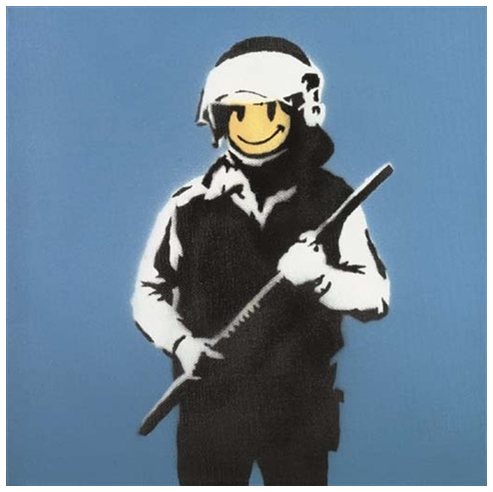
Created at a moment when Banksy was establishing the visual vocabulary that would define his career, Riot Copper already demonstrates many of his enduring concerns: the questioning of institutional authority, the appropriation of universally recognizable symbols and the remarkable ability to communicate complex political ideas through extraordinary graphic economy. More than twenty years later, the smiling policeman continues to embody one of Banksy’s most effective artistic strategies—not attacking power directly, but gently dismantling the mythology that surrounds it through wit, contradiction and visual precision.