SNORTING COPPER
Description
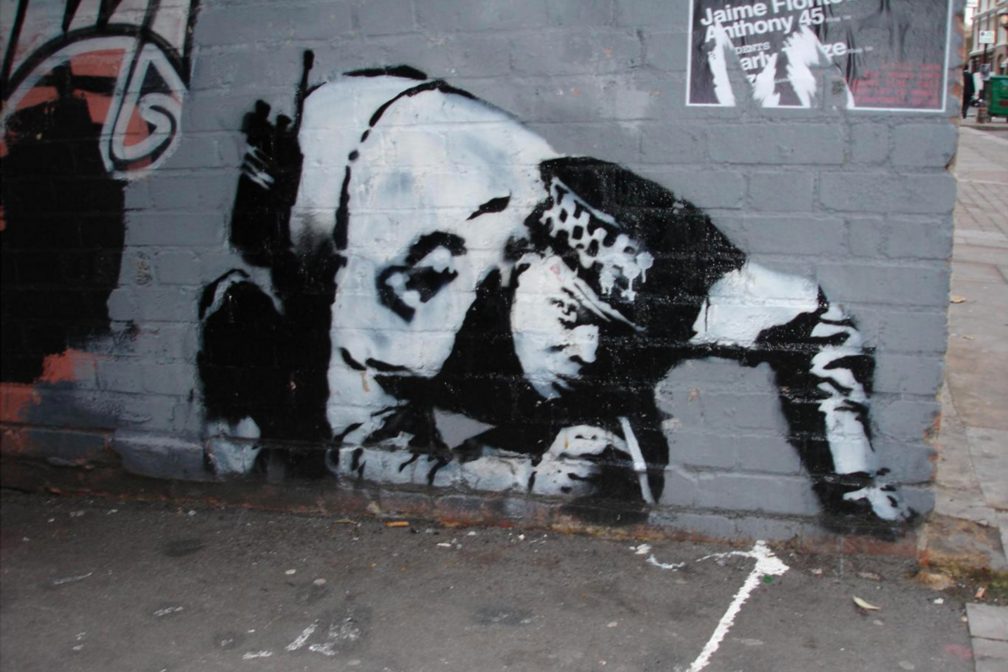
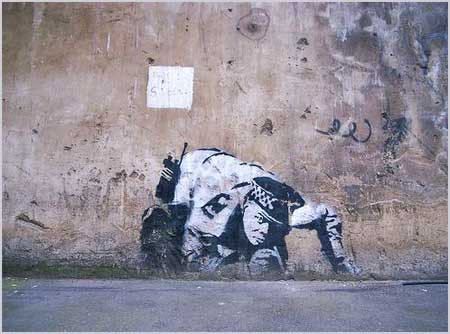
A uniformed police officer crouches on his hands and knees, apparently preparing to snort a long white line from the pavement. The figure initially resembles a policeman examining evidence at a crime scene; only the position of his face and the white trail reveal the illicit activity taking place.
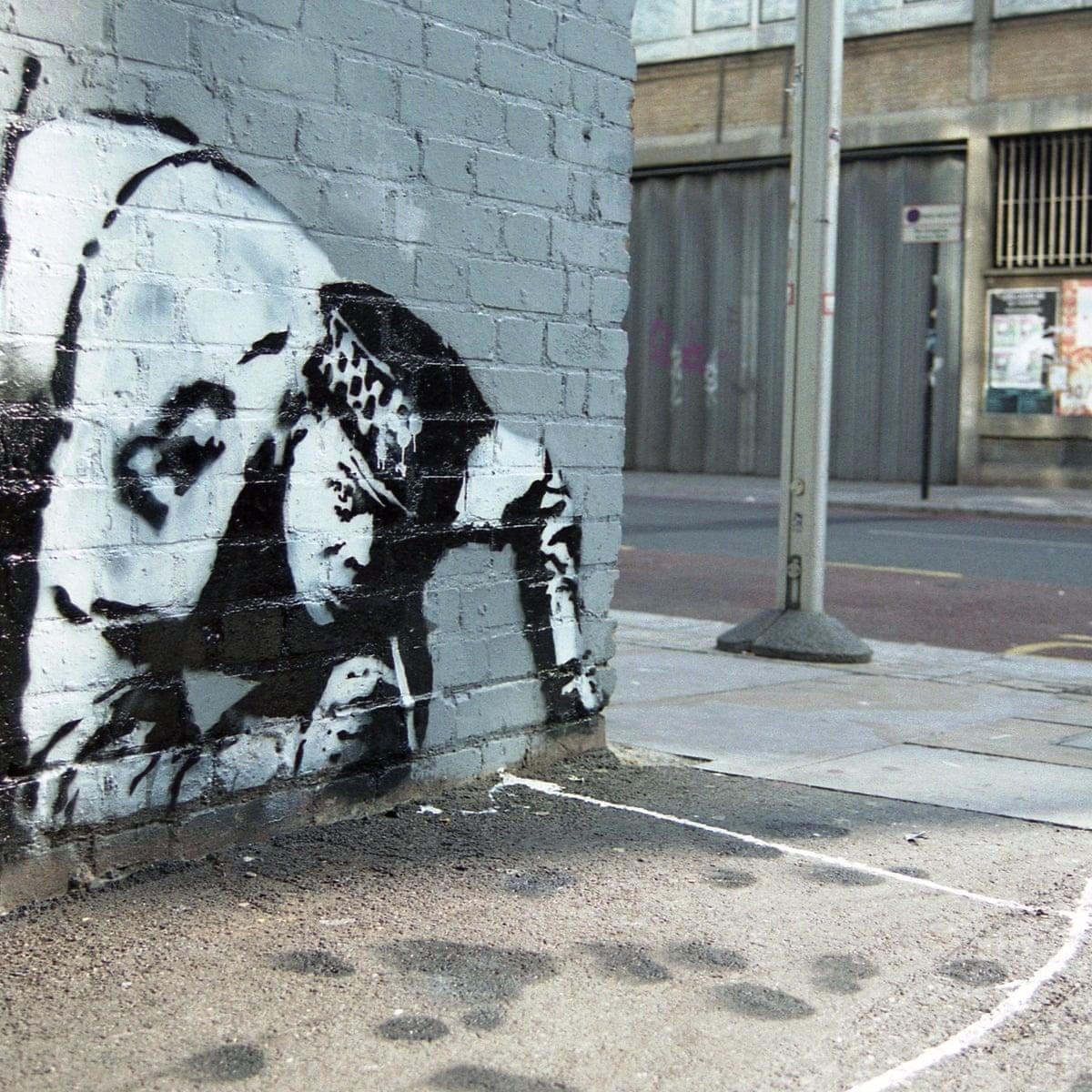
The joke is characteristically immediate. Banksy takes the figure responsible for enforcing the law and places him in the act of breaking it. The policeman's uniform remains immaculate and authoritative, but his posture strips him of that authority, reducing an emblem of institutional control to a furtive individual caught indulging in the behavior he is supposed to police.
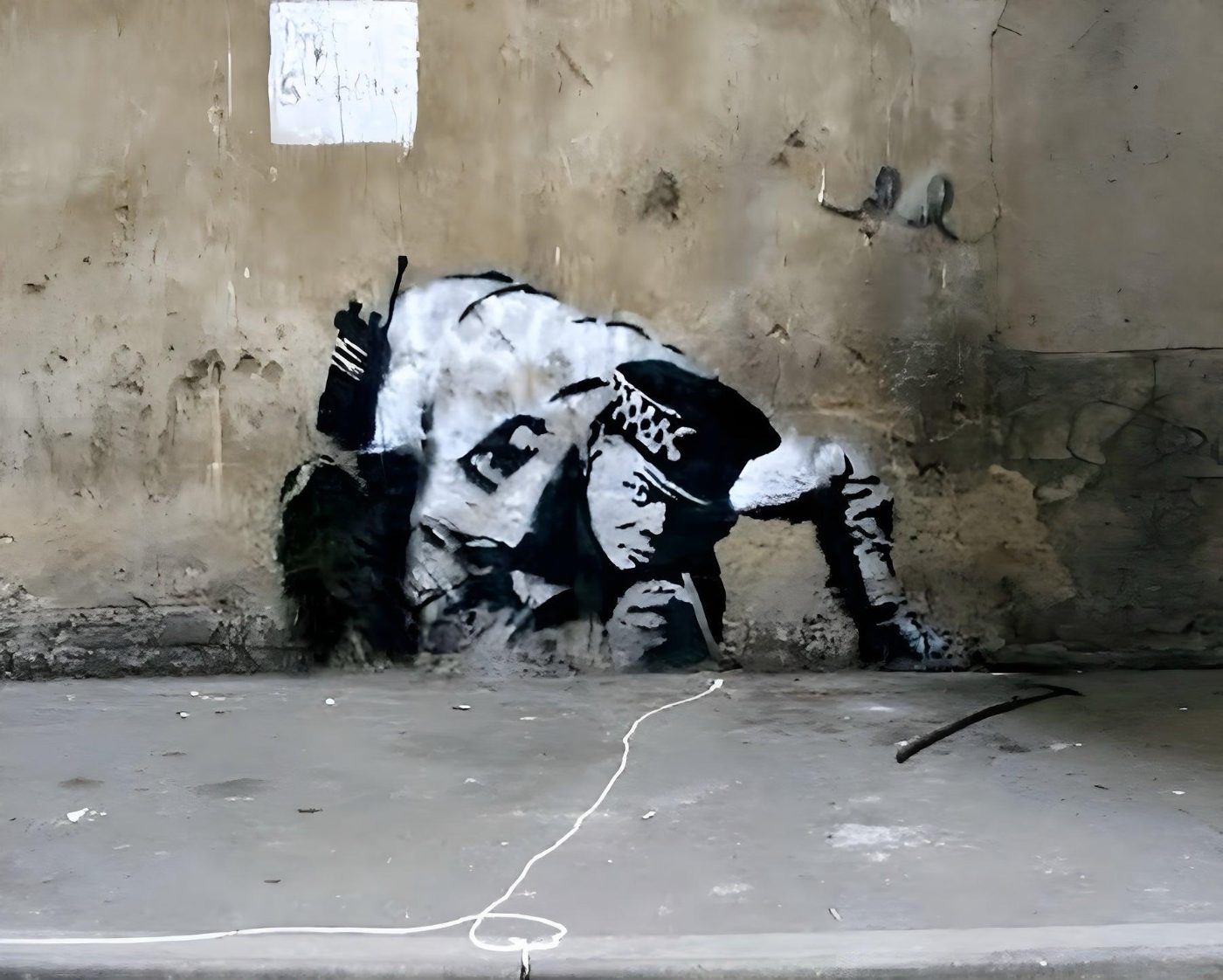
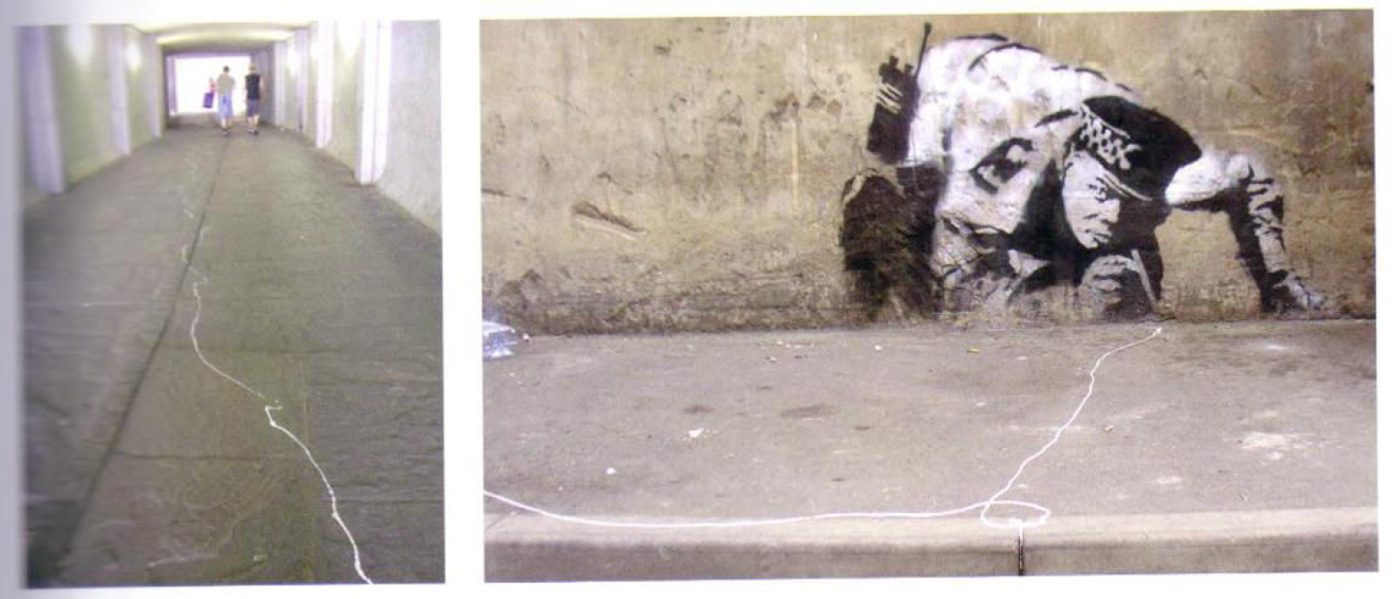
Snorting Copper appeared in 2005 on the wall of a former public toilet block on Curtain Road in Shoreditch. The stencil was accompanied by a remarkable site-specific element: a long trail of white paint extended away from the policeman across the surrounding streets, becoming the enormous line of cocaine towards which he bent.
Following the White Line
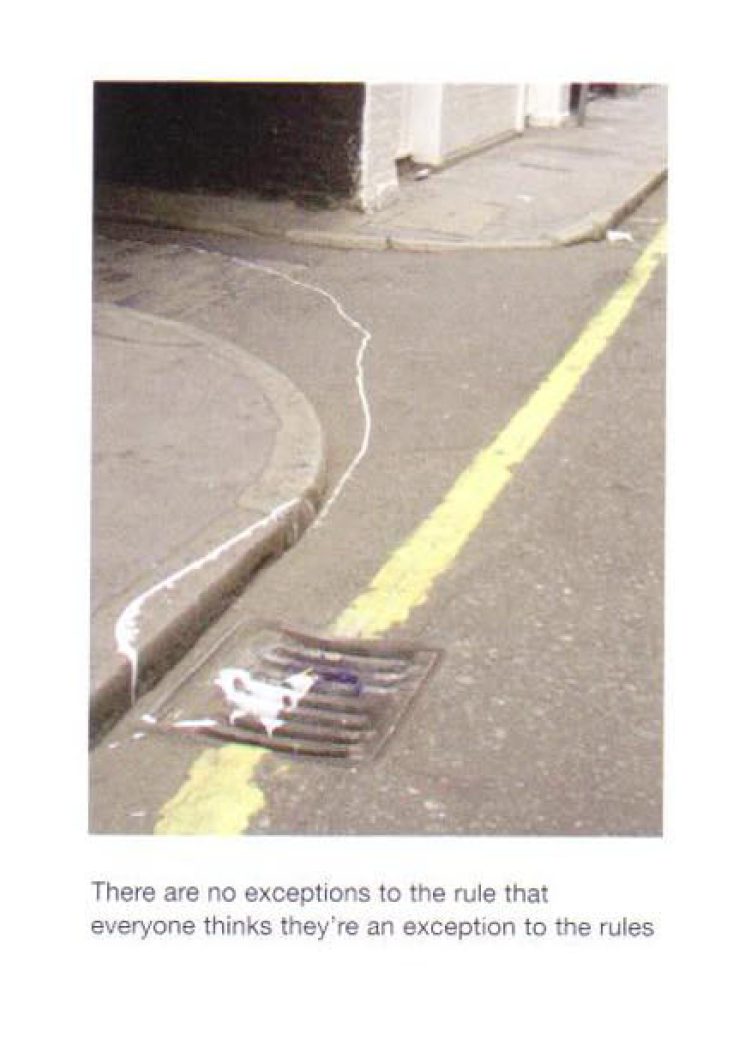
Banksy created another version of the image near Leake Street beneath Waterloo Station, where the white paint reportedly extended for hundreds of metres along the South Bank. That version was still partially visible around the time of Banksy's Cans Festival in 2008 before eventually disappearing.
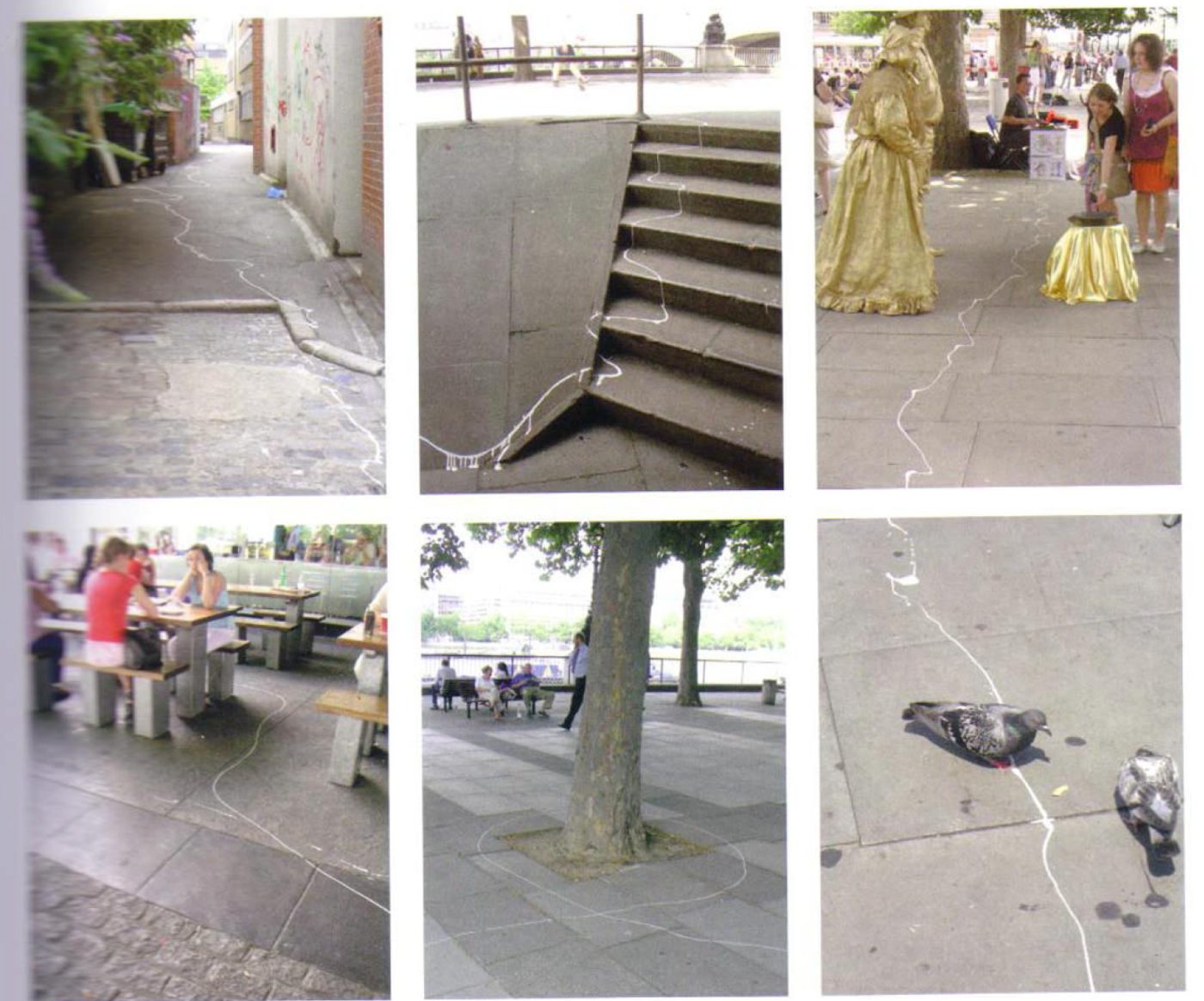
The extended white line transforms a relatively simple stencil into an environmental intervention. What begins as an apparently accidental trail of paint through the city only acquires its meaning when the viewer eventually encounters the policeman at its end. The street itself becomes part of the punchline.
Policing the Police
Police officers recur throughout Banksy's early work, but rarely as heroic figures. They kiss, conduct absurd searches, walk ridiculous dogs or become subjects of surveillance themselves. Snorting Copper belongs firmly within this reversal of authority.
The work does not require a complicated accusation of institutional corruption. Its strength lies in something simpler: the person who enforces the rules is shown believing himself exempt from them. Banksy reproduced the image in Wall and Piece alongside the observation that there are no exceptions to the rule that everyone thinks they are the exception to the rule.
The public toilet setting added another layer. Rather than placing the policeman monumentally above the city, Banksy put him low to the ground on a utilitarian building associated with bodily functions and marginal urban space. Authority is literally brought down to street level.
Lost and Rediscovered
The Curtain Road mural had a particularly turbulent history. It was vandalized, subjected to cleaning and eventually painted over. By 2006, contemporary photographs show that much of the painted surface had already been stripped back almost to bare brick. The site was subsequently boarded up, and for approximately a decade the work was generally considered lost.
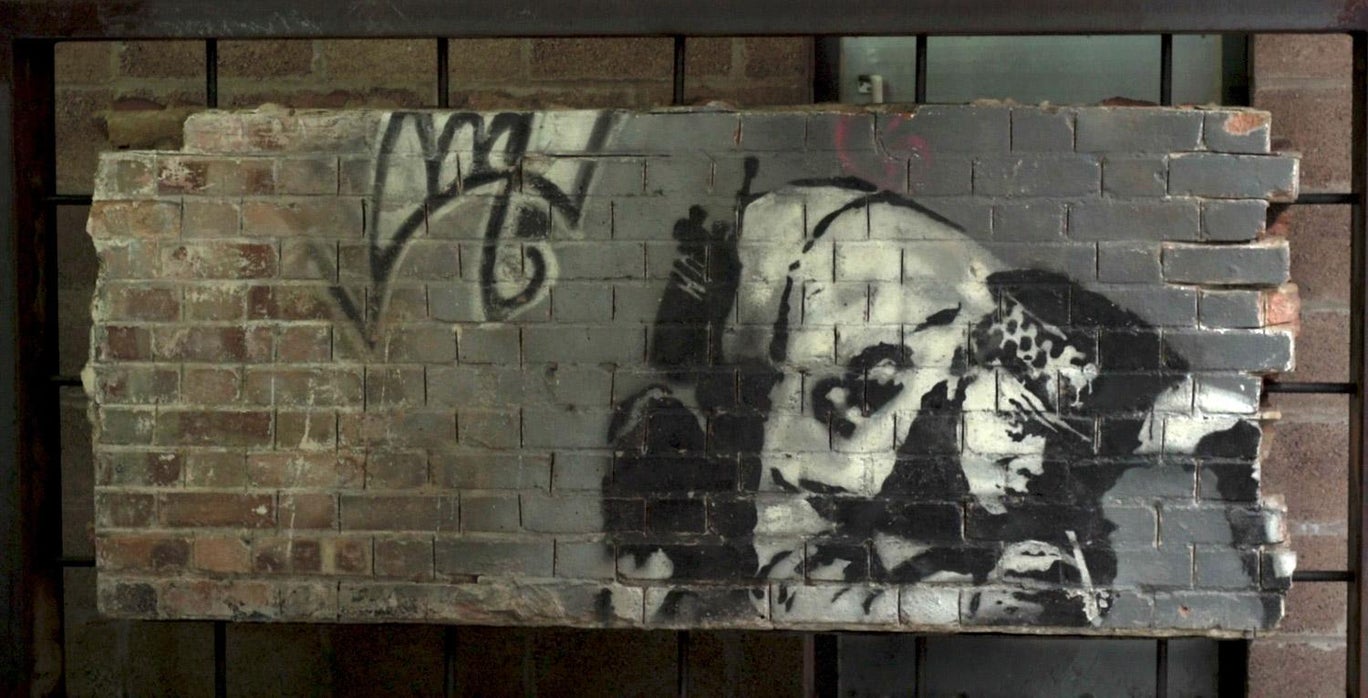
Its disappearance inadvertently helped preserve what remained. After developers Jonathan Ellis and David Kyte acquired the property, the covered wall was investigated during redevelopment. The section containing the mural was eventually removed and sent to specialists for a restoration process lasting approximately sixteen weeks.
In October 2017, Snorting Copper was unveiled again on Curtain Road, installed in the position of the original wall and protected within a reinforced glazed structure.
The degree of restoration, however, is important to its history. Photographs taken before the wall was covered show that very little of Banksy's visible stencil remained by 2006. What visitors encounter today is therefore a heavily reconstructed restoration of the original mural, rather than an untouched Banksy preserved beneath later layers.
That distinction makes Snorting Copper an unusually revealing case in the history of Banksy's street work. An ephemeral stencil was damaged, cleaned, painted over and forgotten; a decade later, the same brickwork was excavated, conserved and reconstructed as cultural heritage.
The policeman who once crouched anonymously on a Shoreditch toilet block is now protected behind glass.
STAY INFORMED
Receive the latest news, exhibitions, artworks and market updates on Banksy.