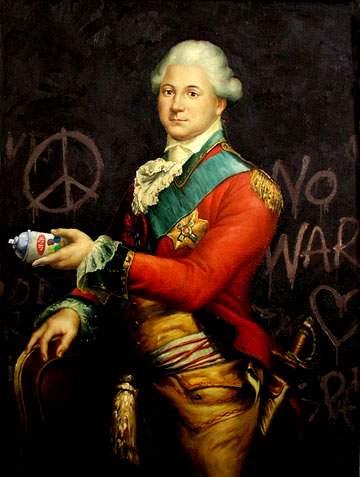
Soldier with Spray-can, 2005
Oil on canvas
Exhibited
Great Historical Painting Wing, Brooklyn Museum, New-York, March 2005
Catalogue Note
Created for Banksy’s audacious series of unauthorized museum interventions in New York in 2005, Soldier with Spray-can exemplifies the artist’s remarkable ability to rewrite art history with a single gesture. Disguised as an eighteenth-century military portrait, the painting depicts a decorated officer calmly presenting a spray can in place of a ceremonial object, while graffiti behind him proclaims the universal plea, “NO WAR.” Installed covertly in the Brooklyn Museum, the work remained on display before eventually being discovered, blurring the line between institutional authority and artistic rebellion.

Banksy deliberately juxtaposes two opposing symbols of power. The military officer represents hierarchy, conquest and state authority; the spray can embodies dissent, freedom of expression and the democratization of public space. Rather than wielding a weapon, the soldier offers the very tool through which Banksy built his career, suggesting that ideas, not violence, possess the greatest transformative power. The peace symbol and anti-war graffiti further reinforce this inversion, turning an image of military prestige into a manifesto for civil disobedience.
Like the finest works from Banksy’s museum interventions, Soldier with Spray-can is both homage and provocation. Respecting the craftsmanship of classical portraiture while subverting its ideological message, Banksy demonstrates that museums are not merely repositories of history but living spaces where history itself can be questioned, rewritten and reclaimed. Few works better illustrate his enduring belief that art remains one of the most powerful weapons against authority.