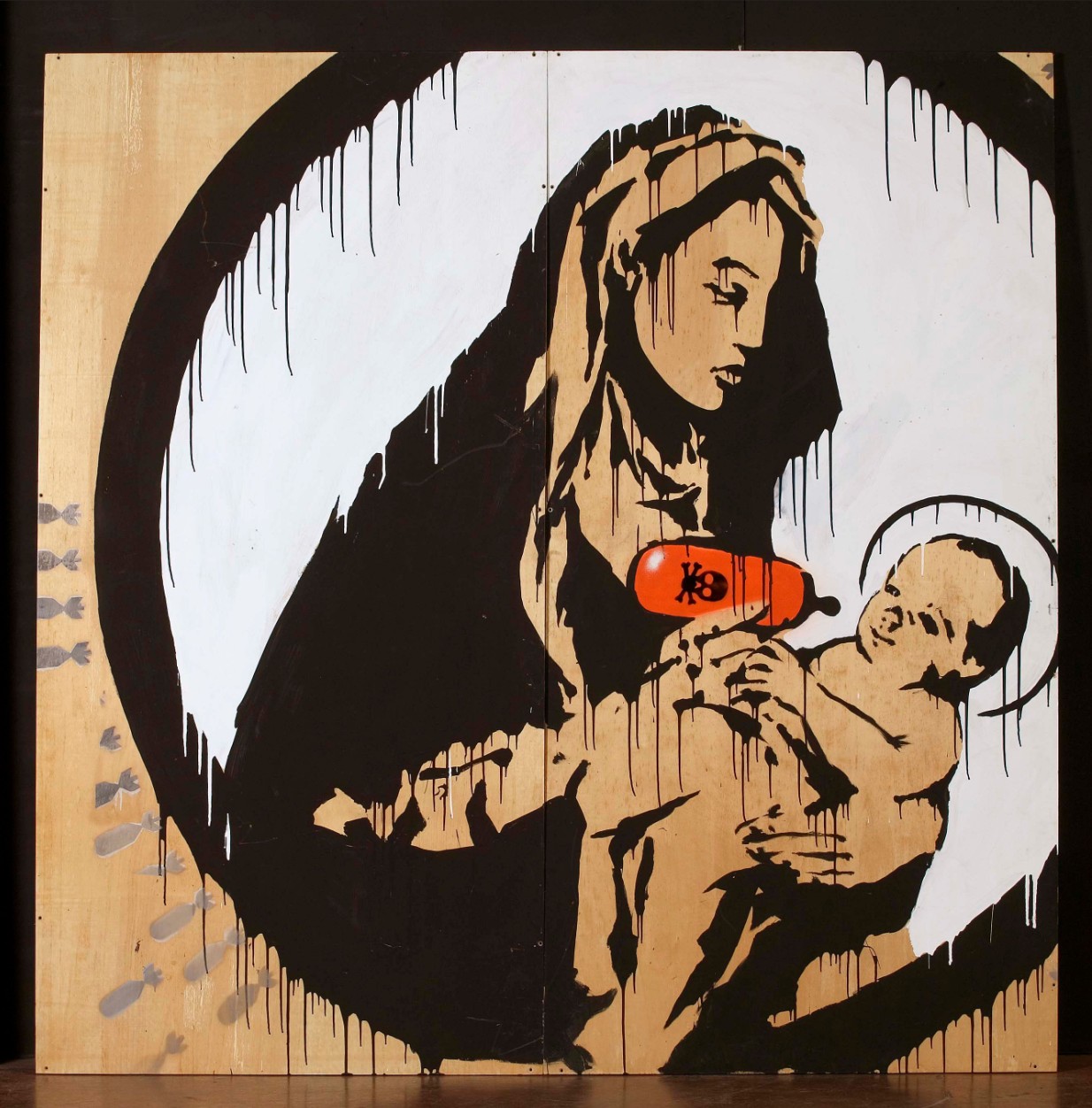
BANKSY (British, born 1975)
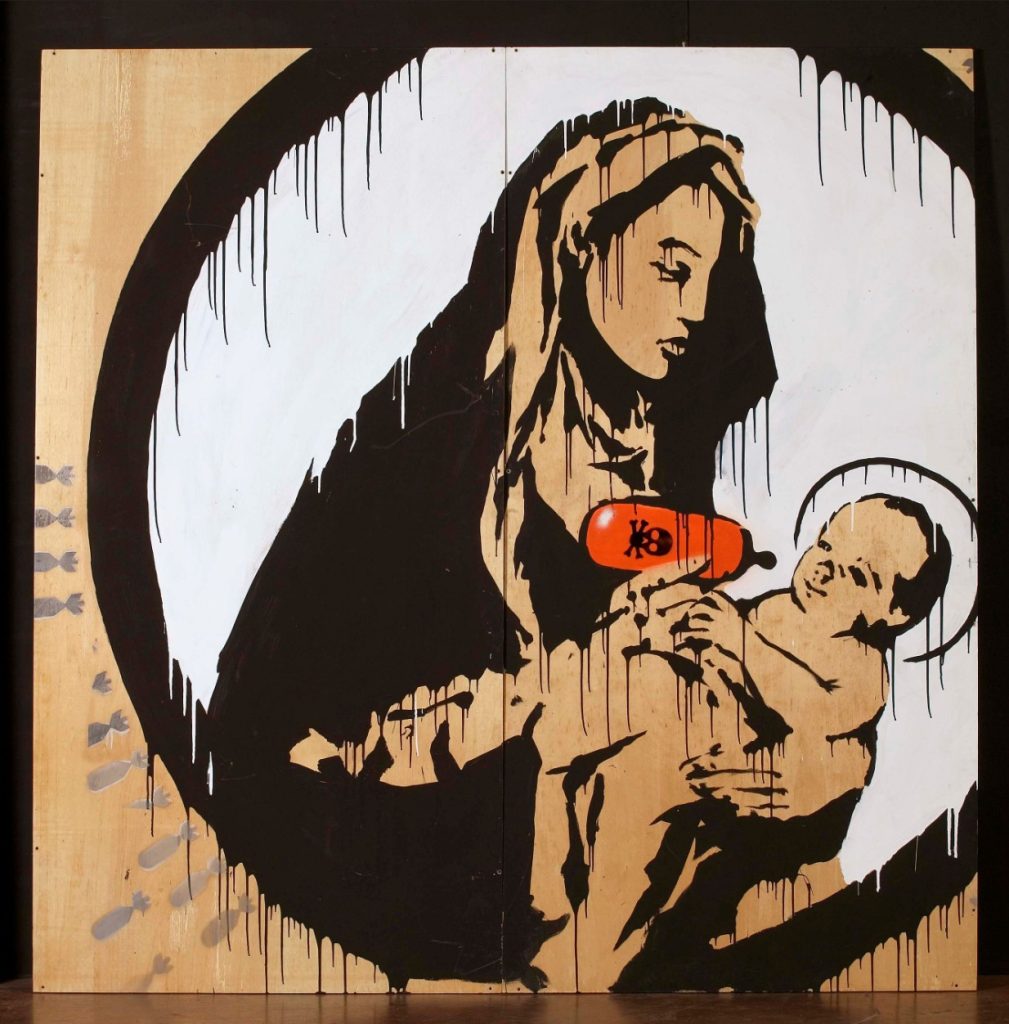
Toxic Mary, 2003
Acrylic and stencil spray paint on two plywood panels
Each panel: 240×120 cm (94-1/2 x 47-1/4 inches)
Provenance
Semi-Permanent Exhibition, Sydney, Australia
The reverse of these panels contains traces of others artist’s works from the same exhibition, including Shepard Fairey’s ‘Obey’.
Catalogue Note
Executed in 2003, this monumental Toxic Mary was exhibited at the influential Semi-Permanent Exhibition in Sydney, one of Banksy’s earliest appearances outside Europe and an important milestone in the international dissemination of his work. Measuring an impressive 240×240 cm across two plywood panels, it demonstrates the artist’s ambition to translate the visual immediacy of street graffiti into a monumental gallery installation.
As discussed in the principal catalogue entry, Toxic Mary transforms the traditional Madonna and Child into a powerful contemporary allegory. Replacing the nurturing breast with a baby’s bottle marked by the universal biohazard symbol, Banksy questions the values, fears and toxic ideologies unconsciously transmitted from one generation to the next. The monumental scale, the stark contrast between the raw plywood and the crisp black-and-white stencil, and the vivid orange bottle amplify the extraordinary visual power of one of the artist’s most iconic compositions.
This Australian version possesses an exceptional historical dimension. The reverse of the panels retains traces of works by fellow artists exhibited at Semi-Permanent, including Shepard Fairey’s celebrated Obey imagery, transforming the object itself into a tangible document of one of the defining moments of early twenty-first-century street art. More than a simple support, the plywood panels preserve the physical memory of an exhibition that brought together many of the movement’s most influential figures.
The exposed plywood also contributes significantly to the work’s aesthetic. Unlike the pristine white backgrounds of other versions, the warm timber surface evokes construction hoardings and urban walls, reinforcing the painting’s origins in the street while lending it an unexpected warmth and humanity. Combined with its remarkable exhibition history and exceptional provenance, this version stands as both a powerful interpretation of Toxic Mary and a rare historical witness to the formative years of the international street art movement.