ZEHRA DOGAN
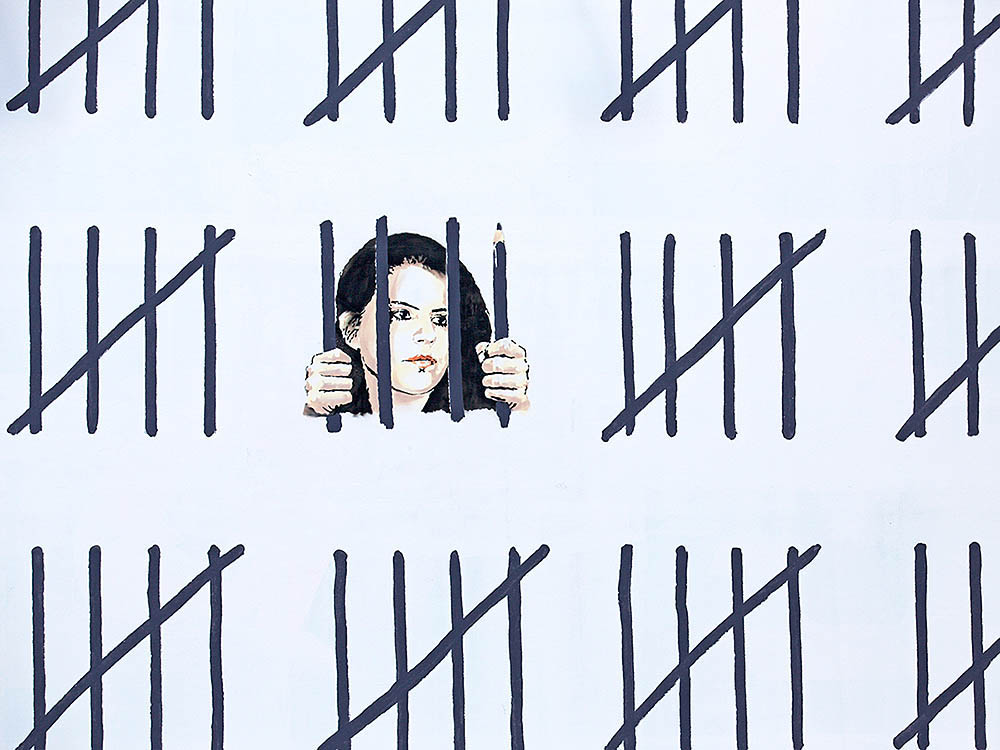
Free Zehra Doğan
On 15 March 2018, Banksy returned to New York with one of the largest and most explicitly political murals of his career. Covering the celebrated Houston Bowery Wall in Lower Manhattan, the work demanded the release of Zehra Doğan, a Kurdish artist and journalist imprisoned in Turkey after creating and sharing a painting depicting the destruction of Nusaybin, a predominantly Kurdish city in southeastern Turkey.
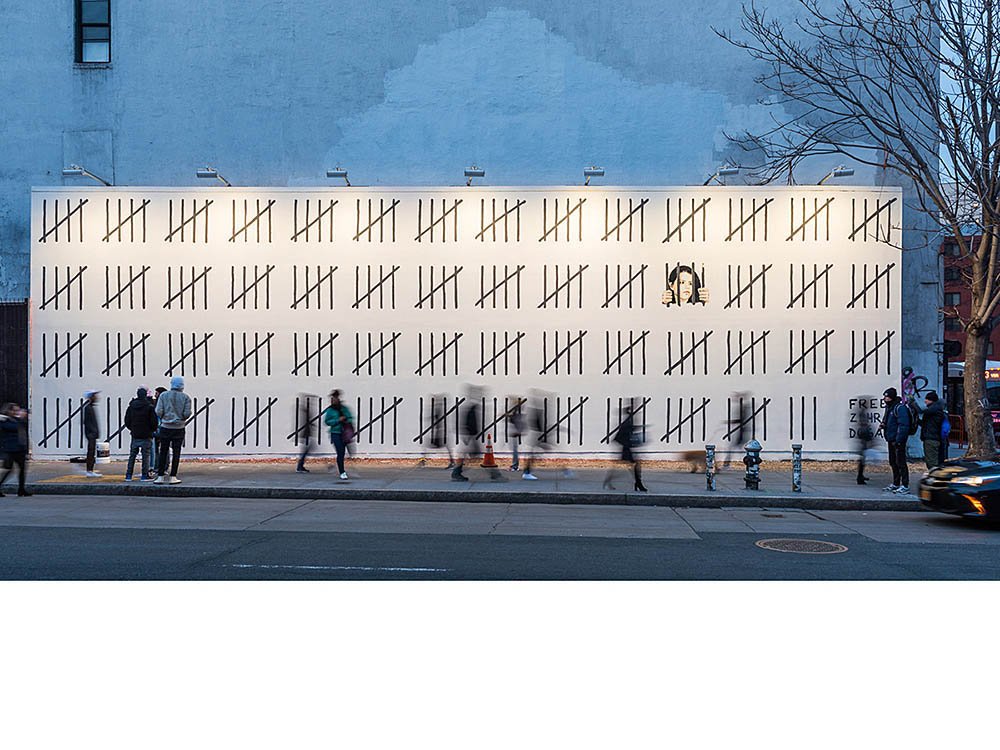
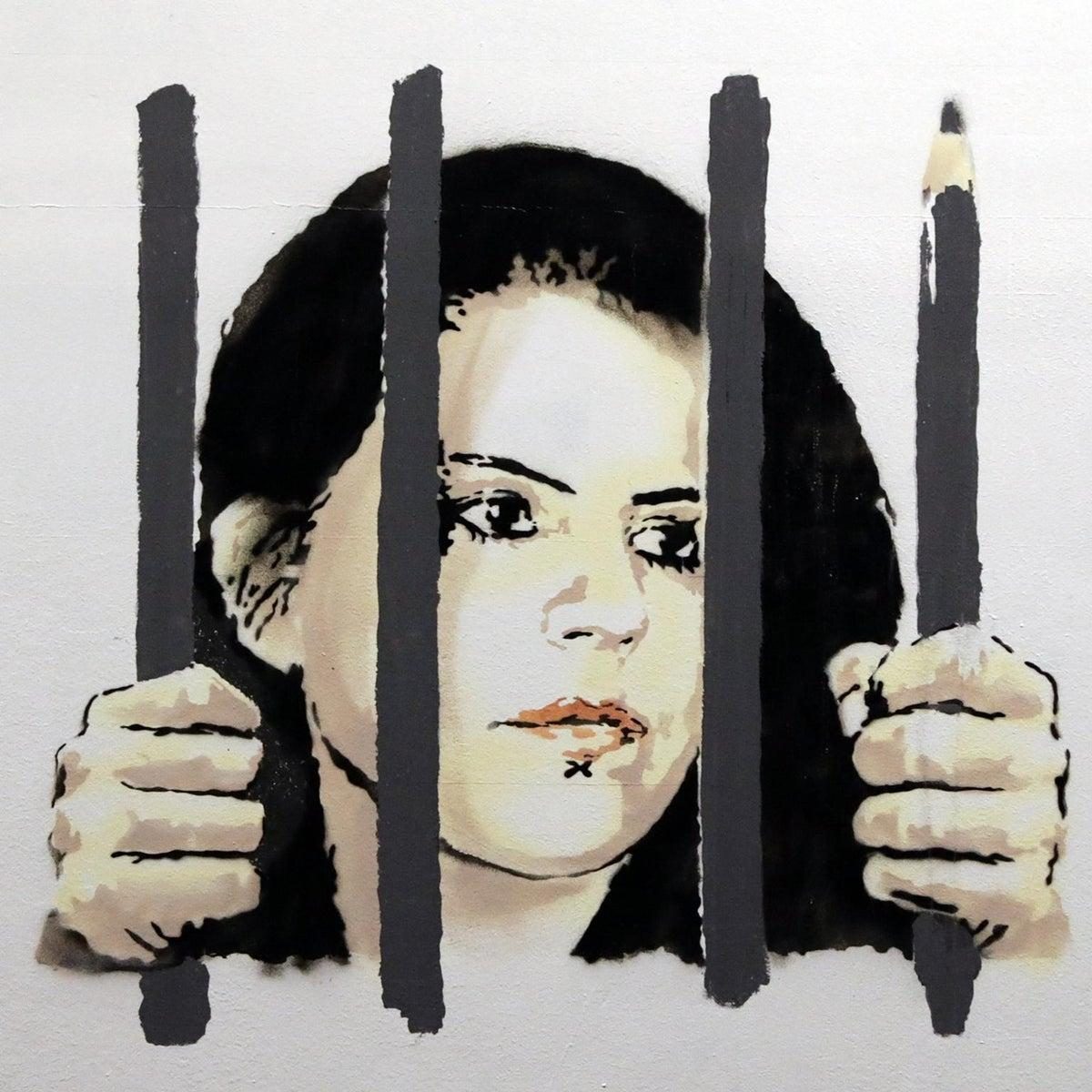
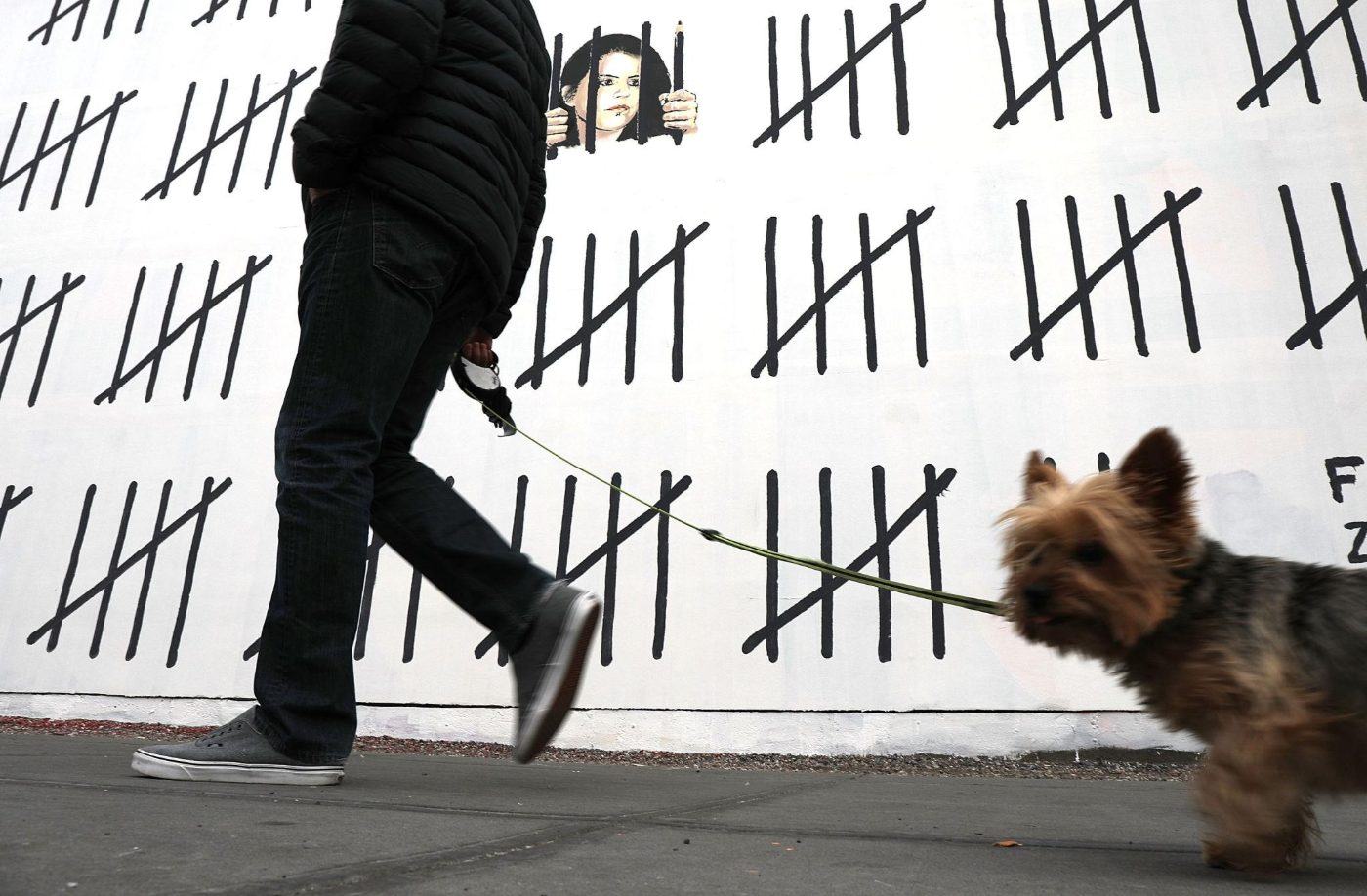
Across the enormous white wall, Banksy and the American graffiti artist BORF painted a succession of monumental black tally marks resembling those scratched by prisoners to count the passing days. Within one group of marks appears Doğan's face, trapped behind the vertical lines as though they were the bars of her cell. Her hand grips one of them—but this particular bar terminates in the sharpened point of a pencil.
At the far end of the composition, Banksy made the purpose of the intervention explicit: FREE ZEHRA DOGAN
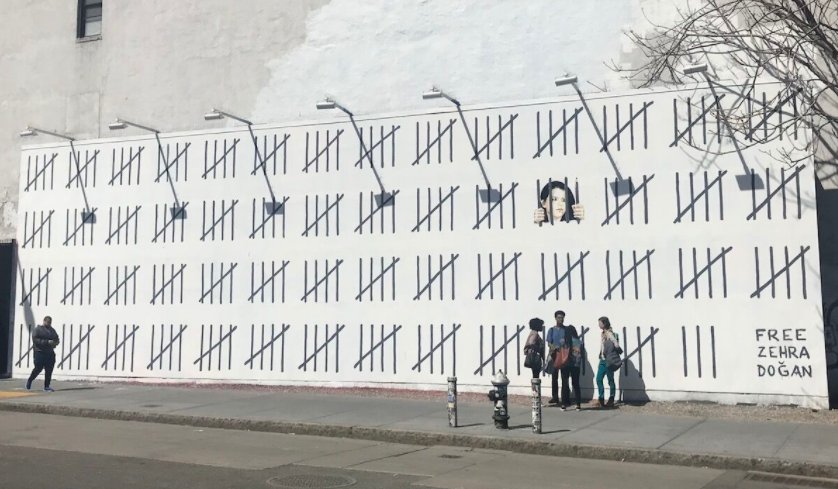
The image is extraordinarily economical. The instrument responsible for Doğan's imprisonment becomes simultaneously the bar that confines her and the means through which she might ultimately escape it. The pencil is both prison and weapon.
Imprisoned for a Painting
Doğan was a journalist, artist and founding editor of JINHA, an all-female Kurdish news agency. Her case centred on a painting based upon a photograph of Nusaybin following Turkish military operations, showing heavily damaged buildings with Turkish flags flying above them.
“One year ago Zehra Dogan was jailed for painting this watercolor of a photograph she saw in the newspaper. Protest against this injustice by re-gramming her painting and tagging Turkey's President Erdogan.”
On 24 March 2017, a Turkish court sentenced Doğan to two years, nine months and twenty-two days in prison on a charge of spreading terrorist propaganda. Doğan maintained that her painting had been derived from a photograph that had already circulated publicly. Her imprisonment became an international freedom-of-expression case, attracting support from artists, journalists and organizations including PEN.
Banksy deliberately brought the original image back into circulation. When revealing the New York mural, he posted Doğan's painting and encouraged his audience to reproduce it on social media and tag Turkish President Recep Tayyip Erdoğan. The strategy was particularly pointed: an image for which an artist had been imprisoned in Turkey was now being multiplied internationally precisely because she had been imprisoned for making it.
Banksy also commented on the disparity between their circumstances with characteristic understatement:
“I really feel for her, I've painted things much more worthy of a custodial sentence.”
The remark exposes the privilege underlying the intervention. Banksy had spent much of his career illegally painting political images on walls while largely avoiding prosecution. Doğan had been deprived of her liberty for making a painting.
The Bowery Wall
The location gave the protest additional significance. The Houston Bowery Wall is one of New York's most celebrated street-art sites. Keith Haring painted the wall in 1982, and its later history has included interventions by artists including Os Gêmeos, Shepard Fairey and JR. By 2018, it occupied an unusual position between graffiti wall, outdoor gallery and New York cultural landmark.
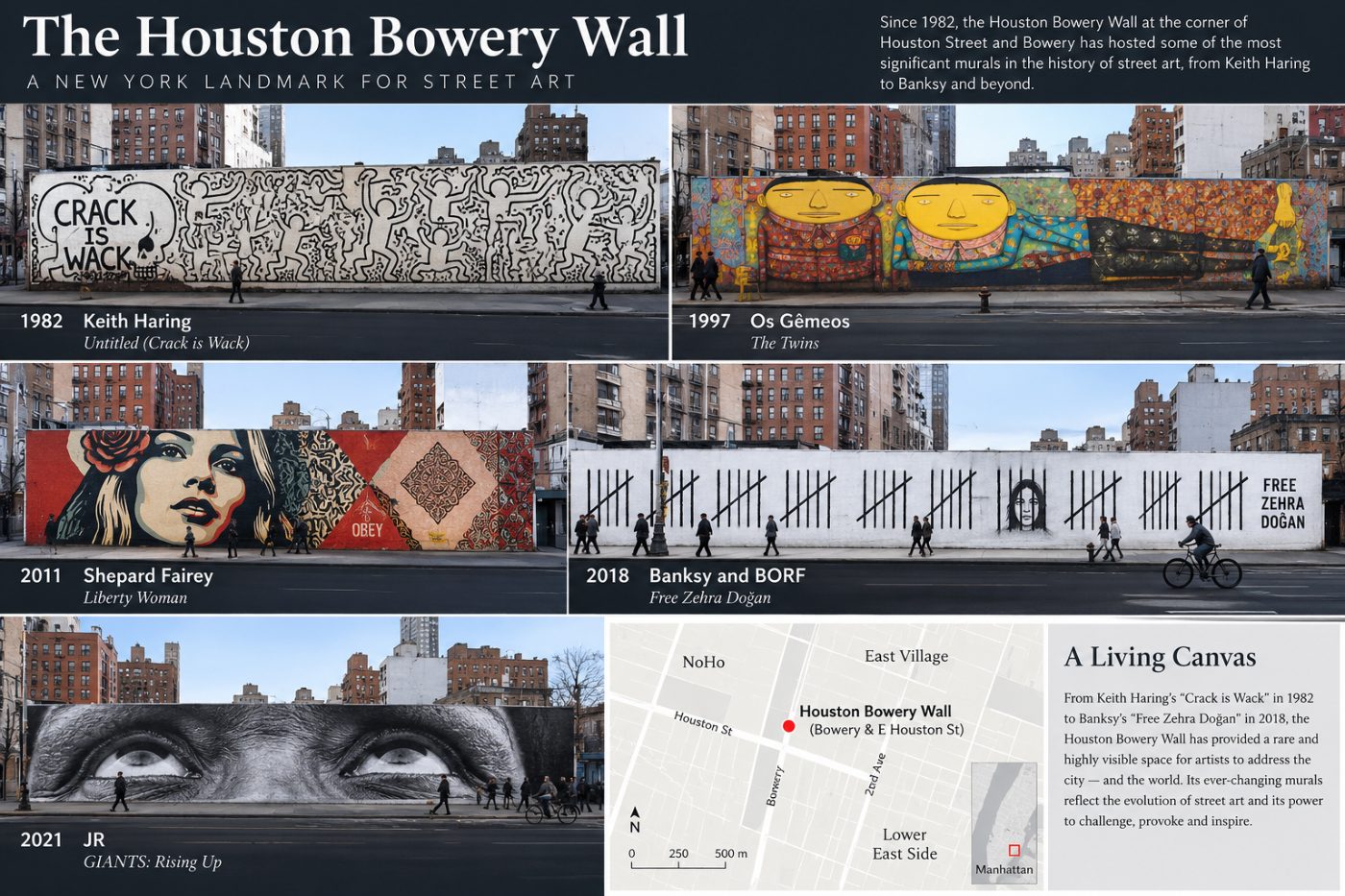
Banksy therefore chose a site where an enormous audience was virtually guaranteed. Unlike many of his clandestine stencils, this was not an image hidden down a side street waiting to be discovered. The scale of the Bowery Wall transformed Doğan's imprisonment into a public announcement occupying one of Manhattan's busiest intersections.
The collaboration with BORF was equally appropriate. The Washington-based graffiti artist had himself served time in jail for graffiti offences. His involvement reinforced the central contradiction of the work: two artists whose unauthorized painting could be treated as criminal activity were using one of New York's most prominent walls to defend another artist whose image-making had resulted in imprisonment.
The Tally Marks
The most powerful element of the mural is its scale. From a distance, the black marks appear almost abstract, a rhythmic sequence extending across the façade. Only when Doğan's face is discovered among them does their meaning become clear.
The wall becomes a calendar of incarceration.
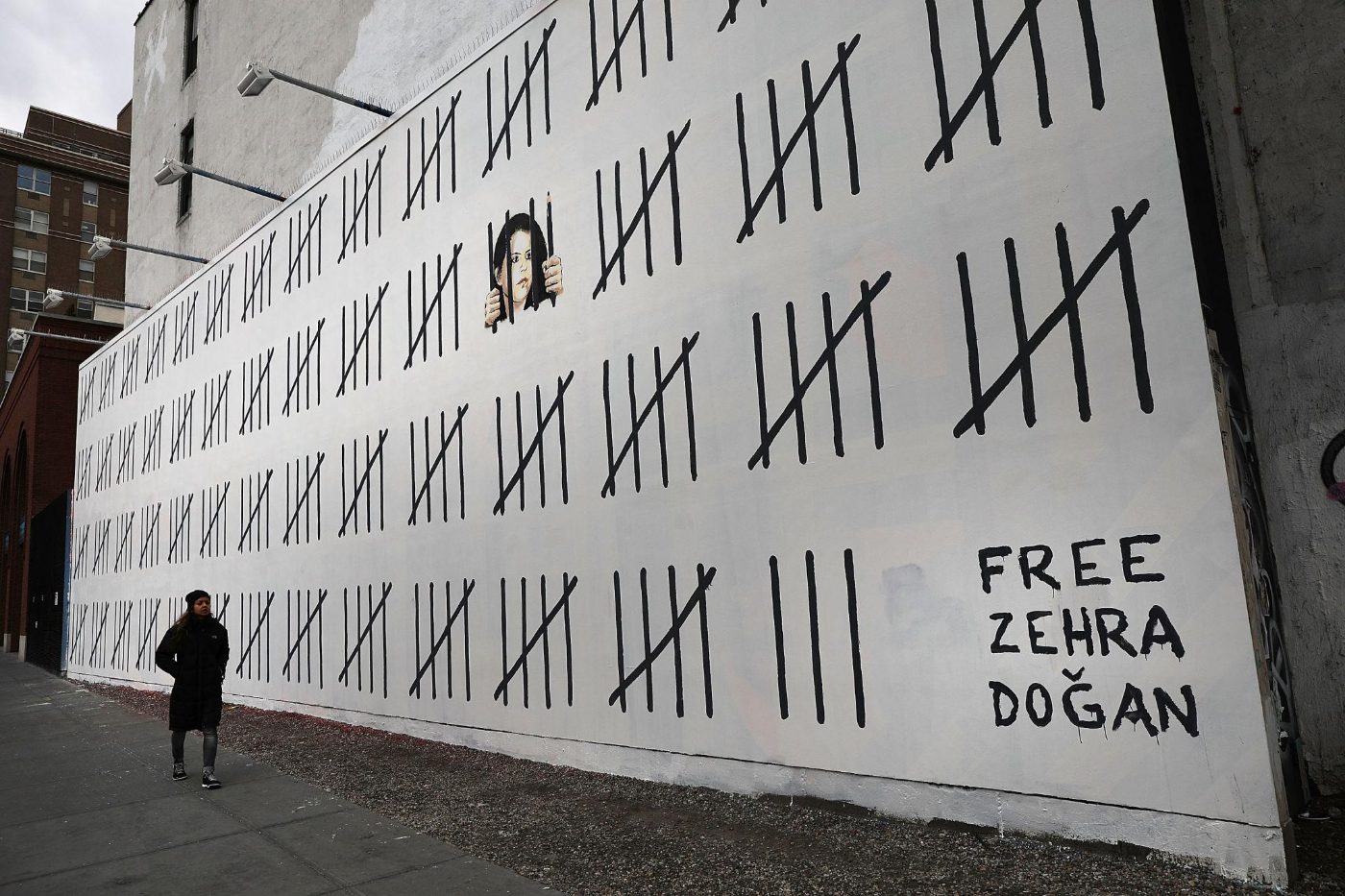
Banksy stated that the marks represented the time Doğan had spent imprisoned. But they also transform time itself into the subject of the mural. A prison sentence is an abstraction expressed in years and months; Banksy's wall translates it into an accumulation of individual days. Each black stroke represents another unit of a life spent behind bars.
The transformation of one bar into a pencil prevents the work from becoming an image simply of victimhood. Doğan remains an artist. The same act of drawing that contributed to her imprisonment is represented as the source of her identity and resistance.
An Image Released
The mural was quickly tagged by other graffiti writers, an entirely predictable development on the Bowery Wall, and as a commissioned temporary street-art site it was never intended to remain permanently. Yet permanence was arguably beside the point. Banksy's intervention functioned as a mechanism for transmitting Doğan's name and her image far beyond the physical wall.
The story acquired an important epilogue. From prison, Doğan wrote to Banksy in July 2018, describing the mural as a powerful response to a regime that, in her words, could not tolerate even a painting. She wrote that Banksy's support had allowed her own image to fulfil its purpose by drawing international attention to what had happened in Nusaybin.
On 24 February 2019, Zehra Doğan was released after spending approximately 600 days in prison. She subsequently continued her work as an artist and journalist outside Turkey.
Banksy's mural had disappeared by then. But the image that prompted it—and the story of the woman who painted it—had become considerably harder to suppress.
Turkey imprisoned an artist for an image. Banksy's response was to make sure millions more people saw it.
STAY INFORMED
Receive the latest news, exhibitions, artworks and market updates on Banksy.