Provenance
Private Collection, United Kingdom
Sotheby’s S|2, London
Private Collection (acquired from the above in 2014)
Ross+Kramer Gallery, New York
Acquired from the above by the present owner
Auction History
| Phillips London 16 October 2025 Est.: GBP 350,000 – 450,000 |
Price Realized GBP 348,300 / USD 466,720 Banksy |
Catalogue Note
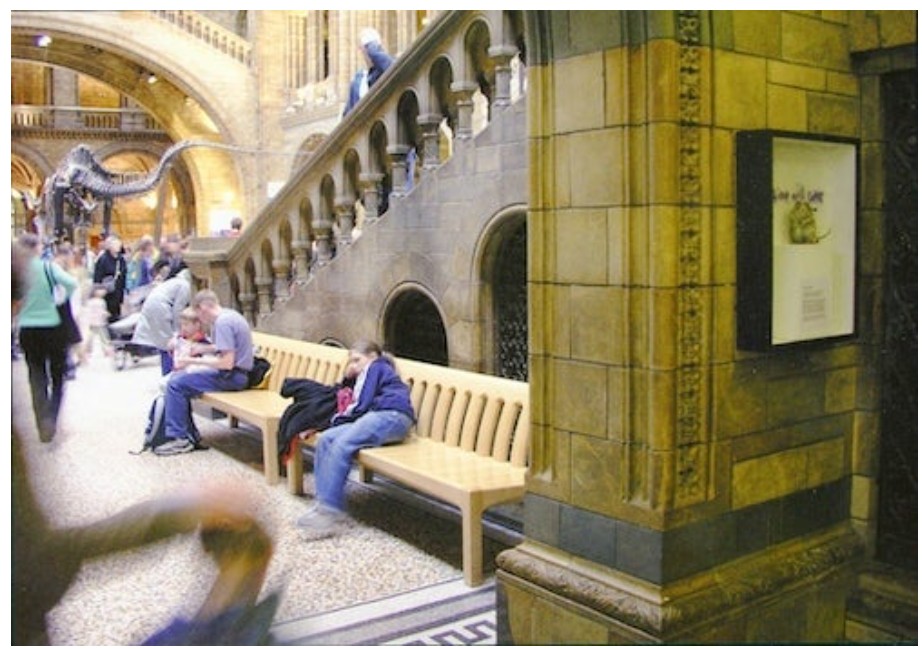
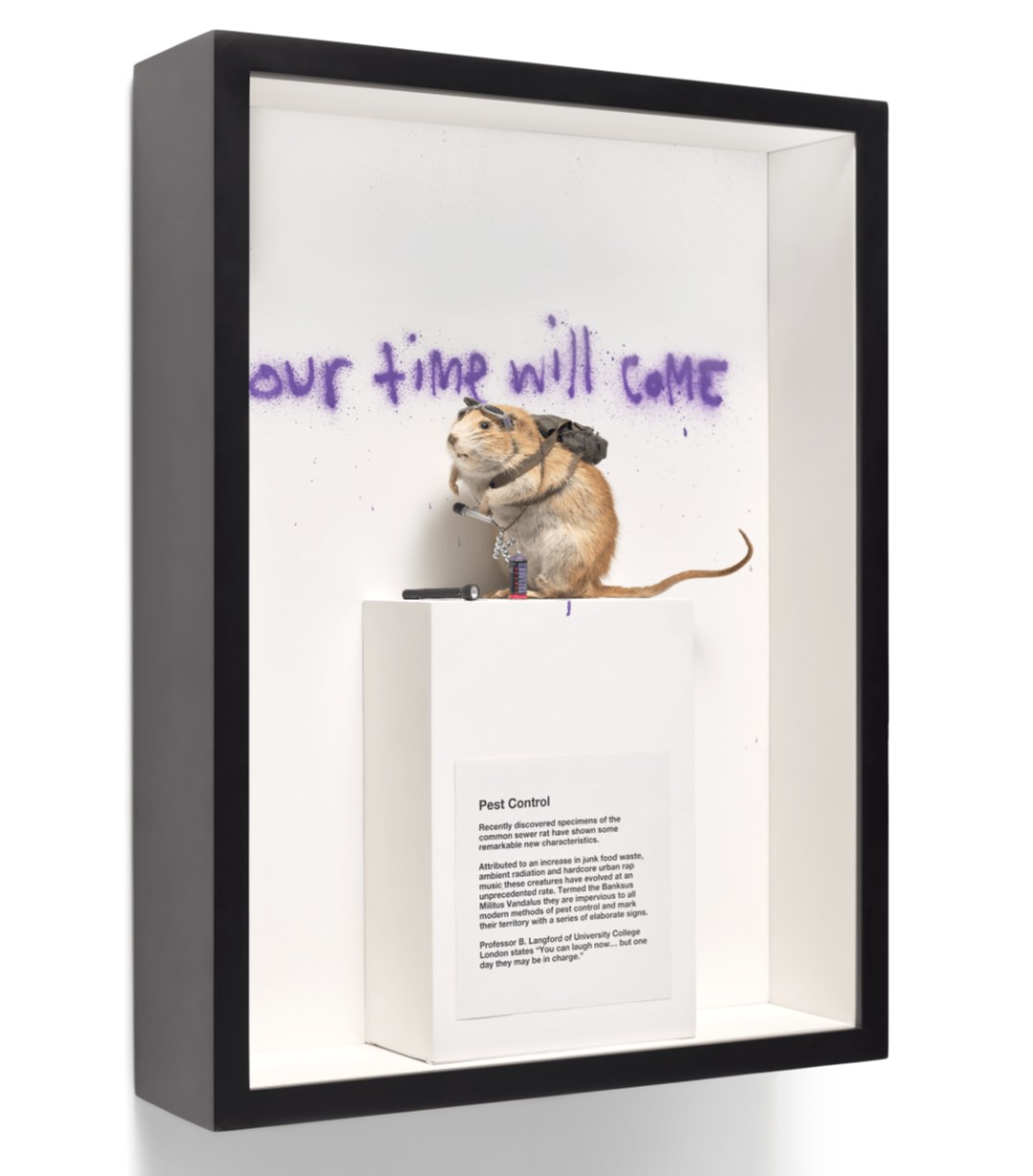
The present work installed in the Natural History Museum, 2004. Image/Artwork: © Pest Control
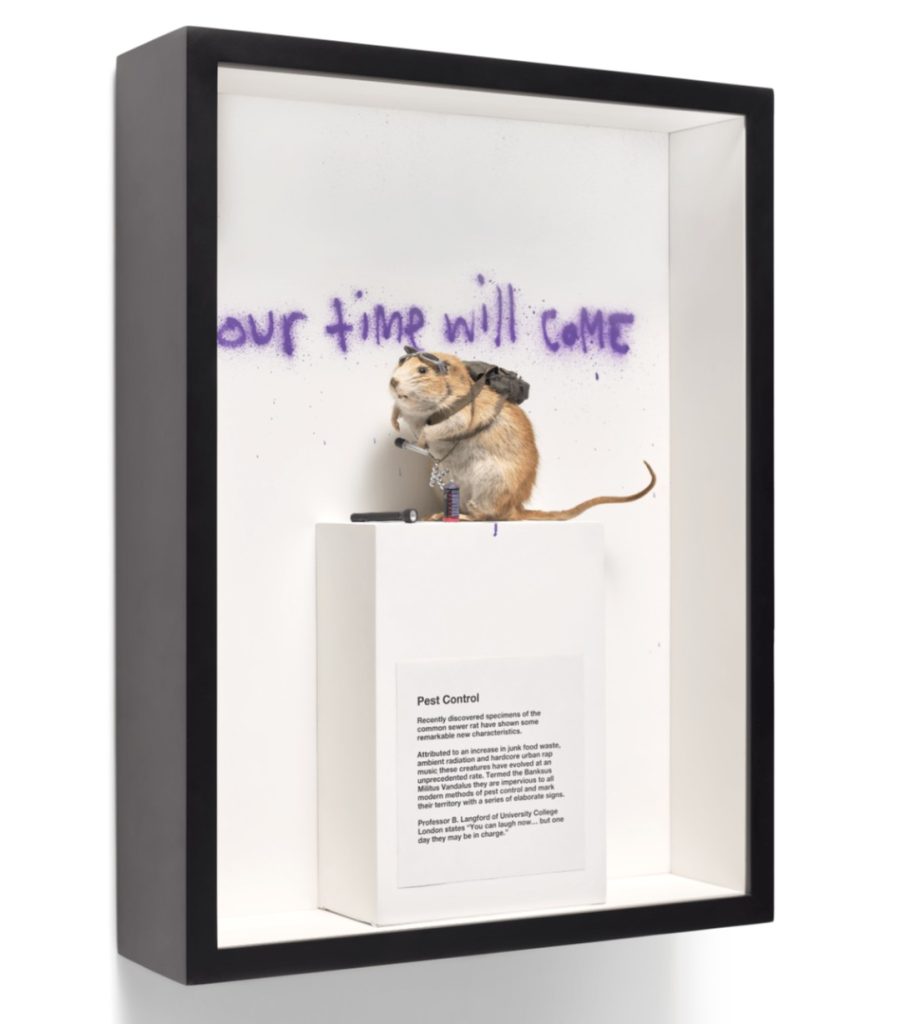
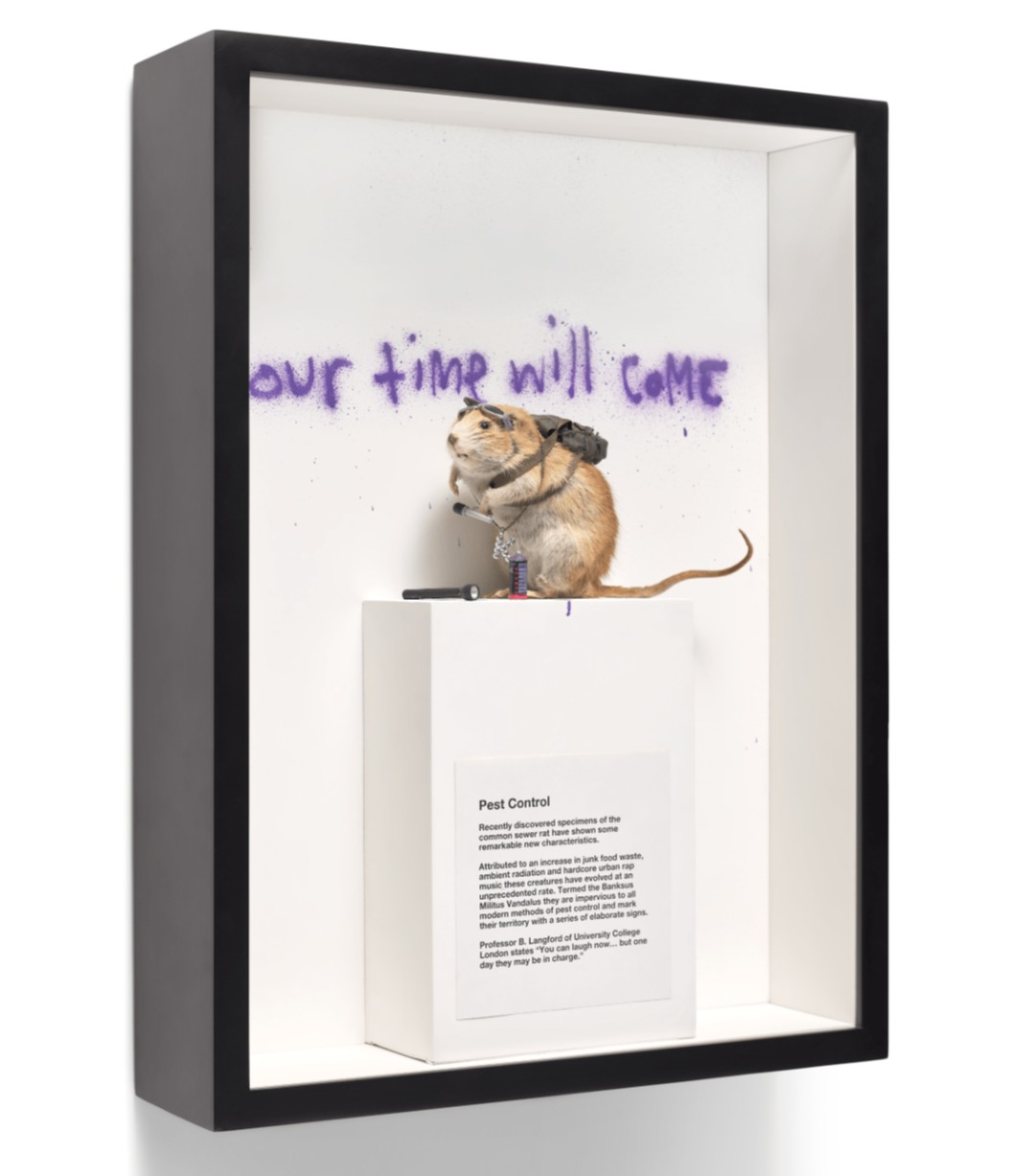
An audacious and confrontational work, Pest Control – Banksus Militus Vandalus made its first appearance in a short-lived guerilla installation in one of United Kingdom’s most illustrious and historic institutions. Disguised as a museum worker Banksy installed the piece in its glass fronted display case in the lobby of the Natural History Museum alongside the more familiar exhibits of dinosaur fossils and woolly mammoth models where it went undetected for some hours before its removal. Aping the authoritative tone typically employed in zoological or museological exhibits, the accompanying text details the strange and rapid evolution of the common sewer rat into an alarmingly ‘militant’ species of ‘vandal’ which demonstrates an alarming resistance to typical methods of pest control and tends to ‘mark their territory with a series of elaborate signs.’
“They exist without permission. They are hated, hunted, and persecuted. They live in quiet desperation amongst the filth. And yet they are capable of bringing entire civilisations to their knees. If you are dirty, insignificant and unloved rats are the ultimate role model.”
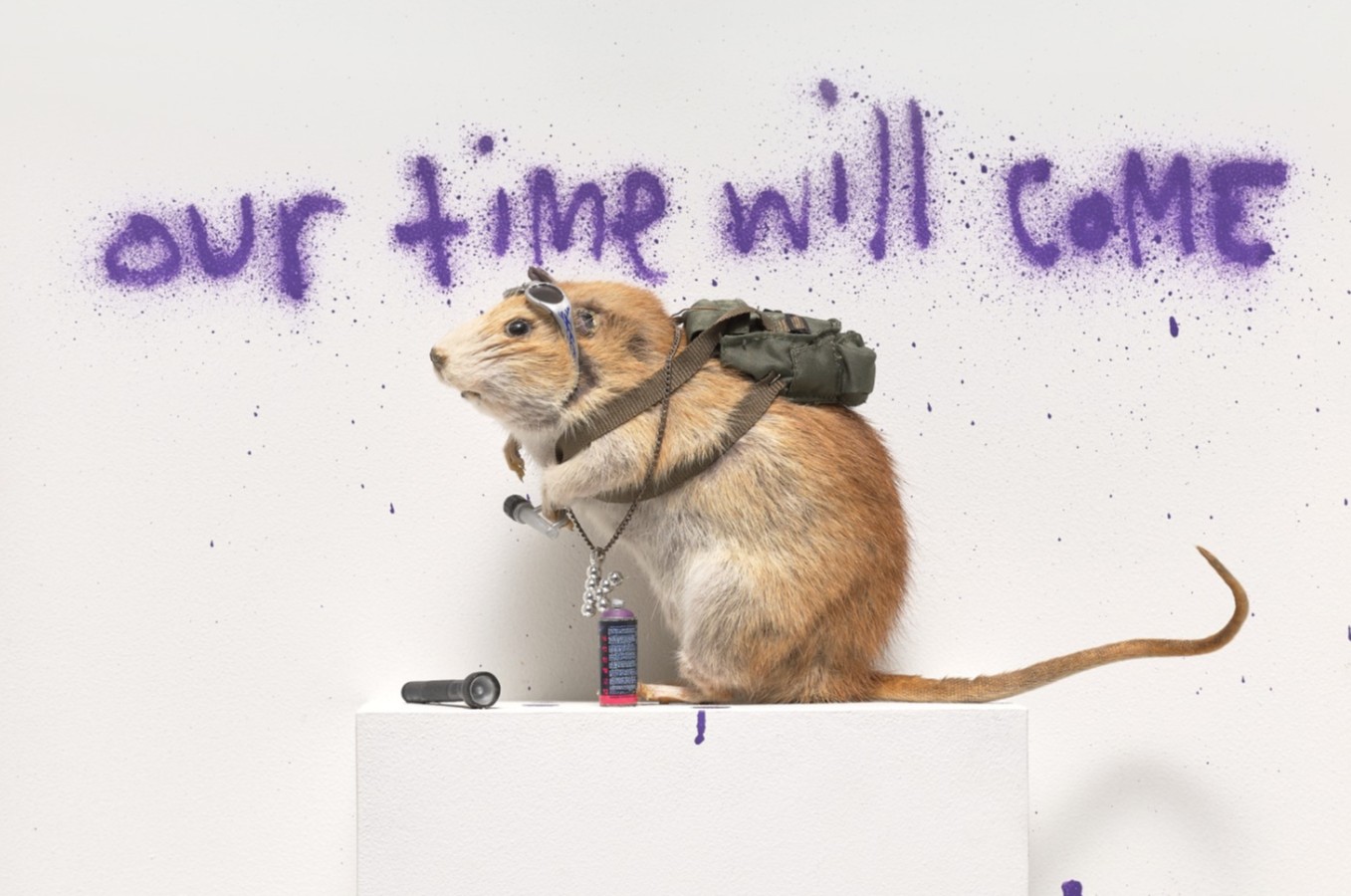
An early and important work, Pest Control – Banksus Militus Vandalus also made an appearance in Banksy’s landmark 2009 exhibition Banksy vs Bristol Museum where the artist transformed the space into a ‘menagerie of Unnatural History’ in a continuation of the themes explored in the earlier Natural History Museum intervention. Exploding in popularity over the course of the 19th century, taxidermy occupies a space between the disciplines of art and science, an extension of the vogue for the Renaissance-era Wunderkammer or ‘cabinet of curiosities’ – visual encyclopaedic collections of treasures and oddities from around the world. As the Enlightenment gathered pace, such objects of fascination were repurposed into classificatory tools, a means of imposing human authority and order onto the natural world. Close ties quickly emerged between colonial expansion, the exploits of Empire, and the legitimizing space of the museum designed to contain and codify the multiple cultural objects and exotic animals encountered abroad, the so-called ‘rationalisation’ of which reflected dominant Imperialist ideologies and deeply embedded exploitative power structures. In introducing his new breed of spray-painting ‘militant vandal’ into the quintessentially Victorian institution, Banksy’s Pest Control – Banksus Militus Vandalus threatens to expose and disrupt not only established conventions around museum curation and their relationship to taxonomies of knowledge, but to the insidious networks and discourses of power that they have historically upheld and reinforced.
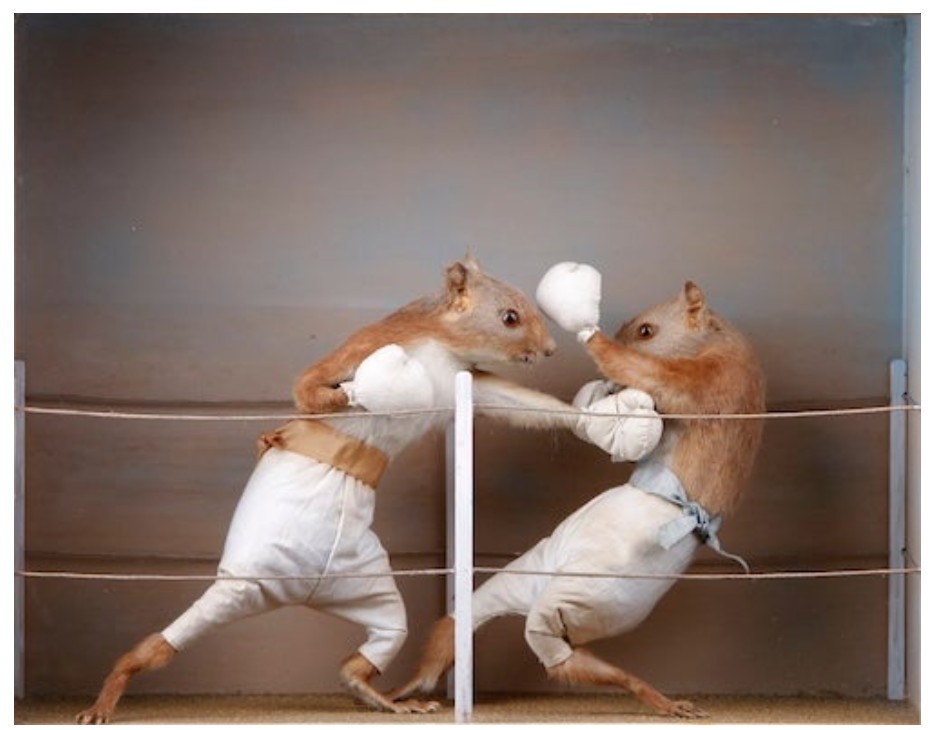
Edward Hart, Red Squirrel, 1834, Castle Ward, County Down. Image: © National Trust / Peter Muhly
While taxidermy was employed in all seriousness as an expression of colonial power, it also lent itself to more oddly comedic uses in surreal tableaux arrangements where animals were posed engaged in human activities, often with miniature accessories and garments to match. In this more playful sense, Pest Control – Banksus Militus Vandalus draws on the long satirical tradition of anthropomorphizing animals in allegorical tales of human folly and hubris, a visual tradition whereby artists drew on the metaphoric relationship between certain animals and human characteristics in order to comment on issues of inequality, political resistance, and protest that certainly resonates with Banksy’s own project. An early and important iteration of Banksy’s most iconic and loaded motifs, Pest Control – Banksus Militus Vandalus comes coded with messages from the past and a wry warning for the future. Banksy’s rats – like the anonymous street artist himself – are agents of social critique, disrupting the status quo in their exposure of the injustices and exploitation of modern life, especially felt by those operating at the margins of society.