CAVE PAINTING REMOVAL
“The Art we look at is made by only a select few. A small group create, promote, purchase, exhibit and decide the success of Art. Only a few hundred people in the world have any real say. When you go to an Art gallery you are simply a tourist looking at the trophy cabinet of a few millionaires.”
Erasing the First Graffiti
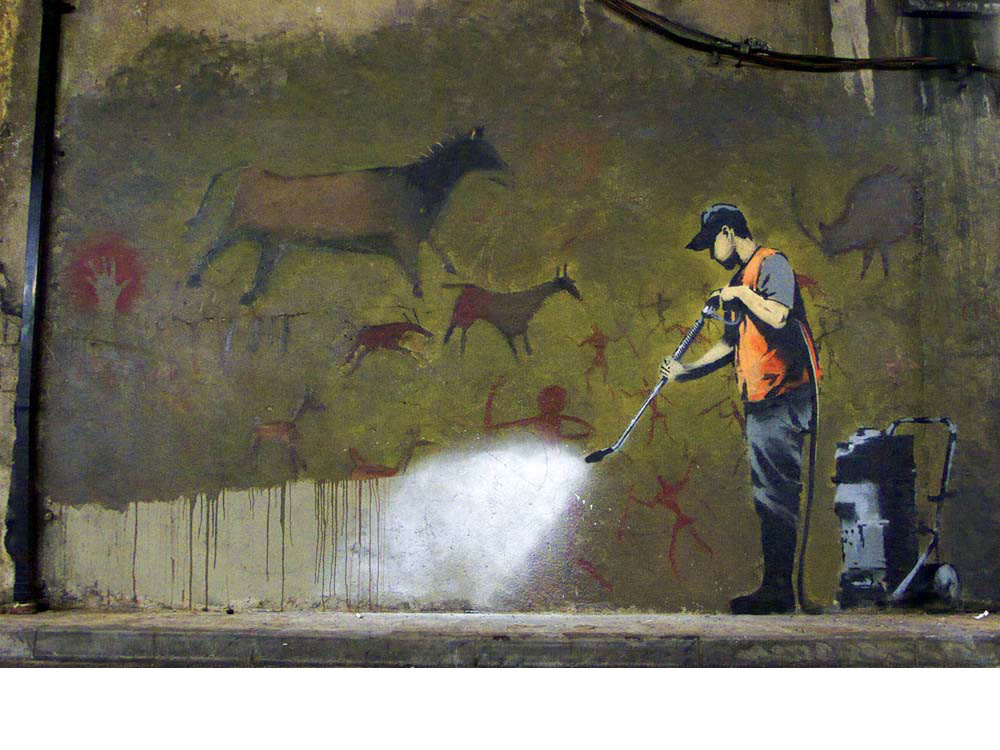
Created for Banksy's Cans Festival in May 2008, Cave Painting Removal depicts a municipal worker methodically pressure-washing a collection of prehistoric animals and human figures from a wall. Bent forward over his equipment and absorbed in his task, the cleaner appears entirely unaware that the marks he is removing resemble some of humanity's earliest surviving images.
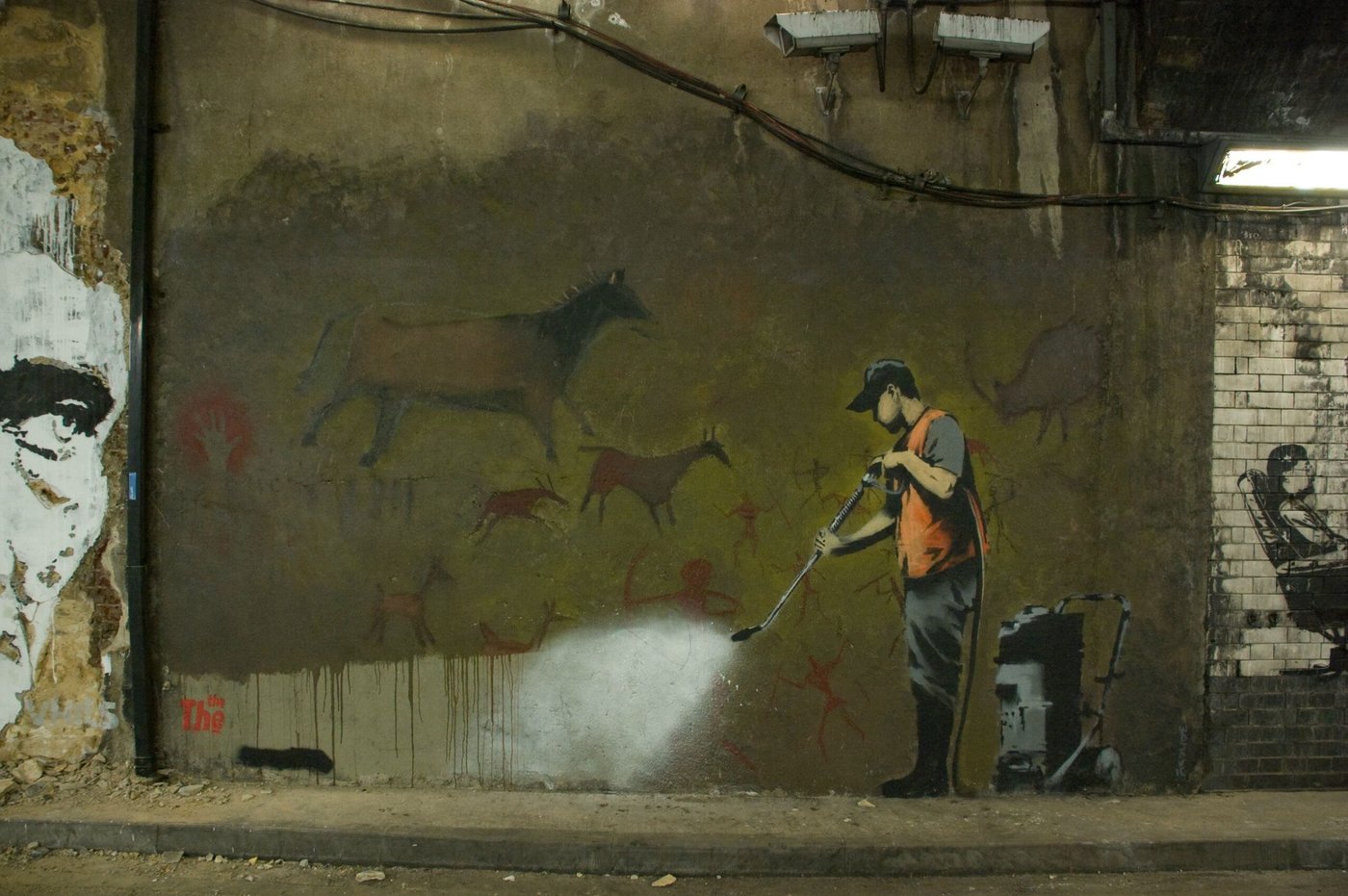
The composition is characteristically economical. Banksy places two radically different visual languages beside one another: the sharply defined stencil of a contemporary maintenance worker and the deliberately primitive silhouettes of animals and hunters scattered across the wall. Between them lies a freshly cleaned patch of masonry, where several ancient-looking figures have already disappeared. The pressure washer becomes the instrument through which one history of mark-making is literally erased by another.
The reference is immediately evocative of prehistoric sites such as Lascaux, whose celebrated paintings of horses, deer, bison and other animals have survived for thousands of years and are now protected as some of humanity's most important cultural artifacts. Banksy's joke depends upon the enormous discrepancy between the value contemporary society assigns to these ancient marks and its treatment of unauthorized images appearing on today's walls.
Who Decides What Is Worth Preserving?
At the center of Cave Painting Removal is one of the fundamental questions running through Banksy's work: when does a mark on a wall cease to be vandalism and become art?
Prehistoric cave painting and contemporary graffiti share an elementary act. Someone encounters a wall and leaves an image upon it. Separated by thousands of years, however, the cultural response could hardly be more different. One is preserved, studied and incorporated into the history of civilization; the other can be removed almost immediately as visual pollution.
Banksy makes that contradiction absurd by collapsing the intervening millennia. His maintenance worker treats the prehistoric figures exactly as a modern graffiti-removal team might treat a tag. The humor comes from our certainty that he is making a catastrophic mistake. We recognize the images as culturally valuable even though, within the fictional world of the mural, he apparently does not.
The work therefore asks an uncomfortable question. If we are horrified by the destruction of ancient wall paintings, how certain can we be that the marks being erased from contemporary cities are culturally worthless?
The Cleaner Is Graffiti Too
There is an additional paradox built into the image. The worker removing the graffiti is himself graffiti.
Banksy does not depict an actual council employee cleaning an actual prehistoric painting. Every element of the scene—the worker, his equipment and the supposedly ancient images—has been painted onto the same contemporary wall. The distinction between the image being preserved by the viewer and the images being destroyed within it is therefore entirely conceptual.
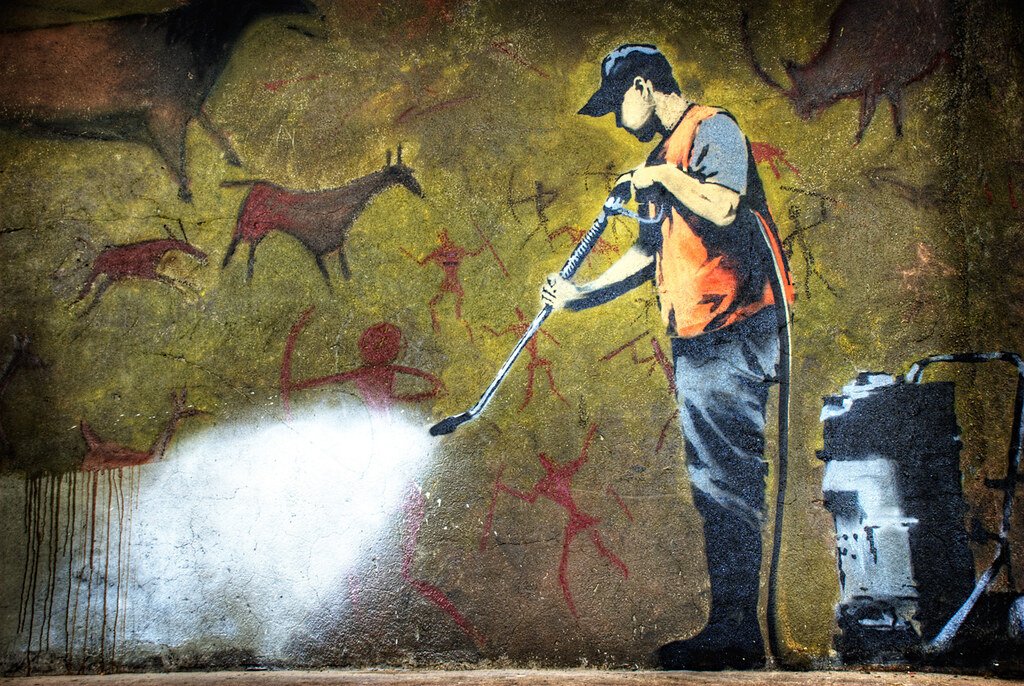
That circularity is central to Banksy's humor. The cleaner exists only because somebody has made an unauthorized—or at least graffiti-derived—mark on a wall, yet his fictional purpose is to eliminate precisely that kind of mark. Destruction and creation occupy the same surface.
It is also important not to reduce the worker himself to a villain. He is not shown attacking the images in anger and there is no suggestion that he has consciously decided they are culturally worthless. He is simply doing his job. Banksy's target is consequently broader than the individual figure: the systems through which institutions classify some forms of visual culture as worthy of protection and others as material to be removed.
The Cans Festival
The location makes the work particularly significant. Cave Painting Removal was created for The Cans Festival, staged by Banksy in the former Eurostar road tunnel on Leake Street beneath Waterloo Station over the May Bank Holiday weekend of 3–5 May 2008. Banksy gathered dozens of stencil artists from Britain and abroad and transformed several hundred metres of neglected tunnel into a vast temporary exhibition. The event had the permission of the site's owners, making the setting itself a provocative inversion of Banksy's usual working conditions.
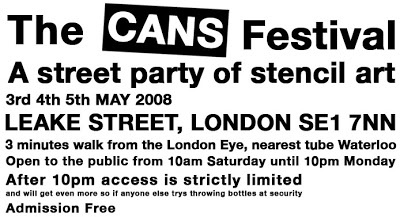
A work about the institutional removal of graffiti was therefore painted during an event in which graffiti had temporarily been granted permission to exist.
The contradiction became even richer after the festival. Leake Street evolved into a legal graffiti space whose walls were continuously painted, covered and repainted. Rather than preserving individual works indefinitely, the tunnel embraced the temporary nature of the medium.
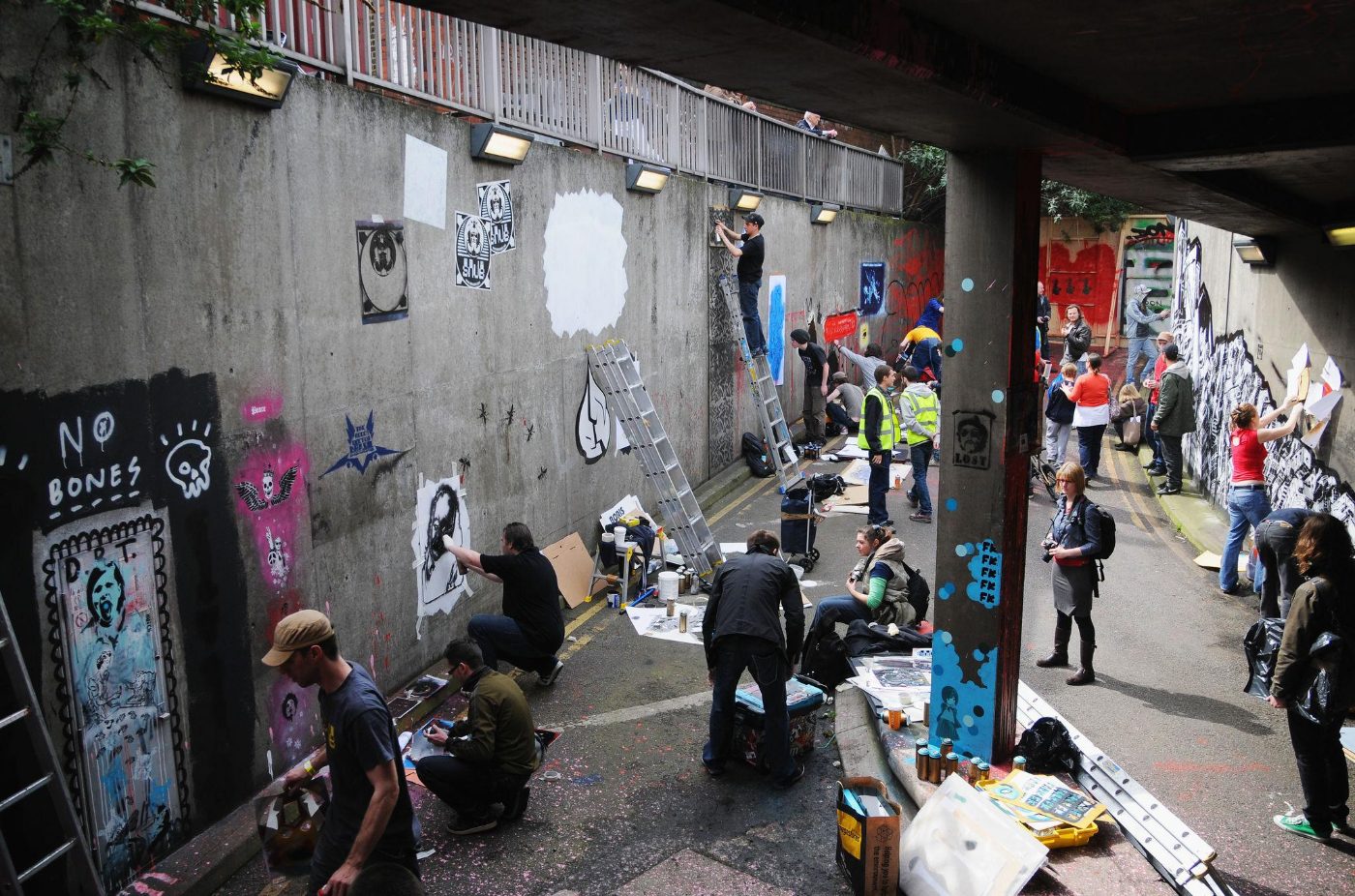
Cave Painting Removal consequently survived for only a few months. By approximately August 2008, it had itself been covered by subsequent work.
From Cave Wall to Graffiti Wall
Its disappearance gives Cave Painting Removal an almost perfect afterlife.
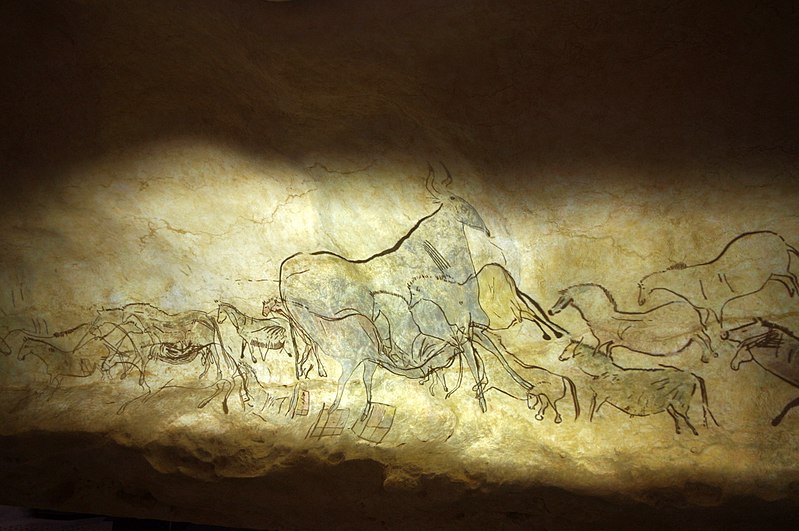
Banksy's fictional maintenance worker erases images that have supposedly survived from prehistory, while Banksy's own image survived only briefly before disappearing beneath subsequent layers of paint. The mural became part of exactly the process it depicted: images appearing on walls, being covered, surviving through photographs and eventually entering cultural memory.
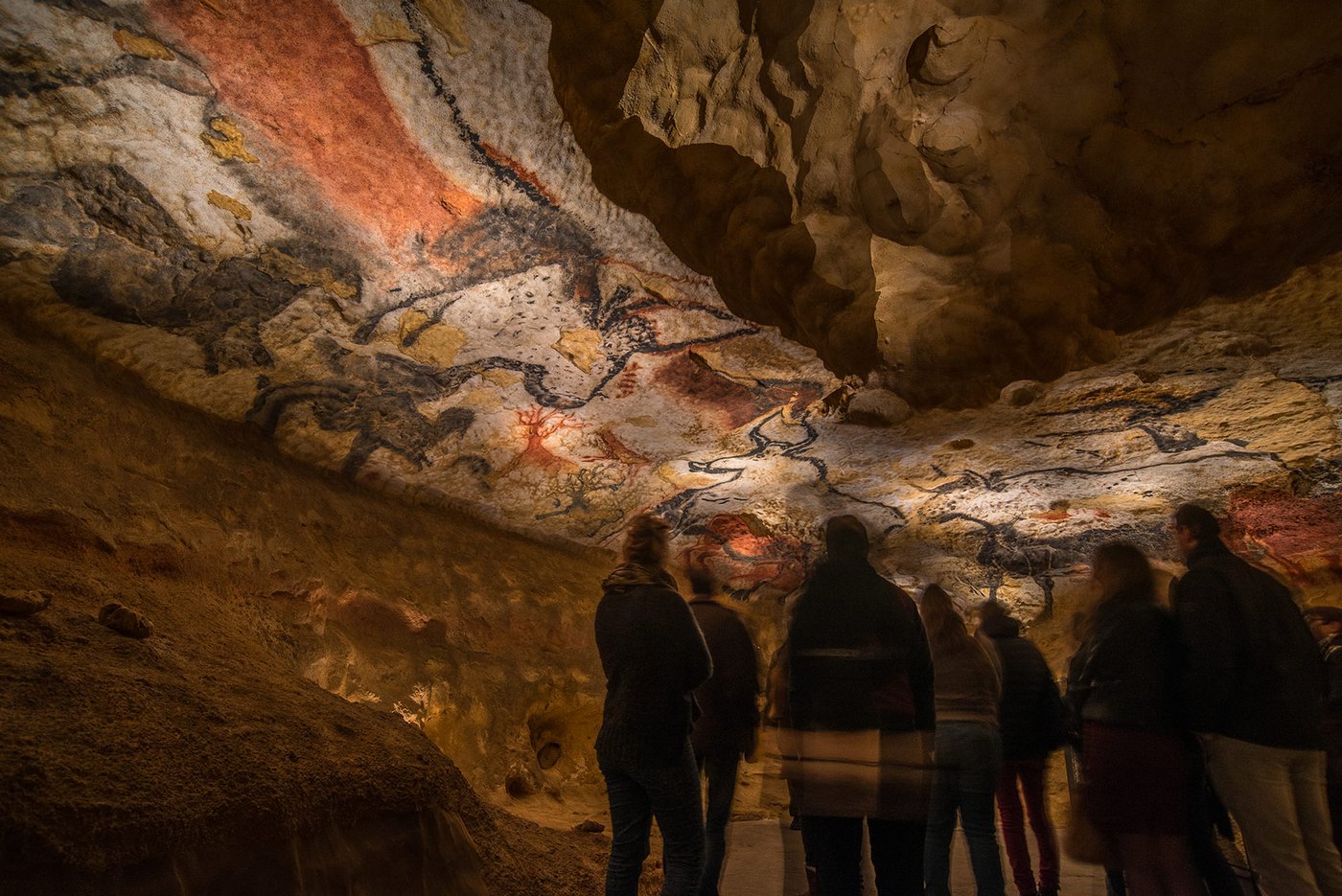
The comparison between prehistoric painting and graffiti is therefore more than a joke about the art establishment. Both begin with the same fundamentally human impulse—to leave an image on a surface. What changes across centuries is not the gesture itself but the cultural value subsequently attached to it.
Prehistoric people painted animals on cave walls. Banksy painted a man removing them. Then another artist painted over Banksy. The wall survived them all.
STAY INFORMED
Receive the latest news, exhibitions, artworks and market updates on Banksy.