BANKSY
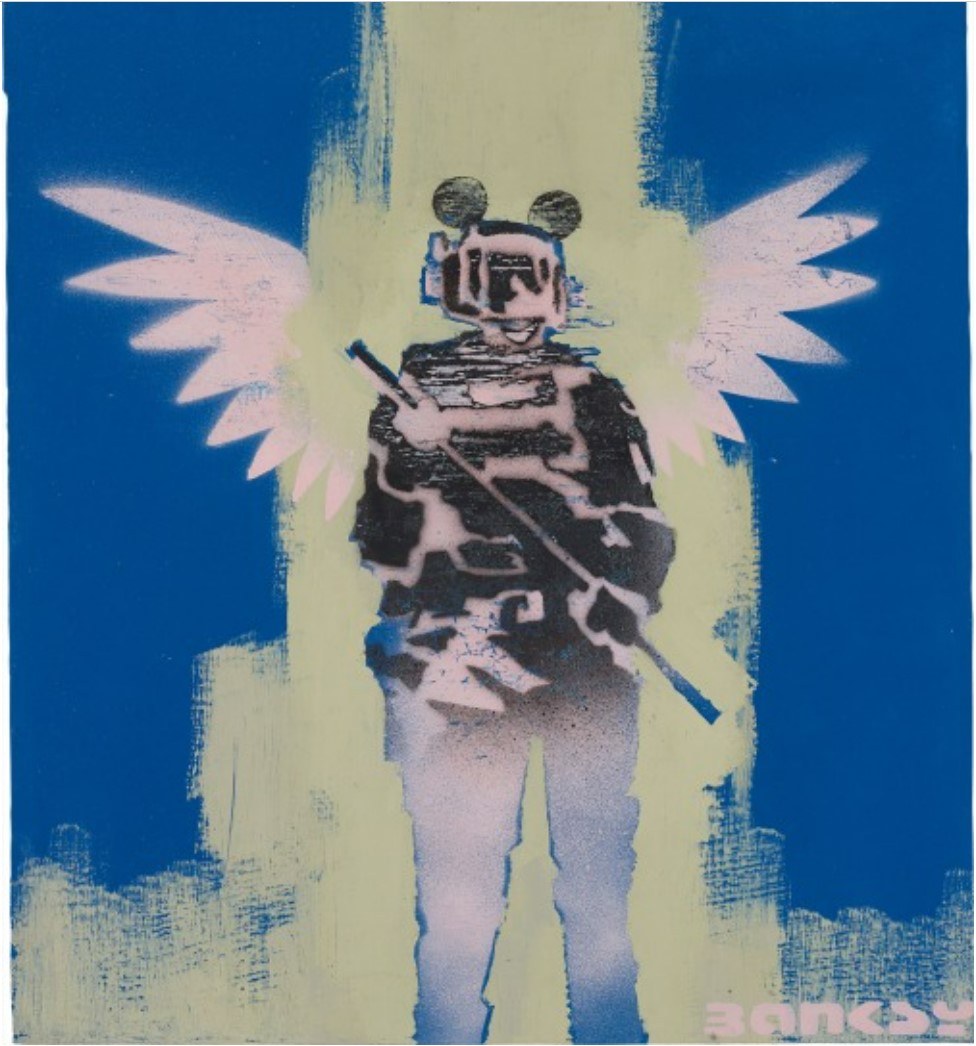
Filth, 2000
Spray-paint and acrylic on canvas
44.4 x 40.5 cm (17 1/2 x 15 7/8 inches)
Stenciled signed “BANKSY”, lower right
Provenance
Andipa Gallery, London
Exhibited
Severnshed, Bristol, 2000
Auction History
| Phillips London 11 February 2014 Est.: GBP 40,000 – 60,000 |
Price Realized GBP 50,000 / USD 82,335 Banksy Phillips |
Catalogue Note
Painted in 2000 and exhibited at Banksy’s seminal Severnshed exhibition in Bristol, Filth introduces one of the artist’s earliest and most enduring visual inventions: the transformation of the riot policeman into an absurd cultural icon. Clad in full tactical gear yet sporting Mickey Mouse ears and angel wings, the figure embodies a collision of authority, innocence and mythology that is at once humorous and deeply unsettling.
The title is itself a provocation. “Filth” is a long-standing British slang term for the police, but Banksy complicates the insult by surrounding the officer with symbols traditionally associated with childhood and salvation. The angel wings imply moral righteousness, while the Mickey Mouse ears reduce the anonymous enforcer to a corporate mascot. Together they expose the contradictions of institutional power, suggesting that authority often relies as much on image and mythmaking as it does on force.
This hybrid figure would become one of the defining motifs of Banksy’s early career, reappearing in works such as Flying Copper, Clown with Cops and You Told Me That Joke Twice. Throughout these compositions, the police are rarely portrayed as individuals; they are anonymous actors performing a role, caught somewhere between intimidation and parody.
Executed with expressive brushwork combined with Banksy’s unmistakable stencil technique, Filth demonstrates the artist’s ability to dismantle symbols of authority through wit rather than direct confrontation. By transforming a riot officer into an improbable angelic cartoon, Banksy reminds us that the most effective satire often works not by exaggerating reality, but by revealing how absurd it already is.