GIRL WITH A PIERCED EARDRUM
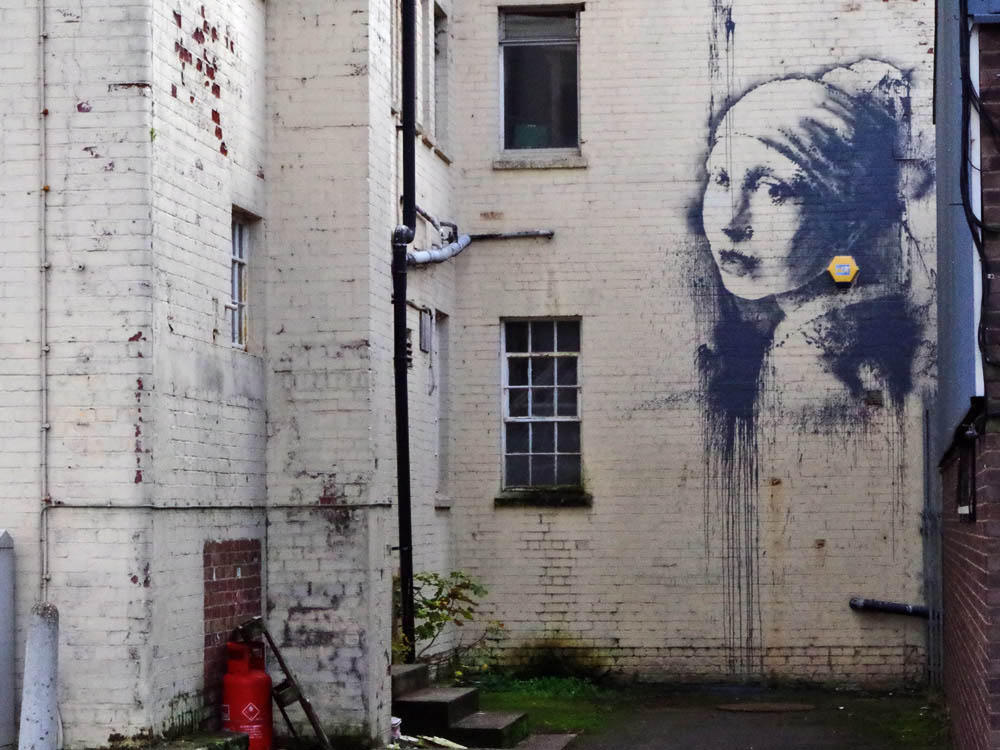
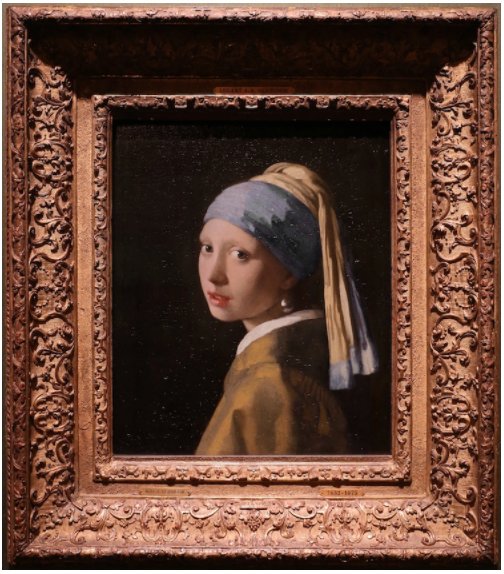
Appearing overnight on 20 October 2014, Girl with a Pierced Eardrum marked Banksy's return to his hometown with one of his most accomplished transformations of an art-historical image. Painted on a building at Albion Dockyard in Hanover Place, close to Bristol's historic harbour, the mural reimagines Johannes Vermeer's celebrated Girl with a Pearl Earring, dated circa 1665. Banksy confirmed the work by publishing a photograph on his website the same day it was discovered.
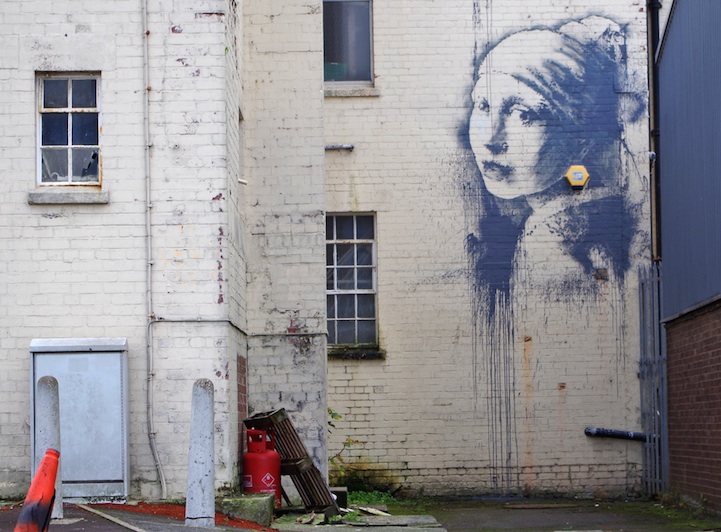
Rather than reproducing Vermeer's composition literally, Banksy reduces the young woman's face, headscarf and clothing to a monumental monochrome stencil. The crucial intervention is neither painted nor stencilled at all. An existing yellow security alarm fixed to the building occupies the position of Vermeer's pearl, transforming the Renaissance jewel into an ordinary piece of urban infrastructure. The substitution gives the work its title: the girl's delicate pearl earring becomes a decidedly more intrusive pierced eardrum.
The alarm is what transforms the work from a straightforward parody into a genuinely site-specific image. Banksy has repeatedly incorporated the physical architecture of the street into his compositions, but here the found object generates the entire idea. The alarm existed before the painting; Banksy effectively constructs the figure around it. What had been an unnoticed functional object becomes, through a change of context, the focal point of one of the most recognizable portraits in Western art. The joke works simultaneously through sight, language and sound: Vermeer's pearl becomes an alarm, while an object designed to make an enormous noise becomes the girl's earring.
The choice of Vermeer also belongs to Banksy's longstanding practice of bringing canonical art into collision with contemporary everyday life. From his interventions in museums to the Crude Oils and Vandalised Oils, Banksy repeatedly takes images whose cultural authority has been established by museums and art history and subjects them to an unexpected intrusion. Here, however, the gesture is unusually economical. Vermeer's sitter remains immediately recognizable; there is no overt political slogan and no violent disruption of the source image. A single piece of pre-existing street furniture is enough to move the seventeenth-century portrait from the museum into the contemporary city.
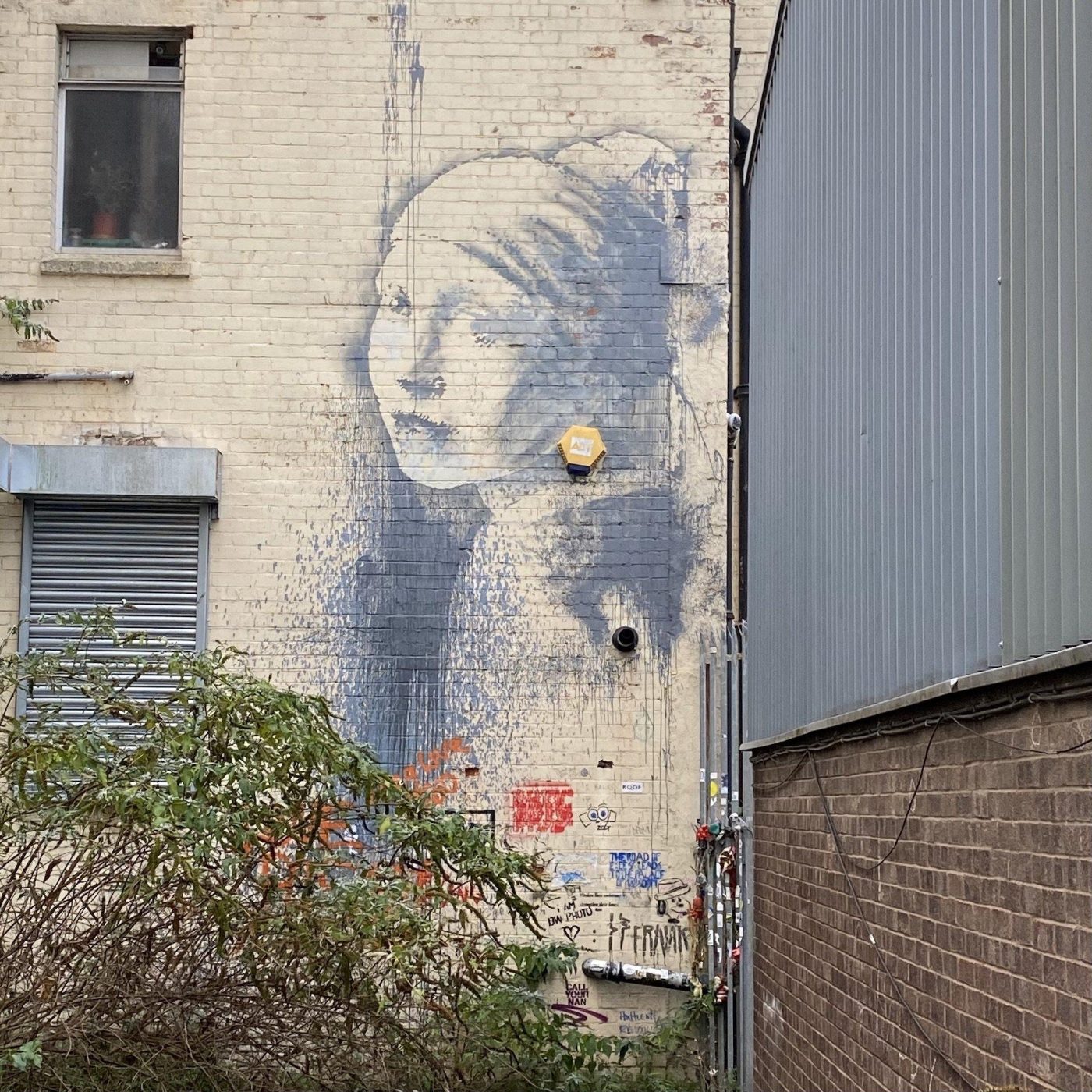
The mural acquired its own layers of intervention almost immediately. Within roughly a day of its appearance, black paint was thrown across the wall, splattering the left side of the composition. Bristol City Council, which owned the building, subsequently stated that it would consider ways of protecting the work. The damage was never entirely erased, leaving the mural to accumulate the physical history characteristic of Banksy's street works rather than preserving it as an immaculate image.
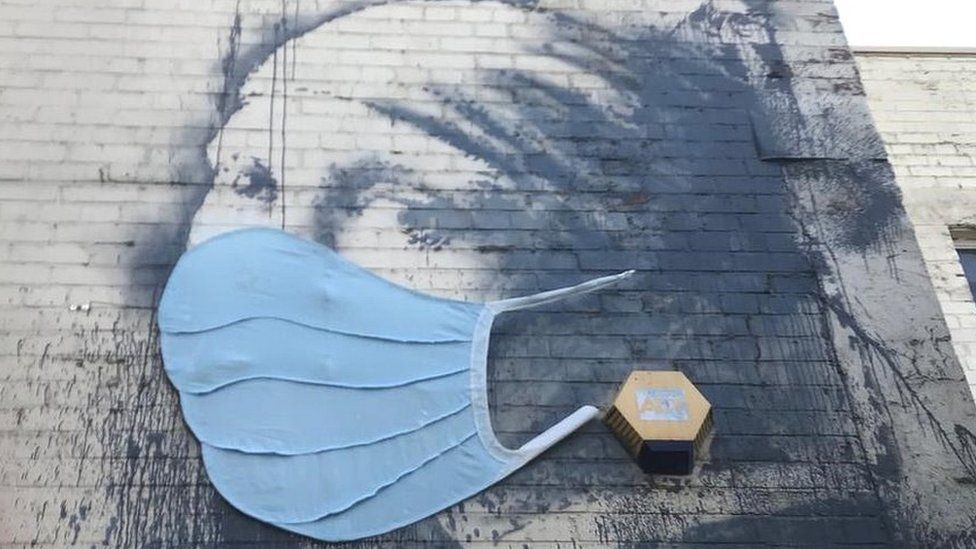
In April 2020, during the first months of the Covid-19 pandemic, another anonymous intervention temporarily transformed the work when a large face mask was attached across the girl's mouth and nose. The addition was not authenticated by Banksy, and its author remains unknown. Nevertheless, the alteration was widely photographed and became an unexpectedly appropriate extension of the work's original logic: just as Banksy had incorporated an existing alarm into Vermeer's portrait in 2014, an unknown participant incorporated the circumstances of the pandemic into Banksy's image six years later.
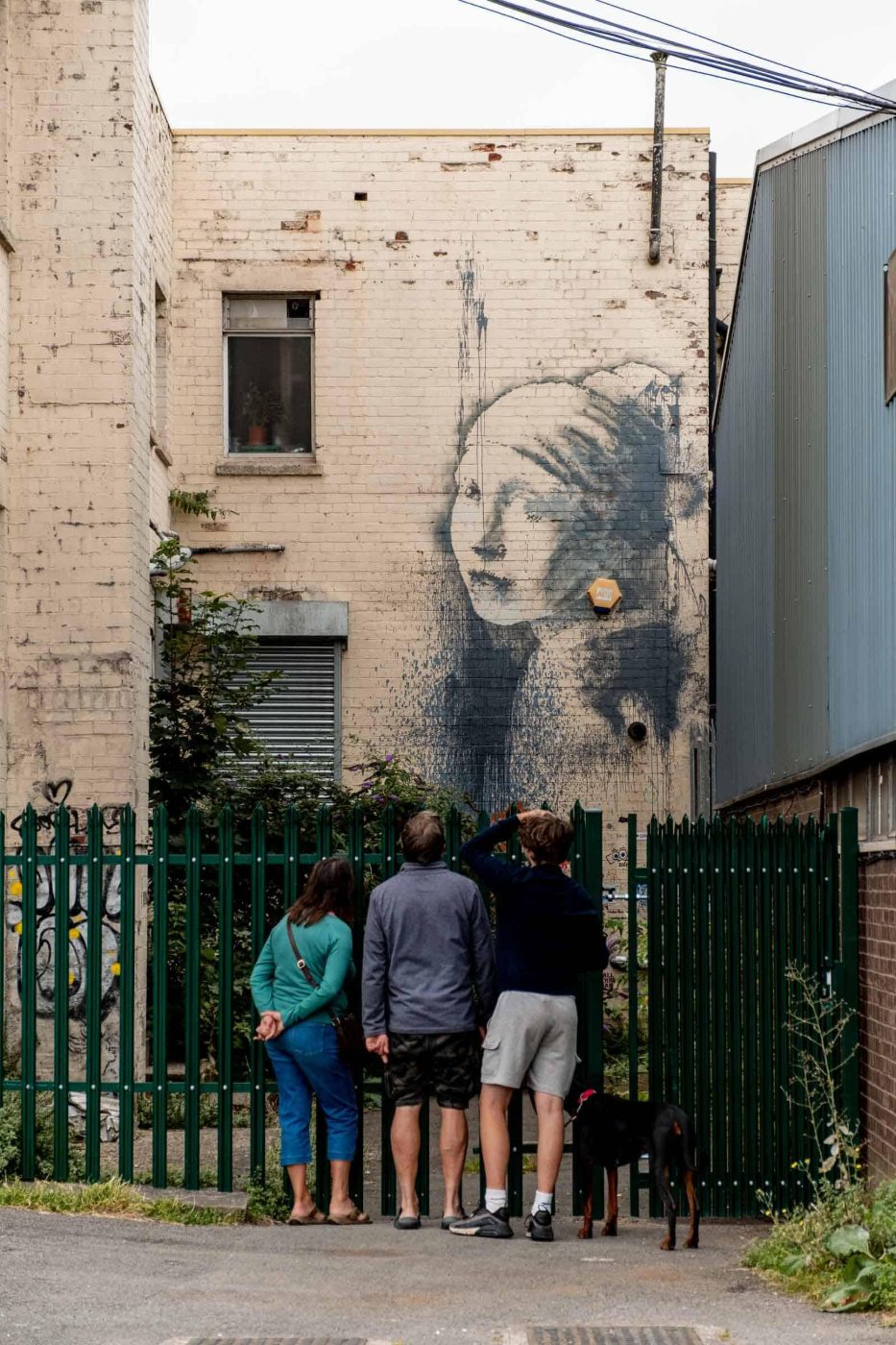
Girl with a Pierced Eardrum remains in situ at Albion Dockyard. Its survival is particularly appropriate for a work whose meaning depends so completely upon its location. Remove the figure from the wall and the yellow alarm ceases to be an earring; remove the alarm and much of the work disappears. Banksy did not simply paint Vermeer's girl on a building. He looked at an ordinary security device already attached to a Bristol wall and saw a pearl.
STAY INFORMED
Receive the latest news, exhibitions, artworks and market updates on Banksy.