
BANKSY
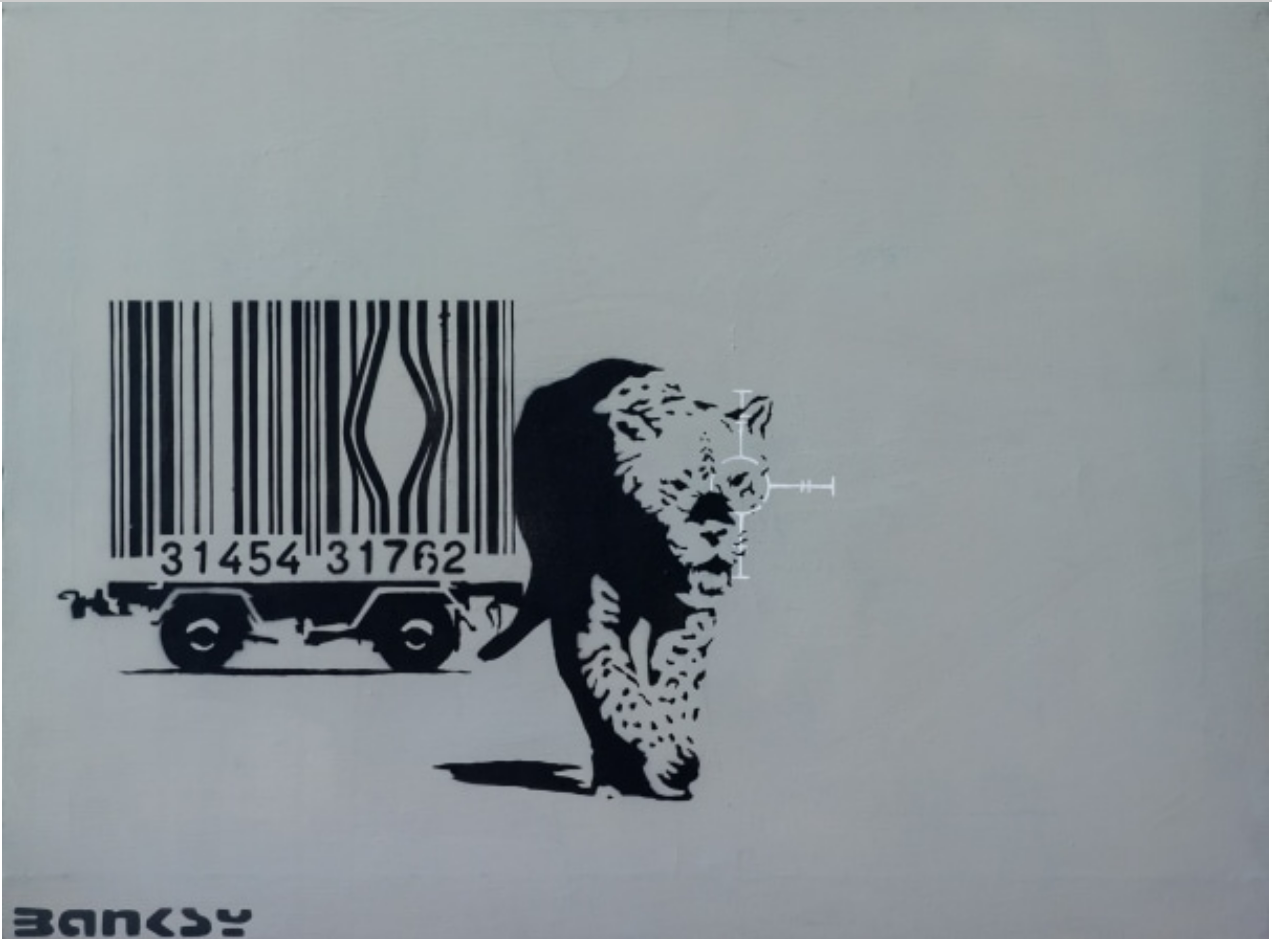
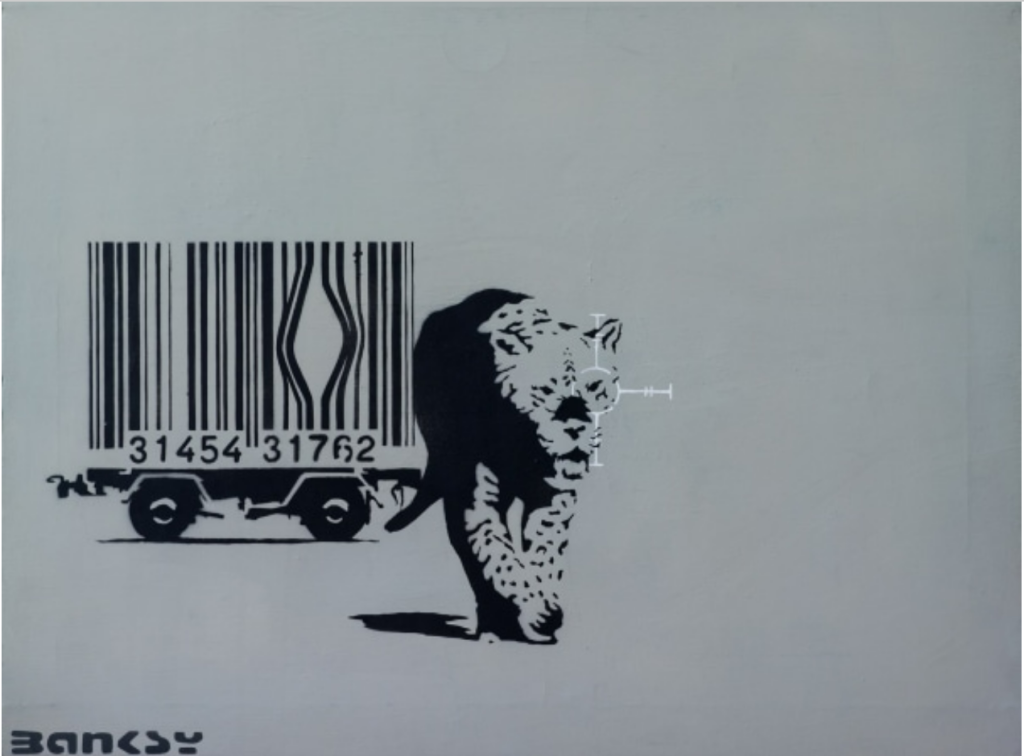
Barcode Leopard, 2002
Spray paint and emulsion on canvas
64.8 x 81.3 cm (25.5 x 32 inches)
This work is from a varied series
Stenciled “BANKSY” lower left
Provenance
Private Collection
Auction History
| Phillips London 3 July 2014 Est.: GBP 40,000 – 60,000 |
|
Executed in 2002, Barcode Leopard is one of Banksy’s earliest and most intellectually sophisticated paintings, introducing themes that would come to define his artistic practice for the next two decades. At first glance, the composition appears disarmingly simple: a leopard strides confidently away from a delivery truck disguised as a supermarket barcode, while a rifle scope locks onto the animal’s head. Yet within this deceptively economical image lies one of Banksy’s most incisive critiques of modern consumer society.
The barcode—perhaps the ultimate emblem of global commerce—reduces every object to a numerical code, transforming individuality into inventory and nature into merchandise. By allowing the leopard to escape from this commercial prison, Banksy inverts the familiar relationship between humanity and the natural world. The animal refuses to remain a commodity. It breaks free from the machinery of production and distribution, reclaiming the freedom that industrial society continually seeks to domesticate.
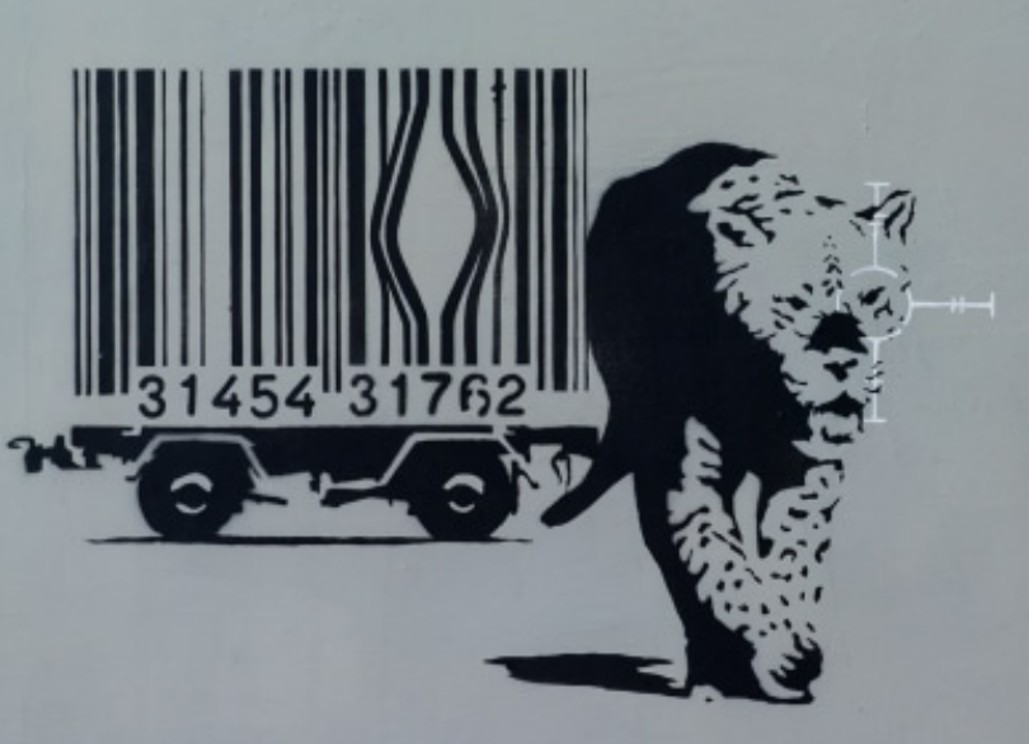
The addition of the rifle sight profoundly enriches the composition. Escape does not guarantee survival. Even once liberated from the marketplace, the leopard immediately becomes the object of another form of domination: human control through violence. Banksy therefore presents two complementary threats to the natural world—commercial exploitation and physical destruction. The work suggests that wildlife is endangered not only by the logic of consumption but also by humanity’s persistent desire to possess, control and ultimately eliminate what remains untamed.
This dual critique distinguishes Barcode Leopard from many contemporary environmental artworks. Rather than depicting ecological devastation directly, Banksy exposes the invisible systems that make such destruction possible. His characteristic wit conceals a deeply unsettling observation: modern society has become remarkably efficient at assigning economic value to everything, including the living world itself.

Visually, the painting demonstrates Banksy’s extraordinary command of the stencil medium. Every unnecessary detail has been stripped away, leaving only the essential elements of the narrative. The restrained monochrome palette, the empty background and the careful balance between negative space and silhouette direct the viewer’s attention entirely toward the central metaphor. Like the strongest political cartoons, the image communicates instantly while rewarding prolonged reflection.
Works from this early series are exceptionally scarce. Unlike Banksy’s later editions, these unique spray-painted canvases were produced in very limited numbers, often with significant variations between examples. They occupy a crucial place within his oeuvre, documenting the period during which the artist refined the visual language that would later make him one of the most recognizable and influential figures in contemporary art.
PLEASE CLICK BELOW TO READ ABOUT BARCODE LEOPARD