BANKSY
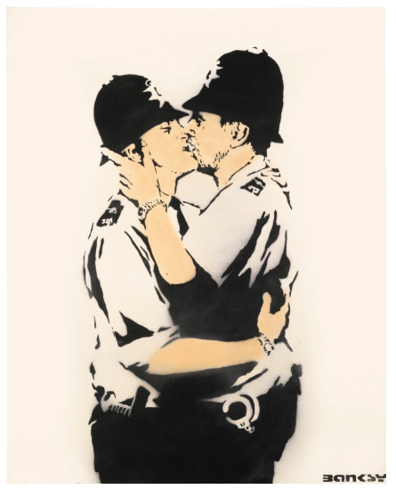
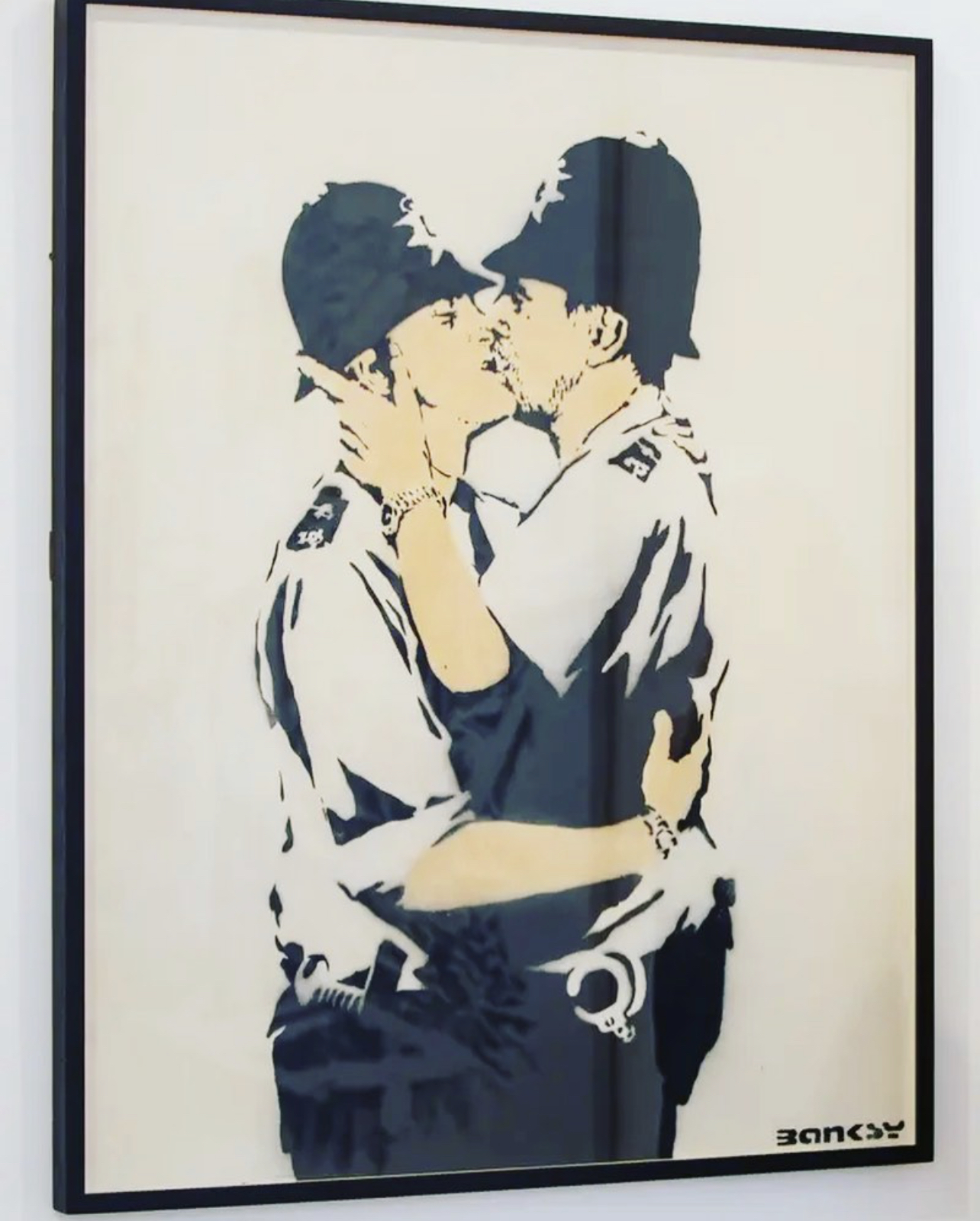
Kissing Coppers, 2005
Spray-paint and emulsion on canvas
121×90 cm (47 1/2 x 35 1/2 inches)
Tagged (on the right-hand overlap)
Signed ‘BANKSY’ and dated ‘2005’ (on the stretcher)
Catalogue Note
Policemen, or “Coppers”, proliferate through Banksy’s work, no doubt due to the illegal pseudo-vandalistic nature of his work, and the guerrilla style he has continued to adopt. Since his earliest days as a graffiti writer in Bristol, they have appeared in his street pieces, sculptures, prints, and paintings as objects of ridicule and targets for derision.
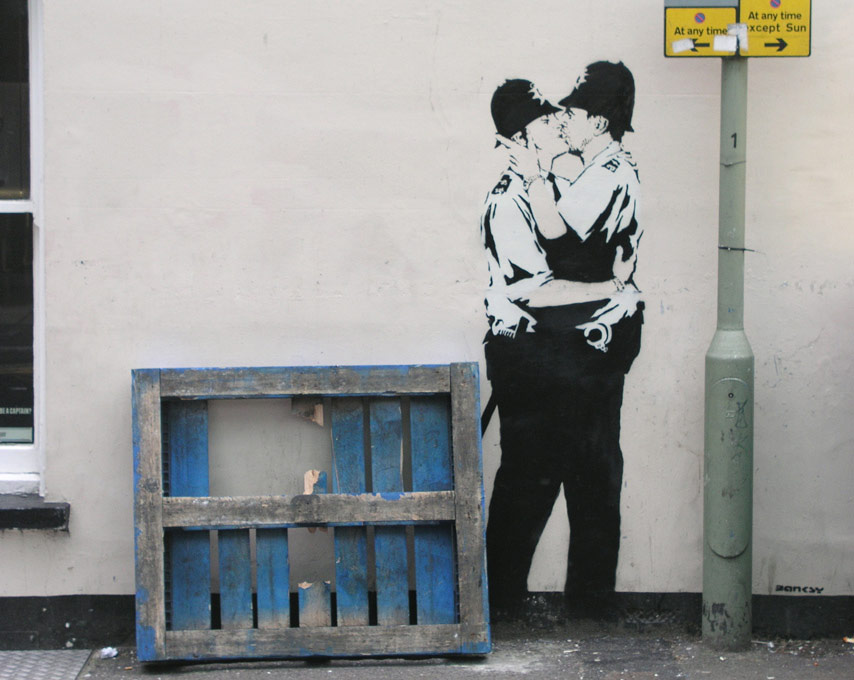
Kissing Coppers started as a street piece, executed by Banksy on the wall of the Prince Albert pub in Brighton in 2004. Brighton is known for its active gay community, and the image became something of an icon for the town: A regular stop on the tourist trail until it was removed from the pub and, since then, the image has been reproduced by various street art imitators around the area. In this local context, the work was seen less as an attempt to mock the police, and more as advocacy for the LGBTQ+ community.
With this arresting vignette, Banksy highlighted the hypocrisy of the British establishment and police force. Although laws against homosexuality were repealed in 1967, it was not fully decriminalized until 2013. Gay marriage was not made legal until 2014. Discrimination was and is endemic throughout society and into the police force. With Kissing Coppers, Banksy holds a mirror up to the social order. He highlights the lines drawn between the establishment and marginalized groups and forces the viewer to question why the image of two men in a passionate embrace still has the capacity to shock.

Courtesy of Christie’s