BANKSY
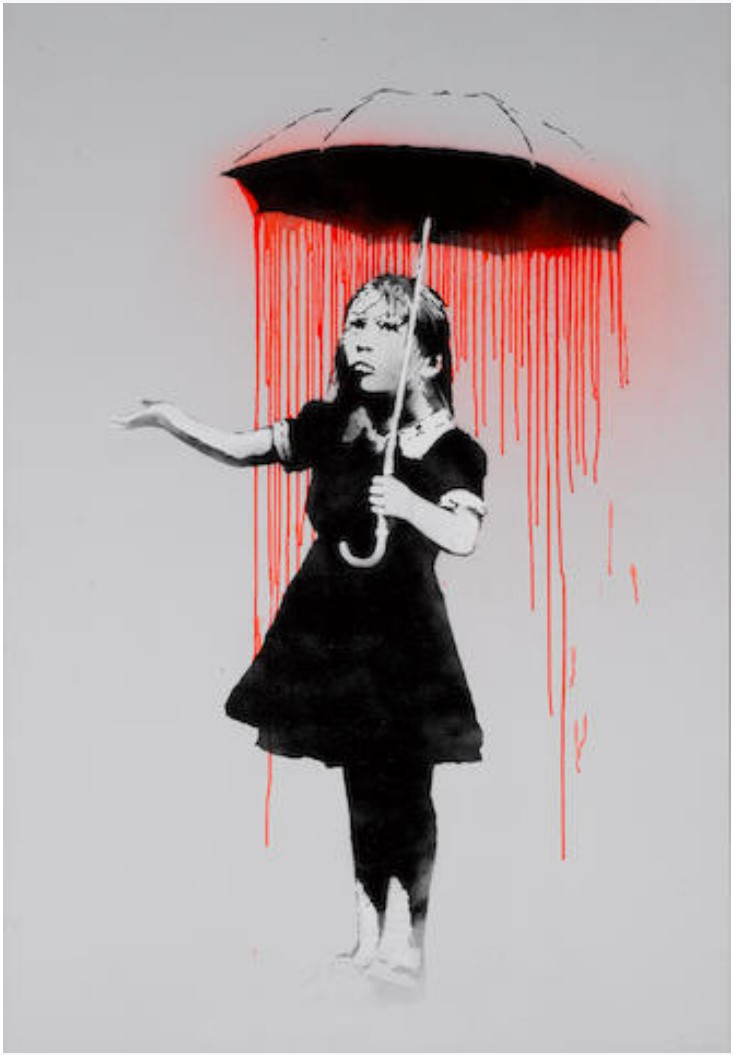
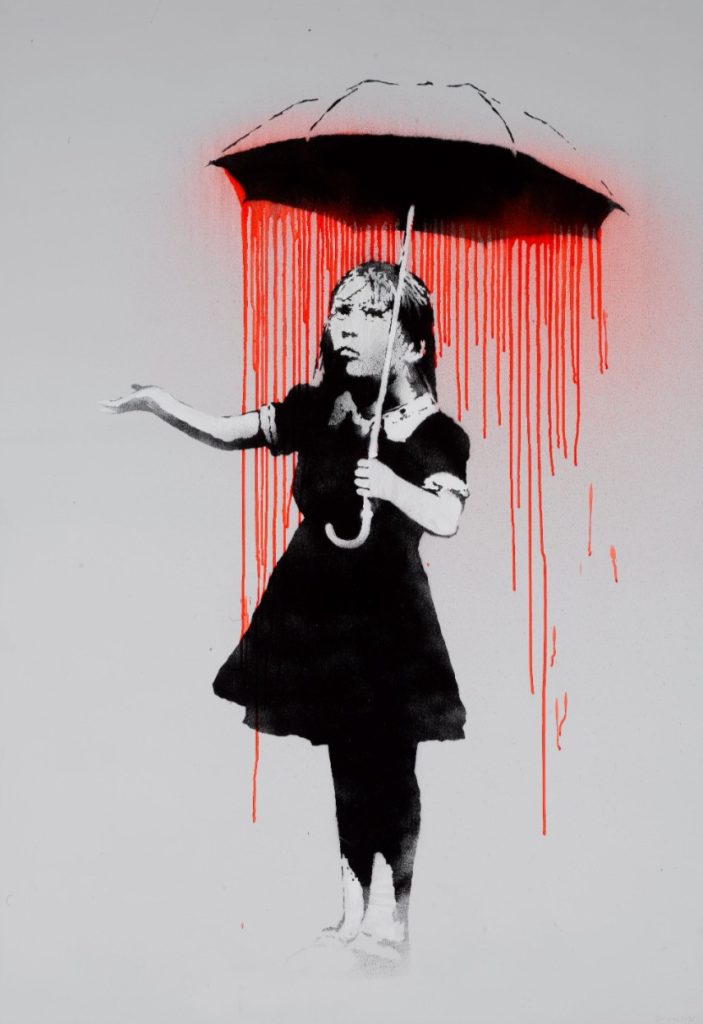
Nola (Red), 2008
Stencil spray-paint and emulsion on canvas
148×102 cm (58 1/4 x 40 3/16 inches)
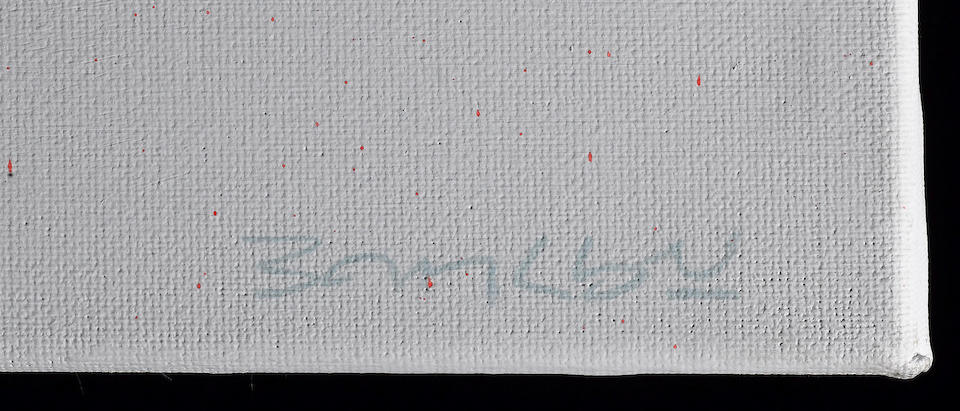
Signed “BANKSY” in ink, lower right
Provenance
A gift from Banksy to the current owner
Auction History
| Bonhams London 13 April 2011 Est.: GBP 50,000 – 80,000 | Price Realized GBP 55,200 / USD 73,515 Bonhams ‘Nola (Red)’, 2008 |
Catalogue Note
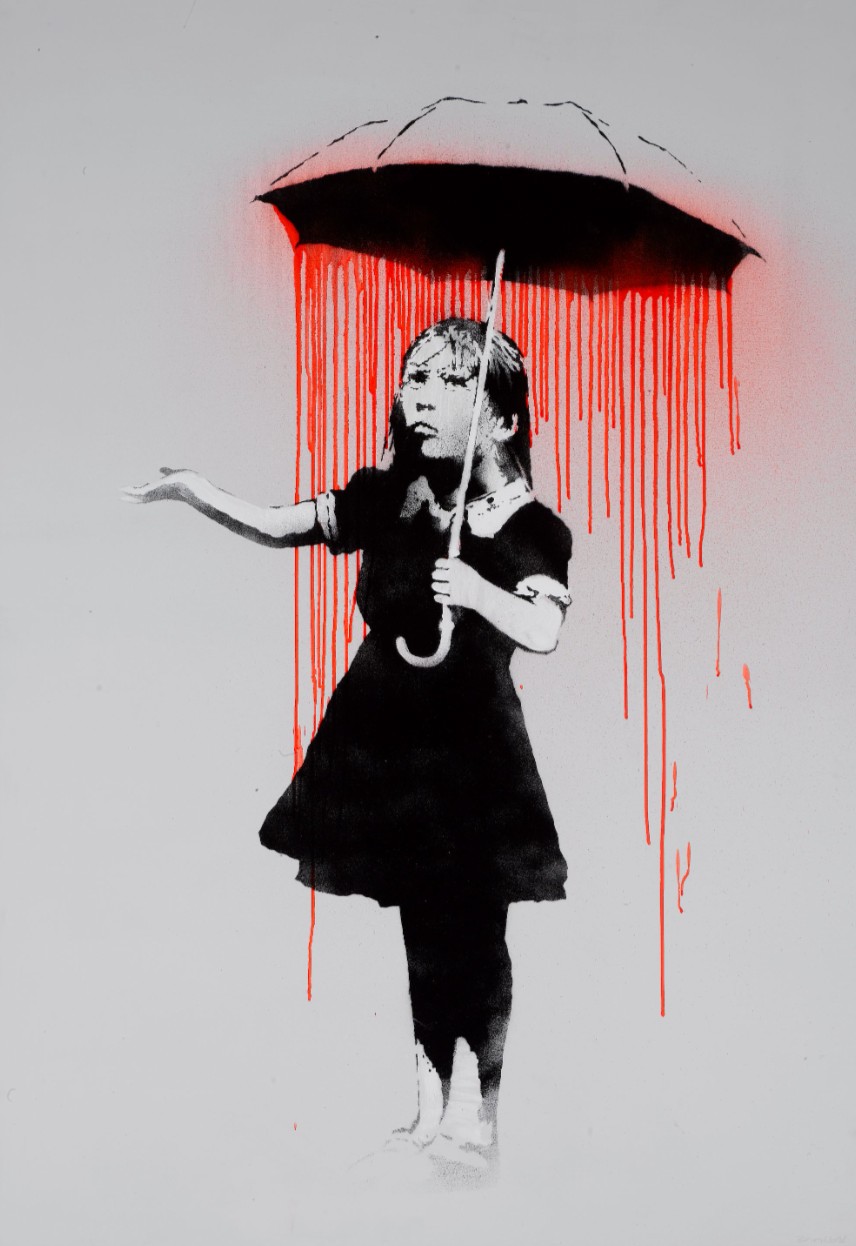
Few of Banksy’s images communicate so much through so little as Nola, also known as Umbrella Girl. Executed in the artist’s unmistakable stencil language, the composition depicts a young girl standing quietly beneath an umbrella, extending one hand to catch the rain. At first glance, the image appears almost poetic, evoking childhood innocence and a simple fascination with the weather. Yet, in one of Banksy’s most devastating visual reversals, the rain is not falling from the sky at all. It pours from inside the umbrella itself.
The paradox is immediate and unforgettable. The very object designed to provide shelter has become the source of the storm. In a single, brilliantly economical gesture, Banksy overturns one of our most deeply rooted assumptions: that protection protects. The umbrella becomes a metaphor for every institution, authority or system that promises security while simultaneously producing the danger from which it claims to shield us.
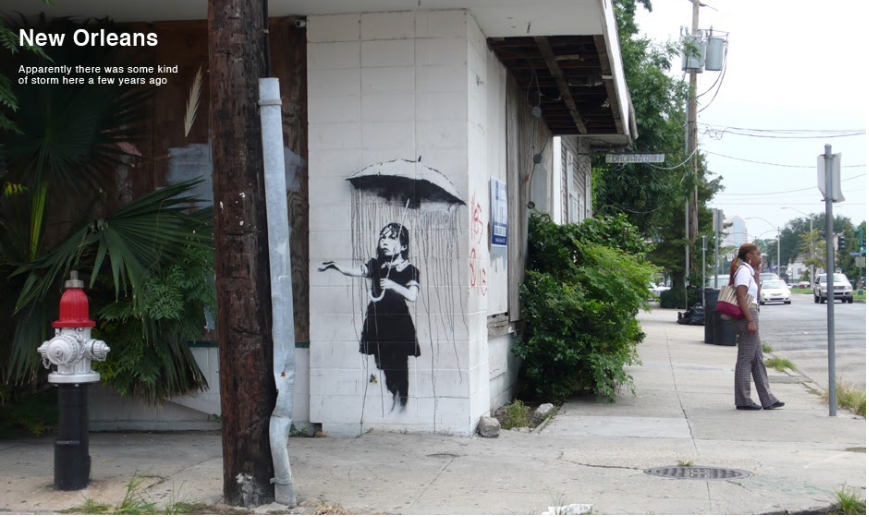
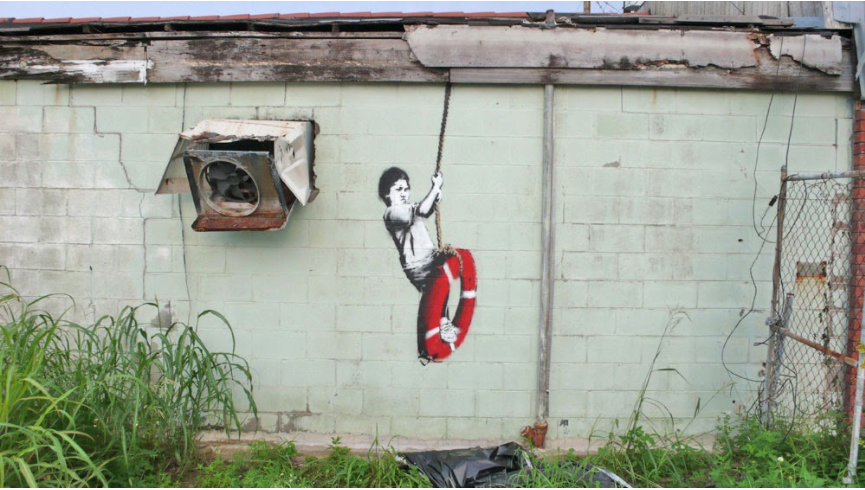
The work first appeared in 2008 on the streets of New Orleans, three years after Hurricane Katrina devastated the city. Much of the international debate that followed the disaster focused not only on the destructive force of nature but on the failures of the institutions responsible for responding to it. Governments, emergency services and public agencies were widely criticized for their slow and inadequate reaction. Against this backdrop, Banksy’s image acquires extraordinary political resonance. The rain no longer represents merely the hurricane itself, but the collapse of the systems intended to protect society when catastrophe strikes.
“Some of the things that are supposed to protect us can also harm us.”
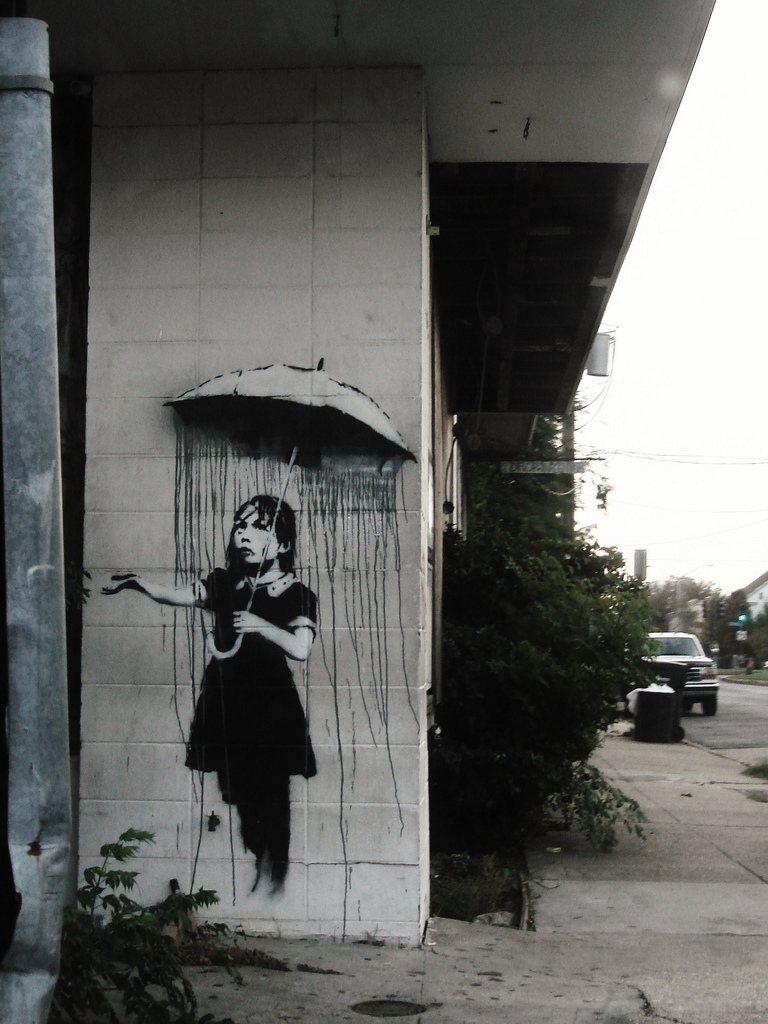
That observation extends far beyond New Orleans. Like much of his oeuvre, Nola avoids attacking a single government or event. Instead, it addresses a universal condition: the gradual erosion of trust in institutions. Whether political, financial, military or social, the structures upon which societies depend increasingly appear capable of generating the very crises they were created to prevent.
The figure of the child reinforces this idea with remarkable emotional restraint. Children occupy a privileged place throughout Banksy’s work because they approach the world without cynicism. Unlike adults, they have not yet learned to question authority. The little girl does not panic or run away. She simply holds out her hand in quiet confusion, attempting to understand why the umbrella has betrayed its most basic purpose. Her innocence allows the absurdity of the situation to emerge without the need for anger or accusation.
This unique canvas introduces another powerful element absent from the original mural. The rain is rendered in an intense, almost visceral crimson. No longer simply water, it evokes blood, trauma and collective suffering. The red transforms a quietly melancholic image into one charged with urgency. It is impossible not to associate the cascading lines with wounds that refuse to heal, making this version one of the most emotionally powerful interpretations of the composition.
Visually, the work exemplifies Banksy’s extraordinary gift for narrative economy. The composition is almost empty. A vast white background isolates the figure, eliminating every unnecessary distraction. There is no city, no floodwater, no ruined buildings. The absence of context becomes its own form of universality. The image could belong to New Orleans, London, Gaza or any place where institutions have failed the people they were meant to serve.
Within Banksy’s oeuvre, Nola belongs to a remarkable sequence of works exploring the betrayal of public trust. Toxic Mary transforms maternal nourishment into poison. Stop and Search shows innocence treated as suspicion. CCTV Angel converts a guardian angel into an instrument of surveillance. Pledge Allegiance to the Flag replaces civic identity with corporate allegiance. In each case, Banksy does not simply criticize power; he questions the fragile assumptions upon which power depends.
The provenance of this particular canvas adds a further layer of significance. Rather than entering the market immediately, it was presented by Banksy as a personal gift to its first owner. Such gestures remain relatively uncommon within the artist’s practice and remind us that, behind the extraordinary auction prices his works now command, Banksy often conceived individual pieces as personal acts of generosity or gratitude before they became highly sought-after collectibles.
Ultimately, Nola is not a picture about rain. It is a picture about trust. The umbrella continues to stand above the girl exactly as it should, fulfilling every outward appearance of its function. Only on closer inspection do we discover that the danger comes not from the world outside, but from the object we believed would keep us safe. Few artists have expressed such a profound political idea with such extraordinary visual simplicity. Like the finest of Banksy’s works, Nola transforms a single impossible image into a timeless meditation on authority, vulnerability and the unsettling realization that our greatest threats sometimes emerge from the very institutions we depend upon most.