A Study in Vulnerability
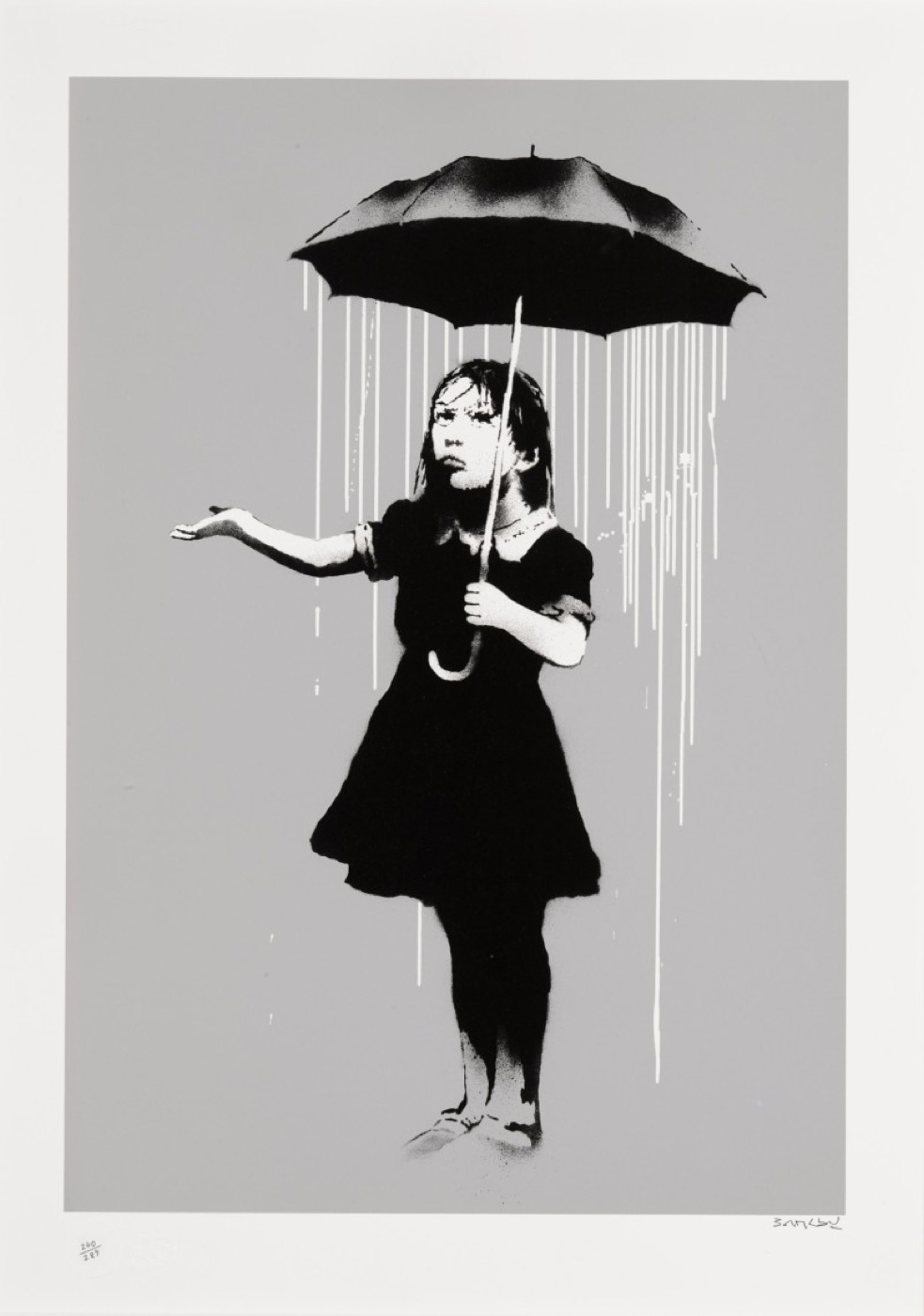
Nola portrays a young girl in black and white, in a dress beneath a black umbrella, holding one hand out and feeling the rain that is pouring down. The background is a block grey as white rain falls from the umbrella. The girl's posture is relaxed, almost neutral, holding the umbrella above her head with quiet assurance. Rain appears to fall, but the critical disruption lies in its origin. Rather than descending from the sky, the water pours from inside the umbrella itself. The object designed to protect becomes the very source of exposure.
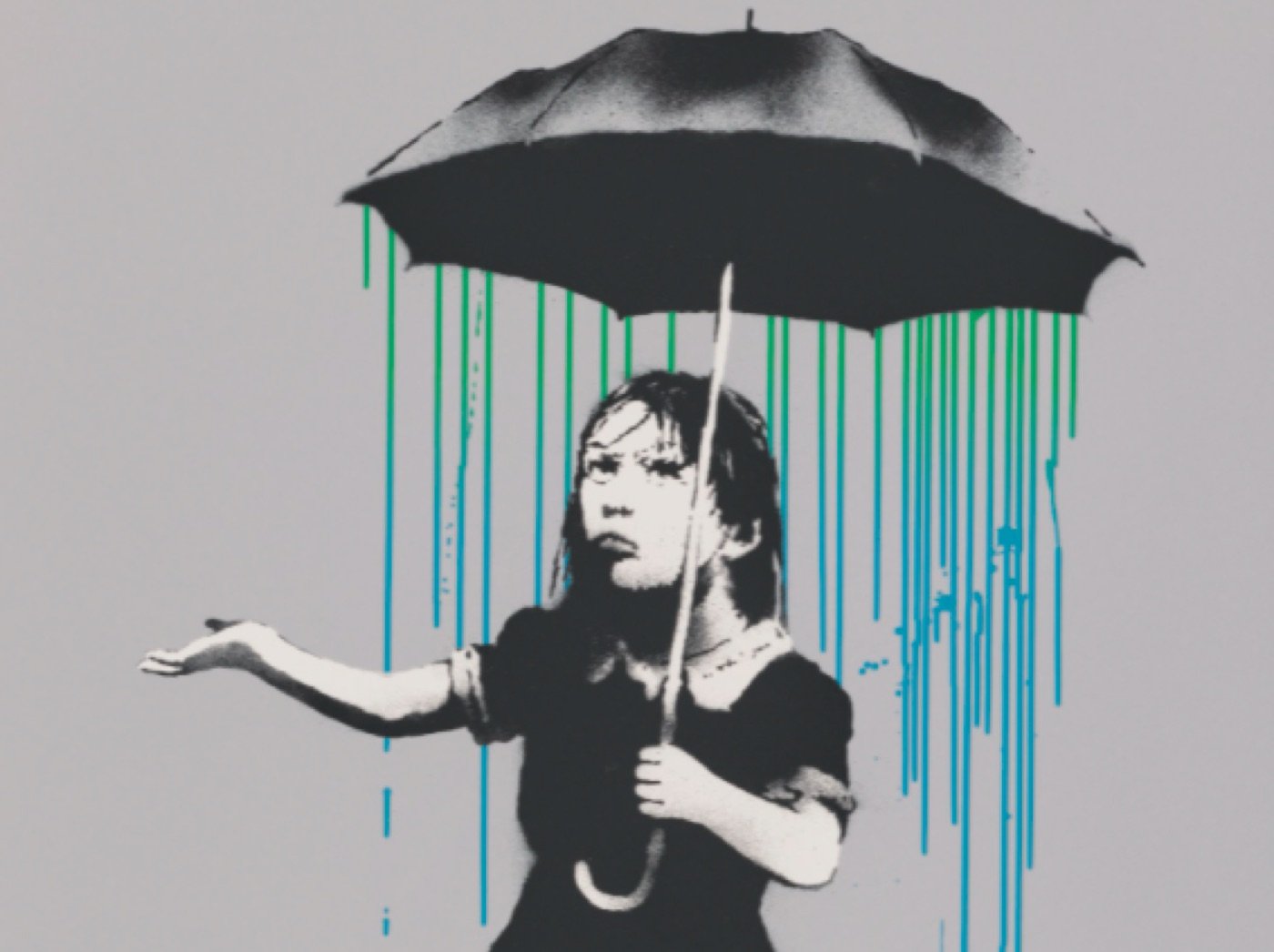
There is no visible panic, no movement, no attempt to correct the situation. The girl remains still, holding onto the gesture of protection despite its failure. The composition is clean, direct, and entirely focused on this contradiction. No additional text accompanies the image. No narrative is imposed. The meaning emerges purely through visual inversion.
Some of the things that are supposed to protect us, can also harm us.
With NOLA, Banksy delivers one of his most restrained yet profoundly affecting images. The composition is disarmingly simple: a young girl stands beneath an umbrella in the rain. At first glance, the scene suggests protection, calm, even a certain innocence. Yet, as the eye adjusts, the logic of the image unravels. The protection offered is illusory. What should shield instead exposes. What should reassure quietly fails.
At its core, NOLA is a meditation on trust placed in systems that no longer function. The umbrella operates as a universal symbol of shelter: simple, reliable, almost instinctive. By reversing its function, Banksy introduces a quiet but devastating idea: protection can become the very mechanism of vulnerability. Importantly, this failure is not dramatic. The umbrella does not break. It continues to exist, to be held, to suggest safety. Its failure is internal, subtle, and therefore more unsettling.
The child reinforces this reading. She embodies innocence, but not fragility in the conventional sense. She does not react. She does not resist. Instead, she accepts the condition without question. This absence of reaction transforms the image into something more profound than a moment—it becomes a state of being.
The work suggests that systems we trust may already be compromised. Even if their failure may not be immediately visible and yet we continue to rely on them. Banksy offers no resolution. Only a quiet, sustained contradiction.
New-Orleans after Hurricane Katrina
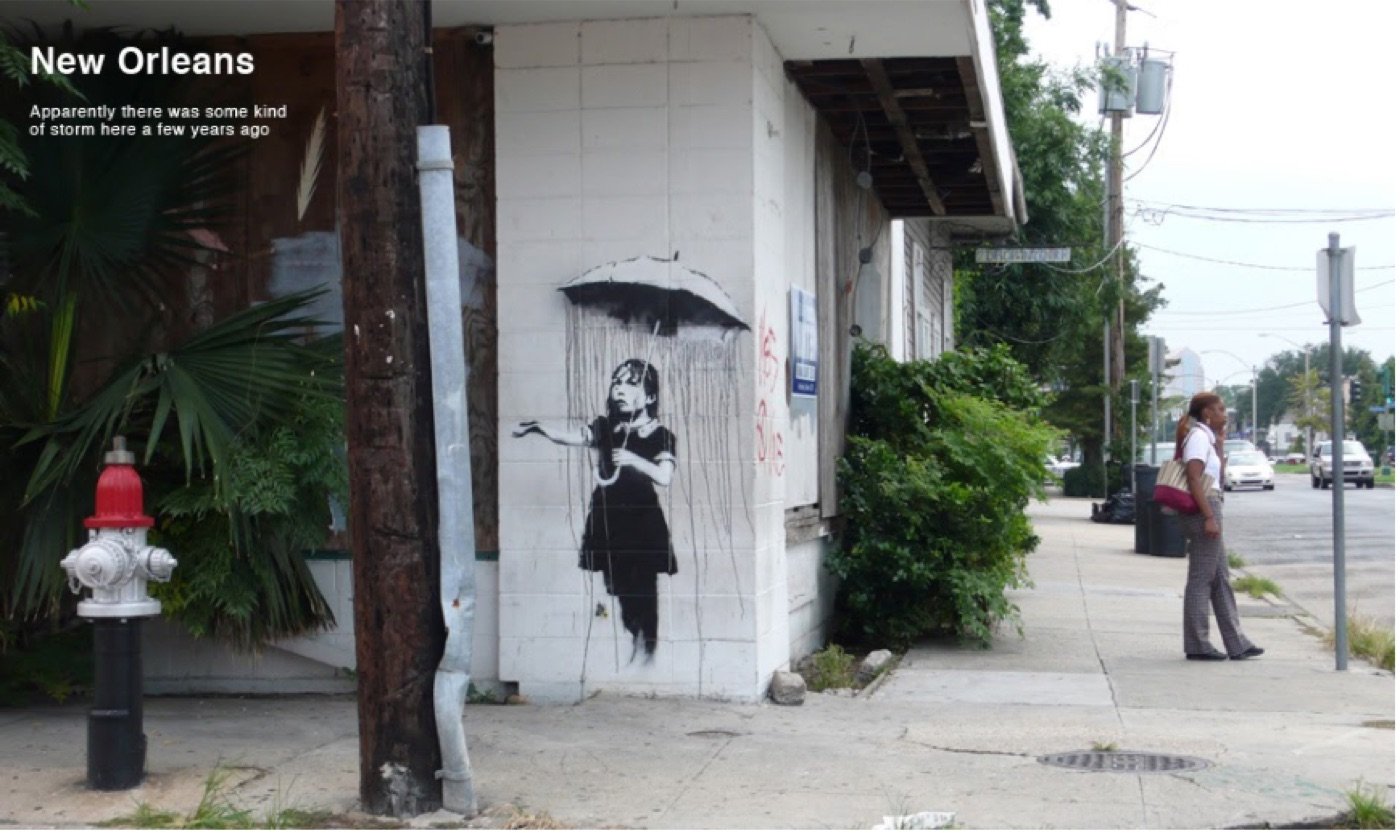
NOLA was created in New Orleans in 2008, a city still deeply marked by the aftermath of Hurricane Katrina. Indeed, the devastating events of Hurricane Katrina were amplified by failure of the flood defenses that had been designed to protect the citizens from such a disaster. The disaster exposed not only physical vulnerability but also systemic failure: failures of infrastructure, governance, and protection.
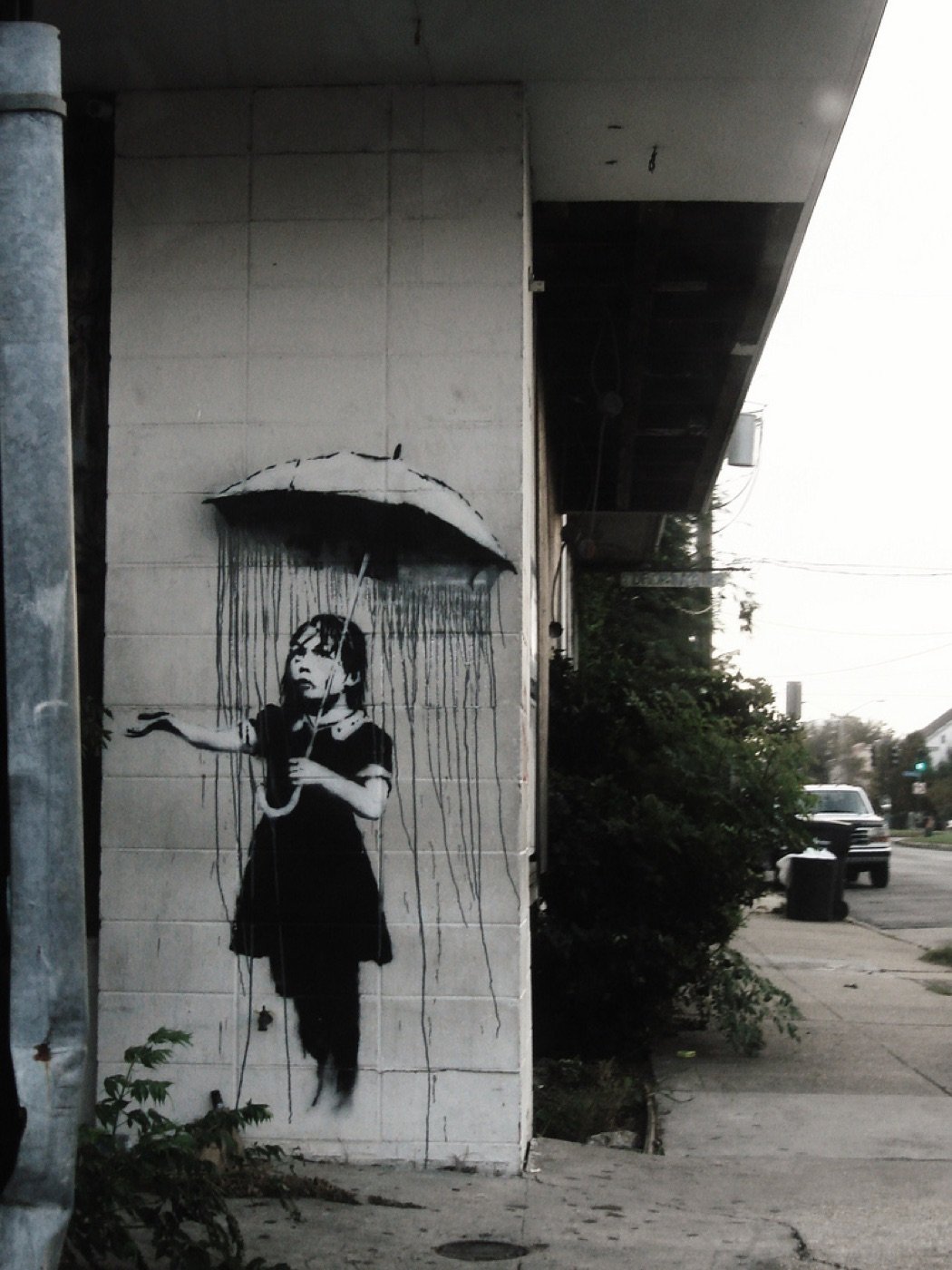
Within this context, the image takes on a precise and grounded resonance. The umbrella's quiet malfunction mirrors the broader breakdown of structures meant to safeguard the population. The child becomes a silent presence within this reality, embodying those left exposed in the wake of institutional inadequacy.
Childhood as Silent Witness
The use of a child is deliberate and consistent with Banksy's broader visual language. Here, innocence is not dramatized. It is simply placed within a flawed environment. The girl does not question, does not adapt, does not resist. She holds the umbrella as one should, maintaining the gesture even when its purpose has collapsed.
She becomes a witness rather than an actor, a presence rather than a narrative, and, more importantly, a quiet embodiment of vulnerability within systemic failure. This restraint gives the work its emotional precision.
NOLA stands among Banksy's most refined works precisely because of its simplicity. It does not rely on overt symbolism or textual guidance. Its power lies in a single, perfectly executed inversion. The image continues to resonate because it speaks to conditions that extend beyond its immediate context: the fragility of protective systems, the normalization of dysfunction, and the quiet persistence of trust despite evidence of failure. It is not an image of crisis. It is an image of acceptance.
A girl stands beneath an umbrella. She holds it correctly. She trusts it completely. And yet, the rain comes from within. Banksy does not depict catastrophe. He reveals something more unsettling: a world where protection still exists but no longer protects.
Release History
Nola was released in late 2008 as a limited edition of 289 prints with White Rain. The edition size of 289 relates to the age of the city of New Orleans where this visual first appeared. During the initial on sale – they experienced technical difficulties whereby Pictures on Walls accidentally oversold the edition – leaving them with not enough prints to fill the orders they accepted. Shortly after the mishap, they created a Grey Rain edition of 63 prints, and offered the right of first refusal to those customers who didn't get a White Rain edition due to the oversell.
Two colorways have appeared since the print was originally released: 32 in Orange Rain and 31 in Yellow Rain, neither of which were offered to the public for sale.
Banksy also released a rare set of Nola Artist's Proof editions of 66 that came in 6 unique variations of Multicolor Rain, reserved for VIP collectors. All Nola prints are signed and numbered by the artist.
Nola Colorways
STAY INFORMED
Receive the latest news, exhibitions, artworks and market updates on Banksy.