BANKSY
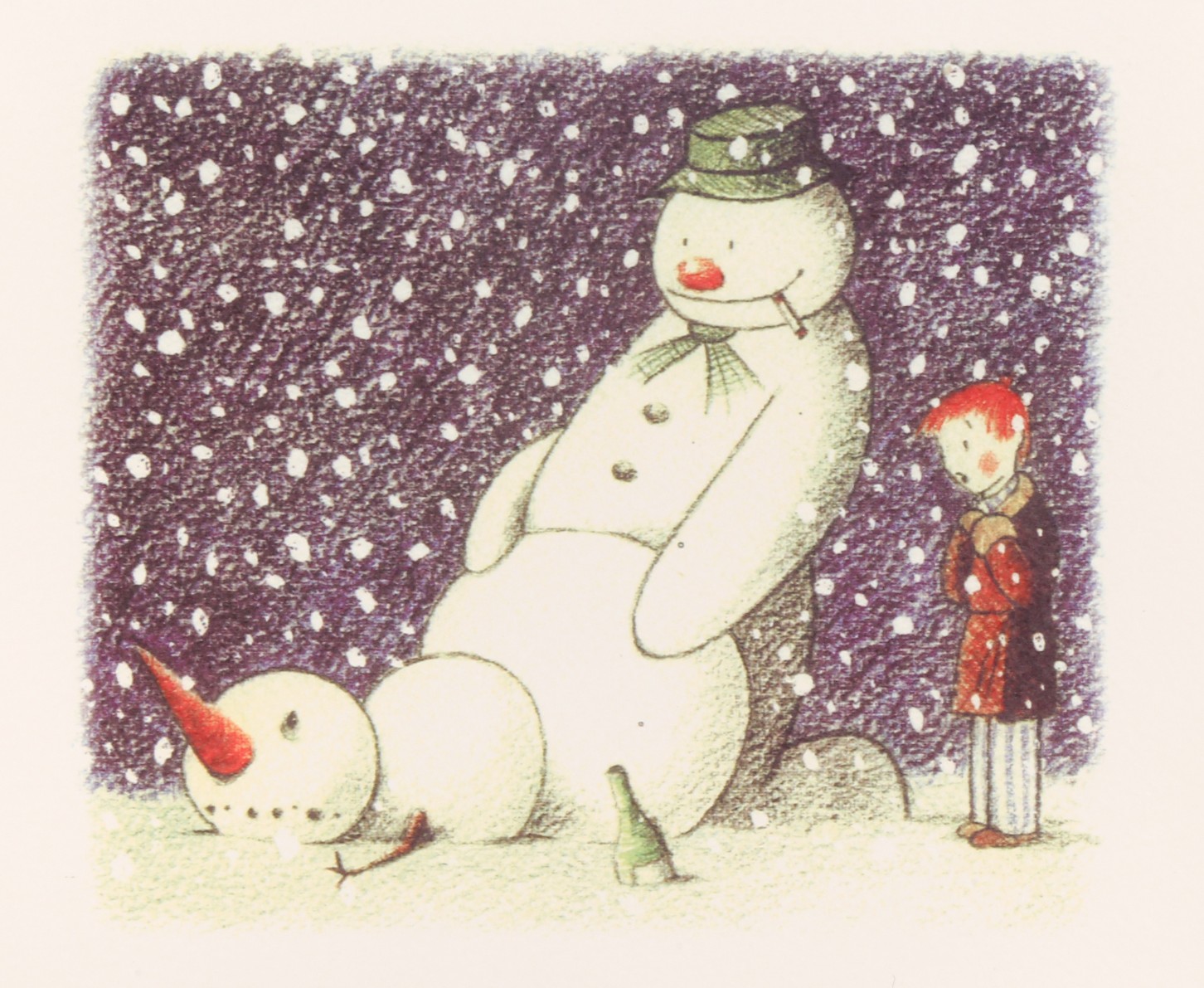
Rude Snowman Christmas Card, 2005
Inkjet print / offset lithograph on folded Christmas card (depending on issue)
Approximately: 14.5 × 17.5 cm (5.7 × 6.9 inches)
With printed Banksy tag on verso
Designed for Santa’s Ghetto, London, 2005
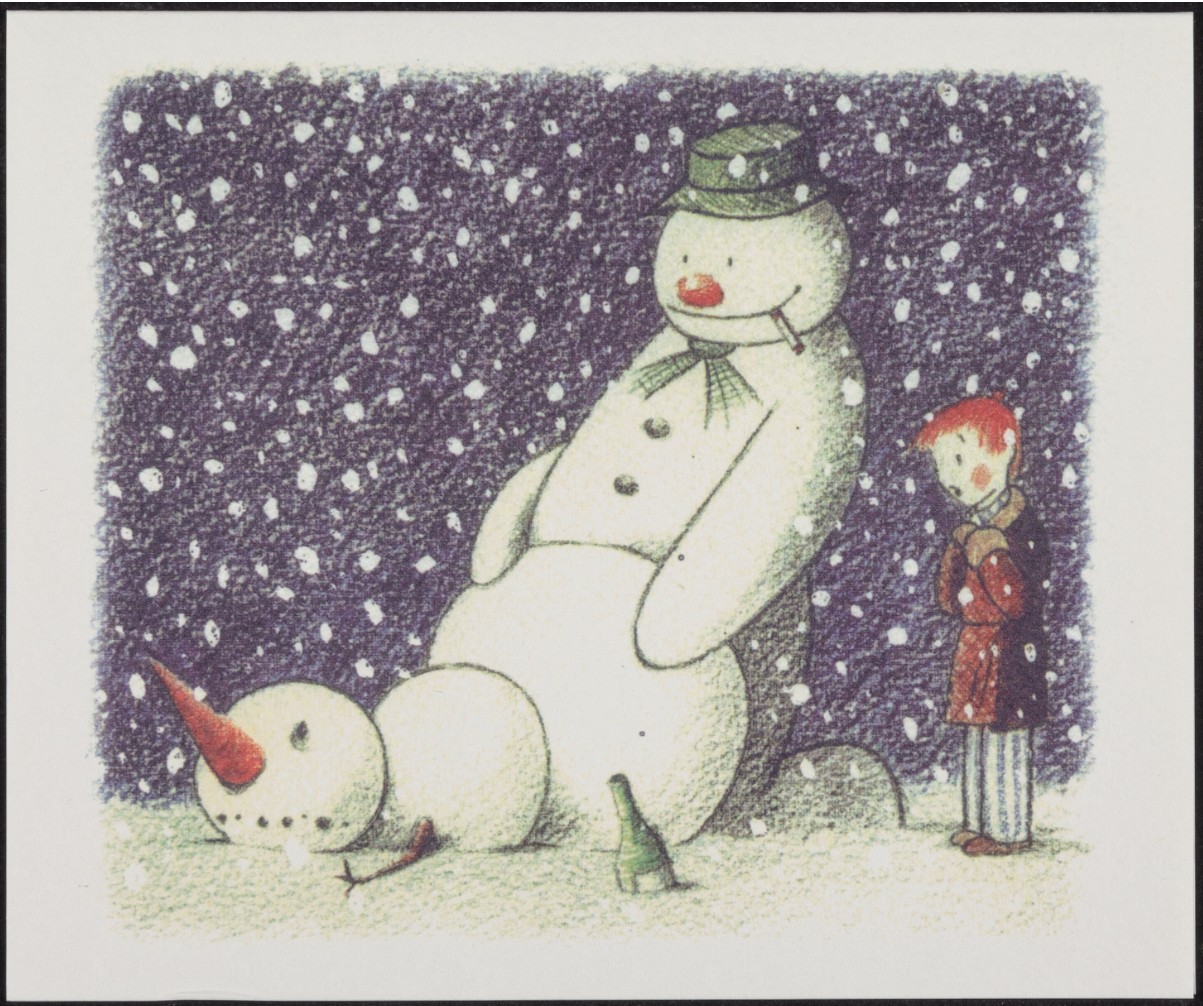
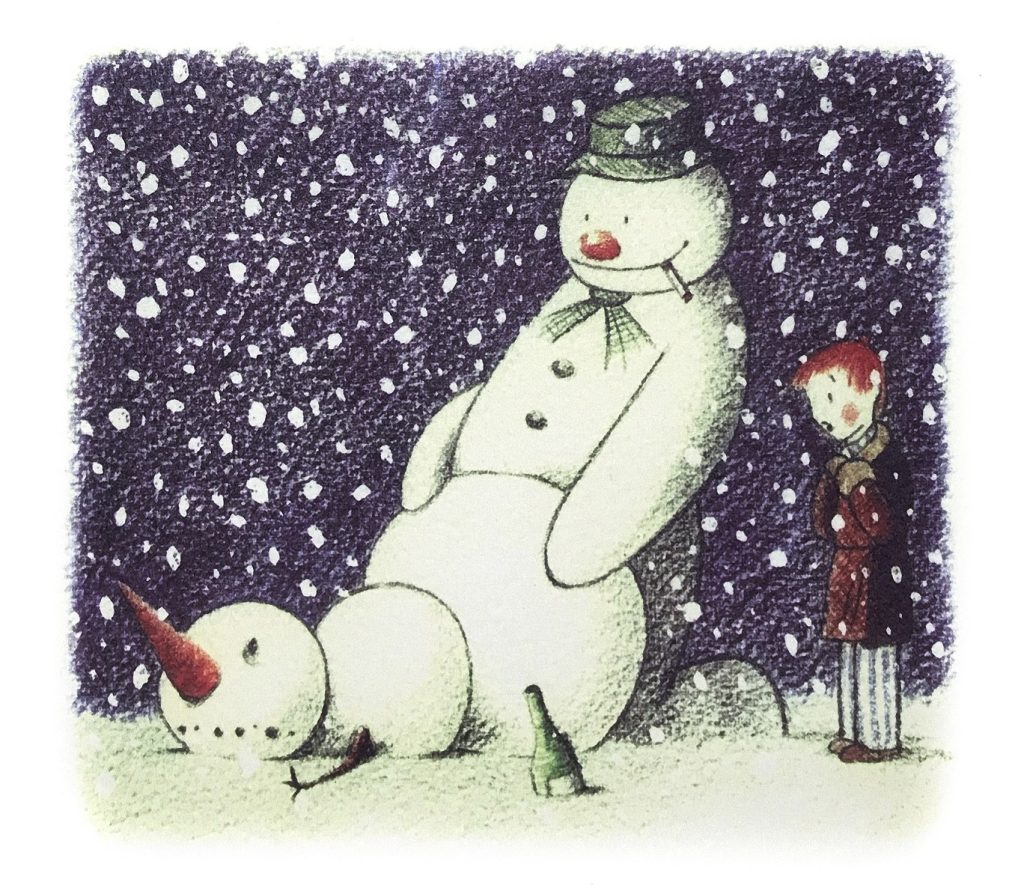
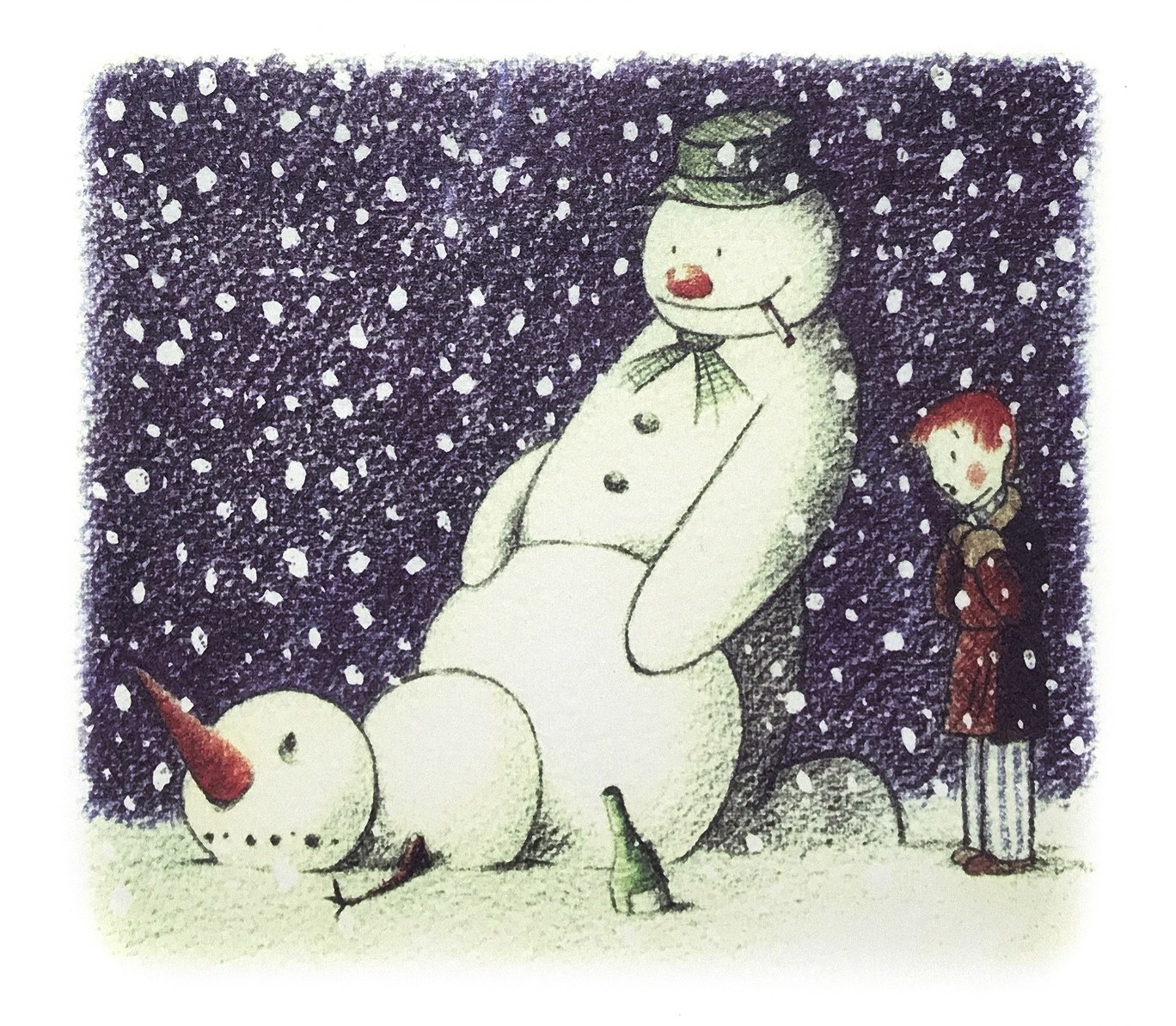
At first glance, Rude Snowman appears to be an innocent Christmas greeting. A cheerful snowman sits contentedly in a snowy landscape while a young child watches quietly as snowflakes drift through the night. The palette is soft and nostalgic, evoking the familiar visual language of traditional British Christmas cards and children’s storybooks. Everything about the composition initially suggests warmth, innocence and festive sentiment. Only after a closer look does the image reveal its true nature.
The snowman’s detached head lies in the foreground between his legs, while the elongated carrot nose transforms the composition into an unmistakably suggestive visual joke. What first appeared to be a wholesome winter scene suddenly becomes mischievous, irreverent and faintly absurd. The humor is not immediately apparent; it relies entirely on delayed recognition. Like many of Banksy’s finest visual ideas, the work asks the viewer to experience the image twice—first through innocence, then through revelation. The simplicity of the drawing is deceptive. With only a handful of elements, Banksy constructs a visual punchline whose effectiveness depends entirely on perception, timing and the viewer’s willingness to look again.
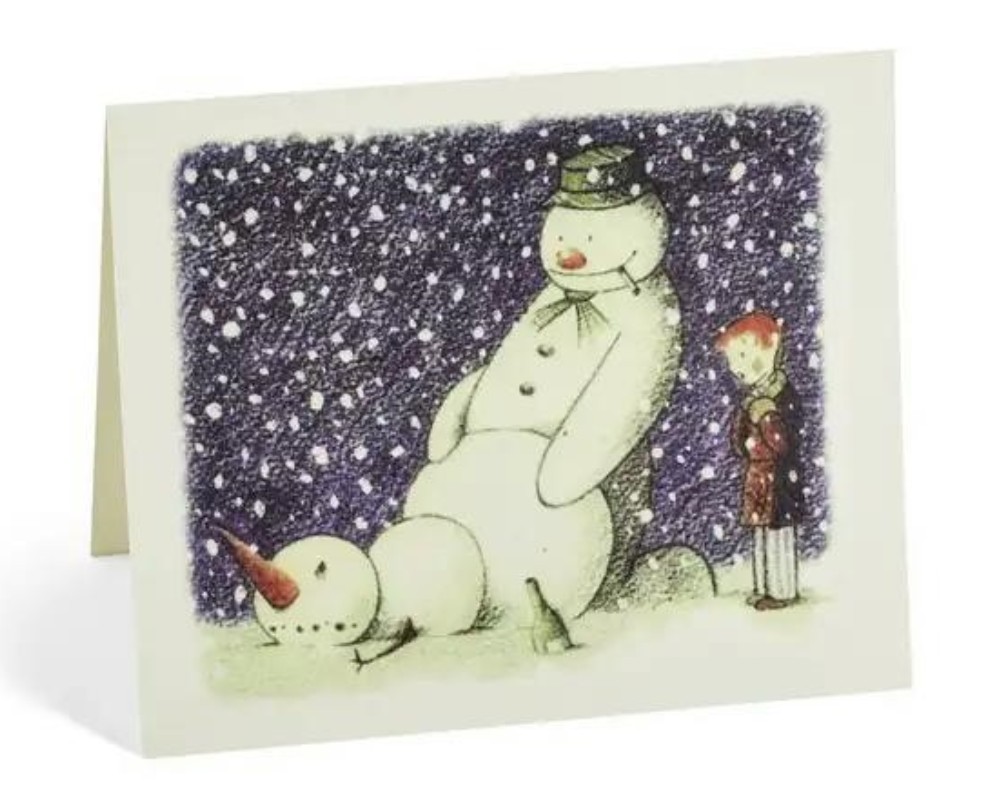
Rude Snowman was produced for Santa’s Ghetto, Banksy’s now legendary Christmas pop-up project, which operated annually between 2002 and 2007 in various locations across London before culminating in Bethlehem in 2007. Conceived as a temporary “art concept store,” Santa’s Ghetto deliberately parodied the commercial excesses of the Christmas shopping season while simultaneously making original artworks, prints, books and artist-designed merchandise available to the public at accessible prices.
Unlike Banksy’s signed editions or Pest Control-authenticated prints, the Christmas cards were never intended to be high-value art objects. They belonged to a category of ephemeral printed material: objects designed to circulate, be mailed, displayed briefly during the festive season and ultimately discarded. Their modest nature was precisely the point. Today, this apparent disposability has become one of their greatest strengths. Because relatively few examples survived in pristine condition, these cards have evolved into highly sought-after pieces of Banksy ephemera, offering collectors a rare glimpse into one of the most experimental and playful chapters of the artist’s career.
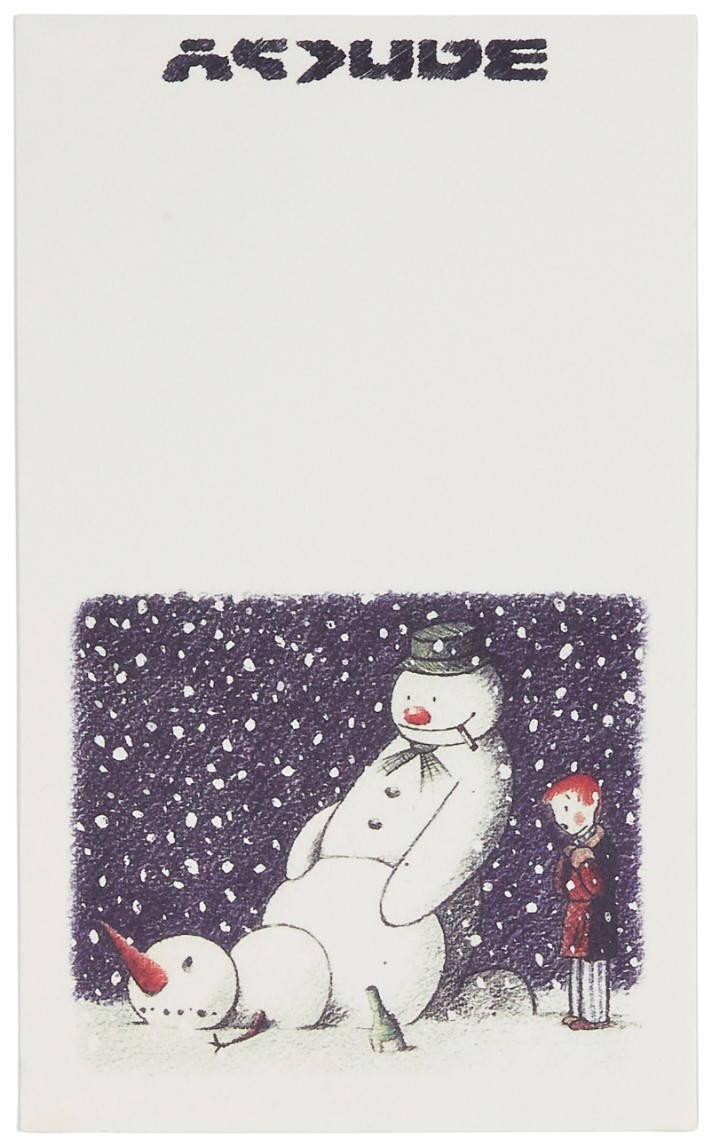
Few artists have mastered the art of visual misdirection as effectively as Banksy. Rude Snowman begins by inviting the viewer into a scene of comforting familiarity before quietly undermining every expectation. The joke itself is almost juvenile, yet its construction is remarkably sophisticated. Banksy does not rely on explicit imagery or provocation; instead, he allows the viewer to complete the joke mentally. The humor exists not within the drawing itself but within the precise moment of recognition. This strategy echoes one of the defining characteristics of Banksy’s practice. Rather than confronting his audience directly, he frequently employs humor as a mechanism of delayed discovery. Whether addressing war, consumerism, surveillance or popular culture, his images often appear straightforward before revealing deeper—or simply more uncomfortable—meanings.
In Rude Snowman, the political dimension gives way to something more universal. The work playfully exposes the fragility of innocence itself. Children may see nothing more than a snowman. Adults inevitably discover the joke. The artwork therefore becomes a subtle meditation on perception, reminding us that meaning is never entirely contained within an image but is completed by the viewer’s own experiences and assumptions.
Although modest in format, Rude Snowman occupies a surprisingly important place within Banksy’s artistic development. Throughout his career, Banksy has consistently challenged conventional distinctions between high art and everyday objects. Long before projects such as Gross Domestic Product blurred the boundaries between commercial merchandise and conceptual art, Santa’s Ghetto had already begun questioning the hierarchy of artistic media. Christmas cards, postcards, stickers, placards and novelty items became legitimate vehicles for artistic ideas.
In this sense, Rude Snowman belongs to the same conceptual lineage as the Di-Faced Tenner, the Santa’s Ghetto merchandise, and later GDP products. None of these objects sought prestige through traditional artistic formats. Instead, they infiltrated ordinary consumer culture, transforming familiar products into unexpected carriers of satire and critical reflection.
The card also reveals another essential aspect of Banksy’s personality. While much of his public reputation rests on politically charged murals addressing war, authority and capitalism, works such as Rude Snowman demonstrate that his humor frequently embraces the ridiculous, the childish and the irreverent. Beneath the sharp political commentator lies an artist who delights in visual pranks and schoolboy humor, recognizing that laughter can often be as disarming as protest.
Viewed today, Rude Snowman functions as far more than an amusing Christmas card. It represents one of the earliest manifestations of Banksy’s determination to dissolve the boundary between artwork and everyday object. By transforming an inexpensive seasonal greeting into an enduring collectible, he challenged the assumption that artistic significance depends upon scale, rarity or traditional mediums. The card’s apparent triviality is precisely what grants it lasting importance.
Its greatest achievement, however, lies elsewhere. In a single humorous image, Banksy demonstrates a principle that would define much of his subsequent career: the most ordinary objects often become the most effective vehicles for extraordinary ideas. What begins as festive nostalgia quietly evolves into an exercise in perception, humor and conceptual wit, reminding us that the strongest artistic interventions frequently arrive disguised as the simplest of jokes.
Auction Results
Estimated: GBP 200-300
GBP 630 / USD 819
BANKSY (BRITISH B.1974)
Rude Snowman, 2003
Offset lithographic card in colors
with printed Banksy tag verso
Produced for the Santa’s Ghetto pop-up, London
Estimated: GBP 300-500
GBP 262 / USD 335