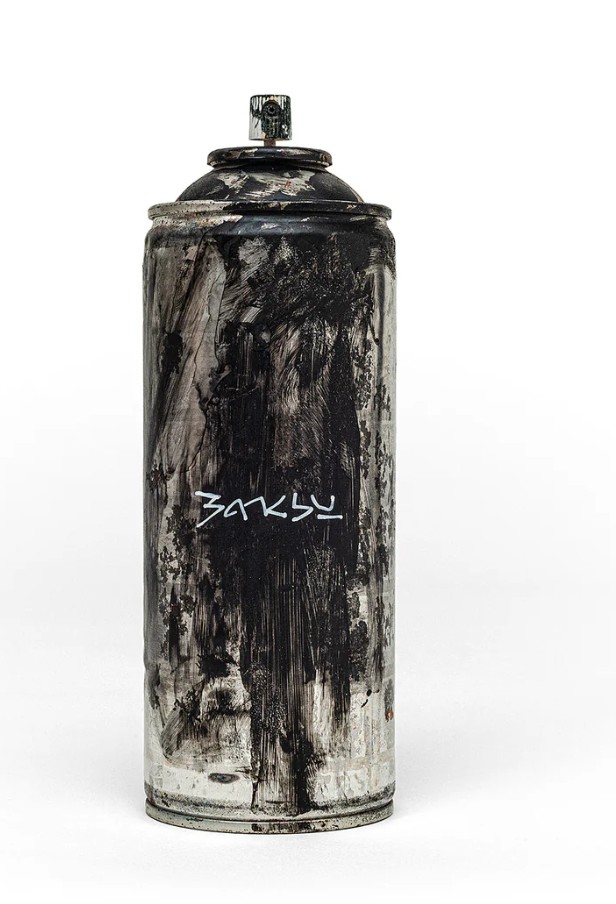
Banksy™ Black
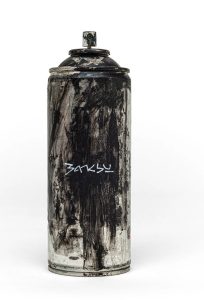
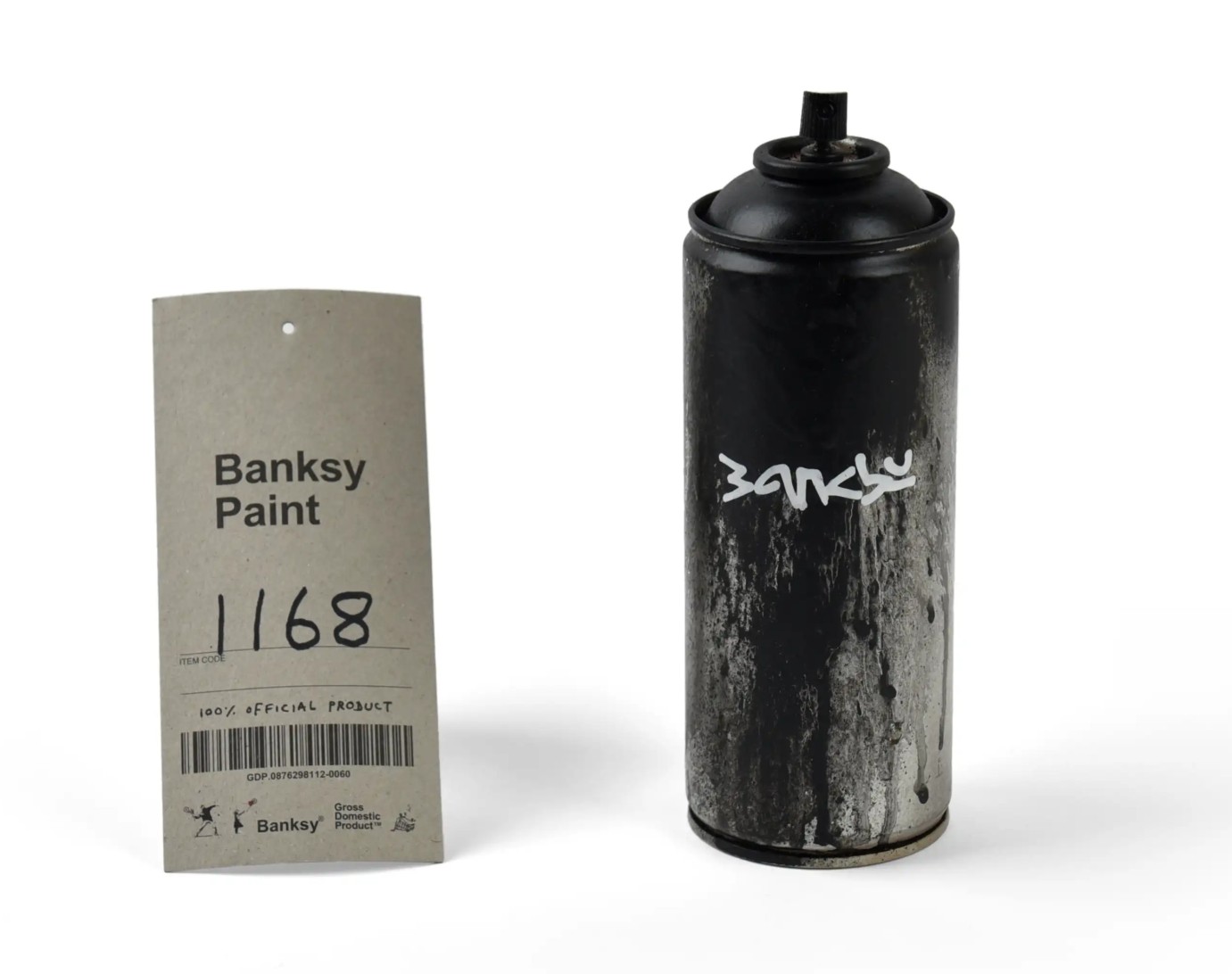
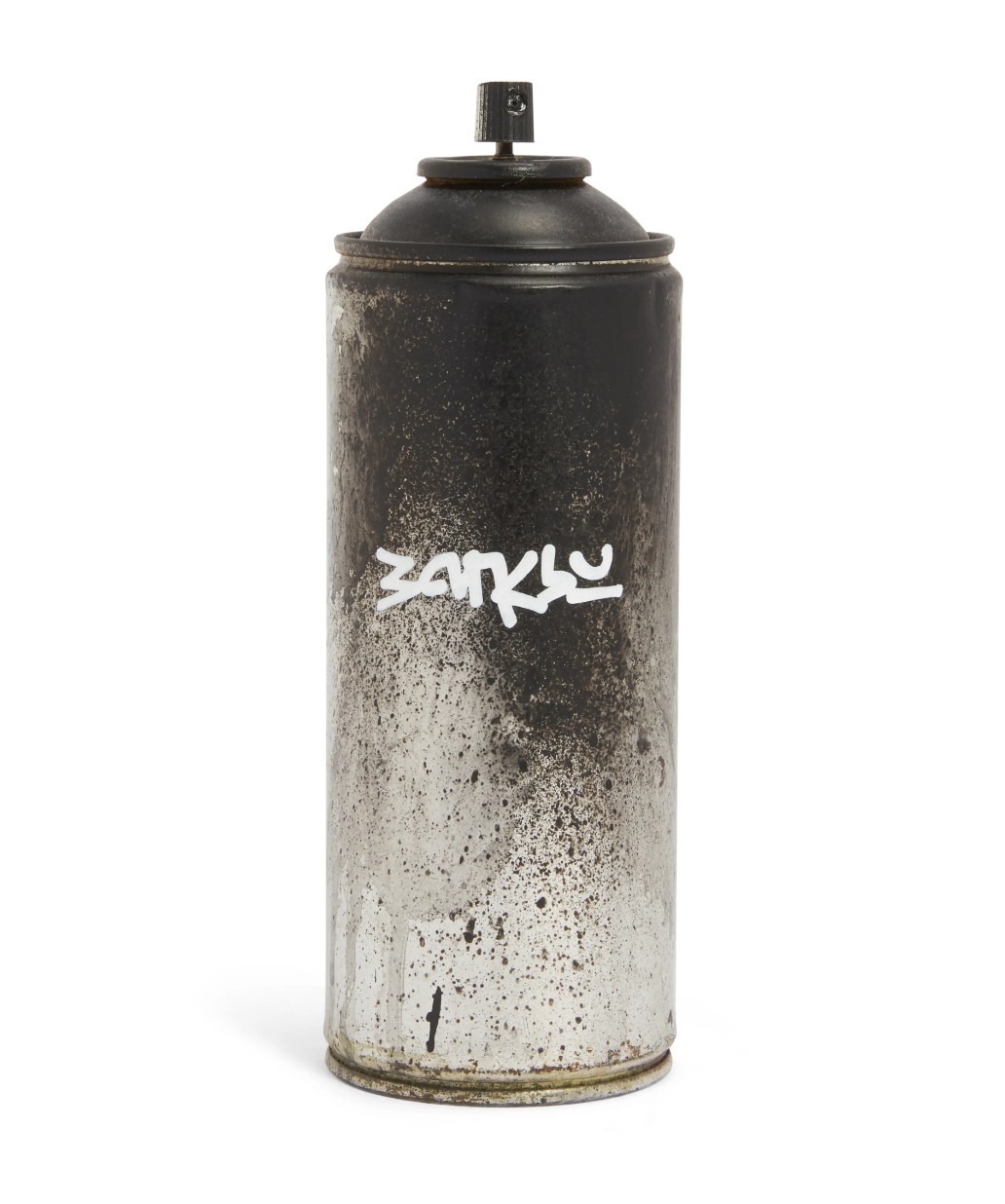
Medium: Metal cylindrical can with overspray in black
Year: 2019
Height: 19 cm
Edition: circa 50 (unnumbered)
Signed in white paint
Comes with Banksy Paint Card
At first glance, Banksy™ Black appears almost absurd in its simplicity. It is an old, partially used spray-paint can stripped of its original label and signed with Banksy’s familiar white tag. Yet this humble object is transformed into something altogether different. The ordinary tool of the street artist becomes the artwork itself, blurring the boundary between artistic process and finished creation.
Released in 2019 through Banksy’s Gross Domestic Product project, the object was presented with the artist’s characteristic humor. The accompanying product description insisted that it was not merely an old can of paint bearing Banksy’s signature, but rather “trademarked Banksy paint” and “an exciting new addition to the world of branded wall coverings.” The joke, of course, is that it is precisely both.
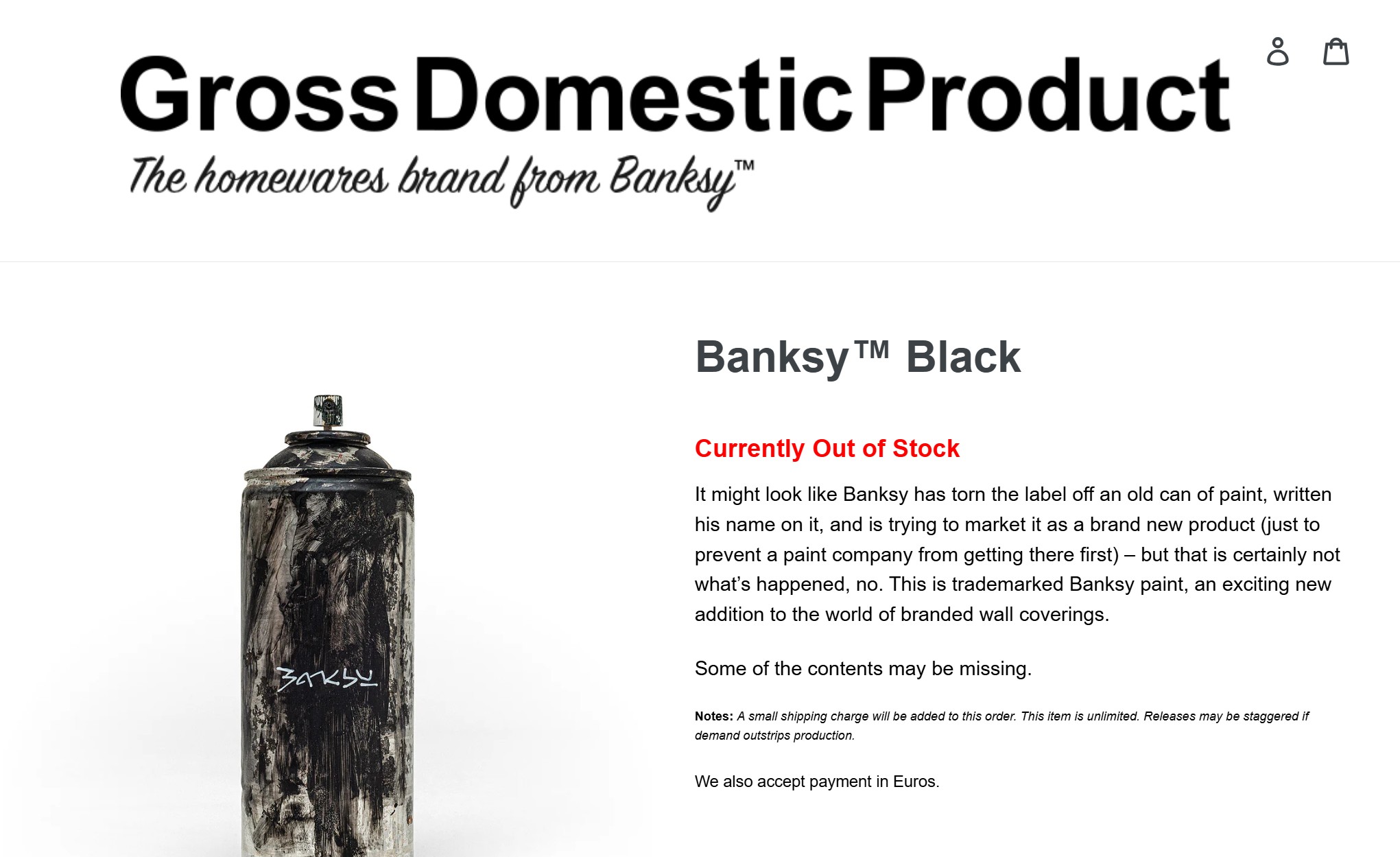
Banksy™ Black emerged from the remarkable Gross Domestic Product project, an online homewares store created in response to an intellectual property dispute that threatened Banksy’s ability to protect his own name. Rather than defending his trademark through conventional corporate branding, Banksy responded by creating a deliberately absurd retail operation, filling it with objects that simultaneously mocked consumer culture and participated in it.
Among all the products released through GDP, the spray can occupies a particularly significant position. More than any other object, it represents the essential instrument of Banksy’s practice. It is the tool through which anonymous interventions become public artworks, political statements and cultural icons. By transforming that tool into a collectible edition, Banksy turns the creative process itself into the artwork.
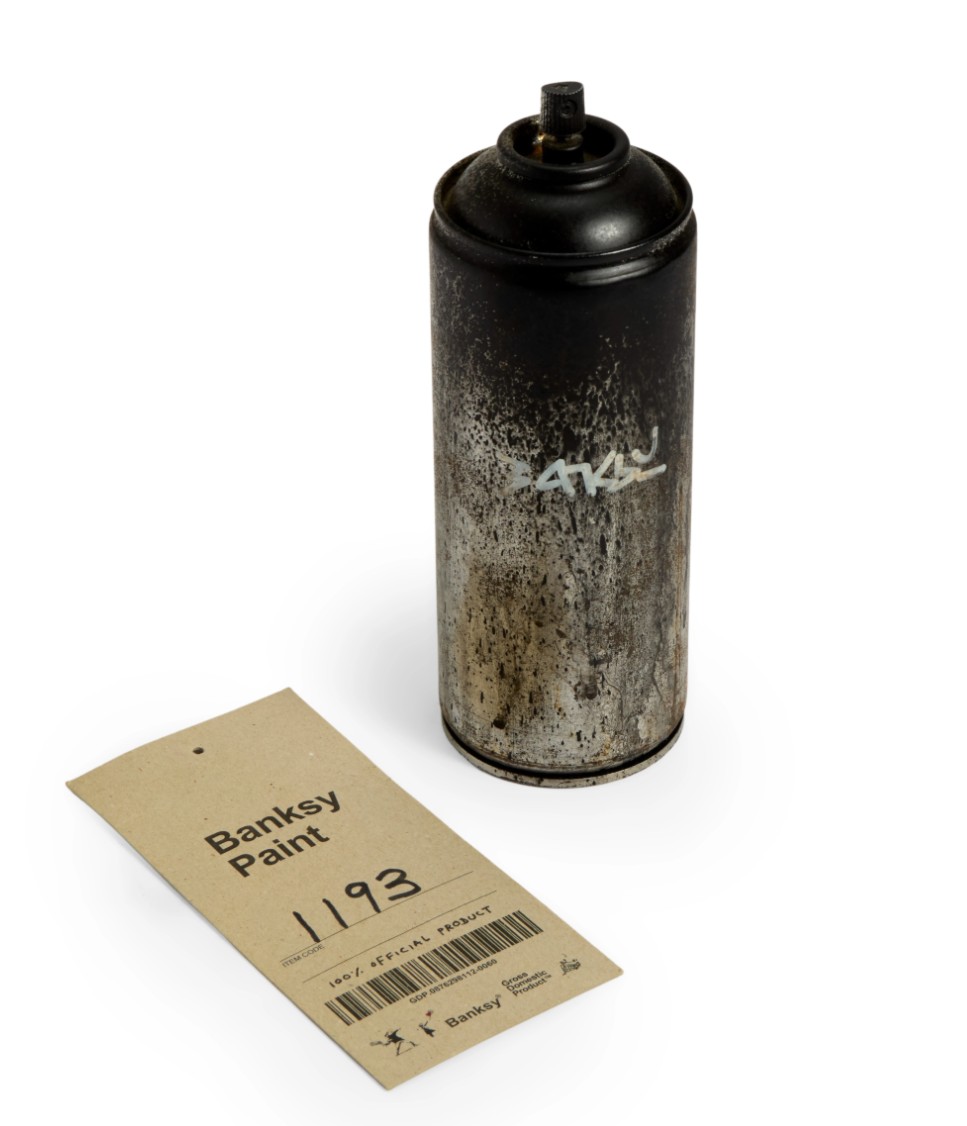
The conceptual strength of Banksy™ Black lies in its remarkable economy. A discarded spray can is not altered, embellished or transformed. Instead, Banksy performs the simplest possible gesture: he signs it.
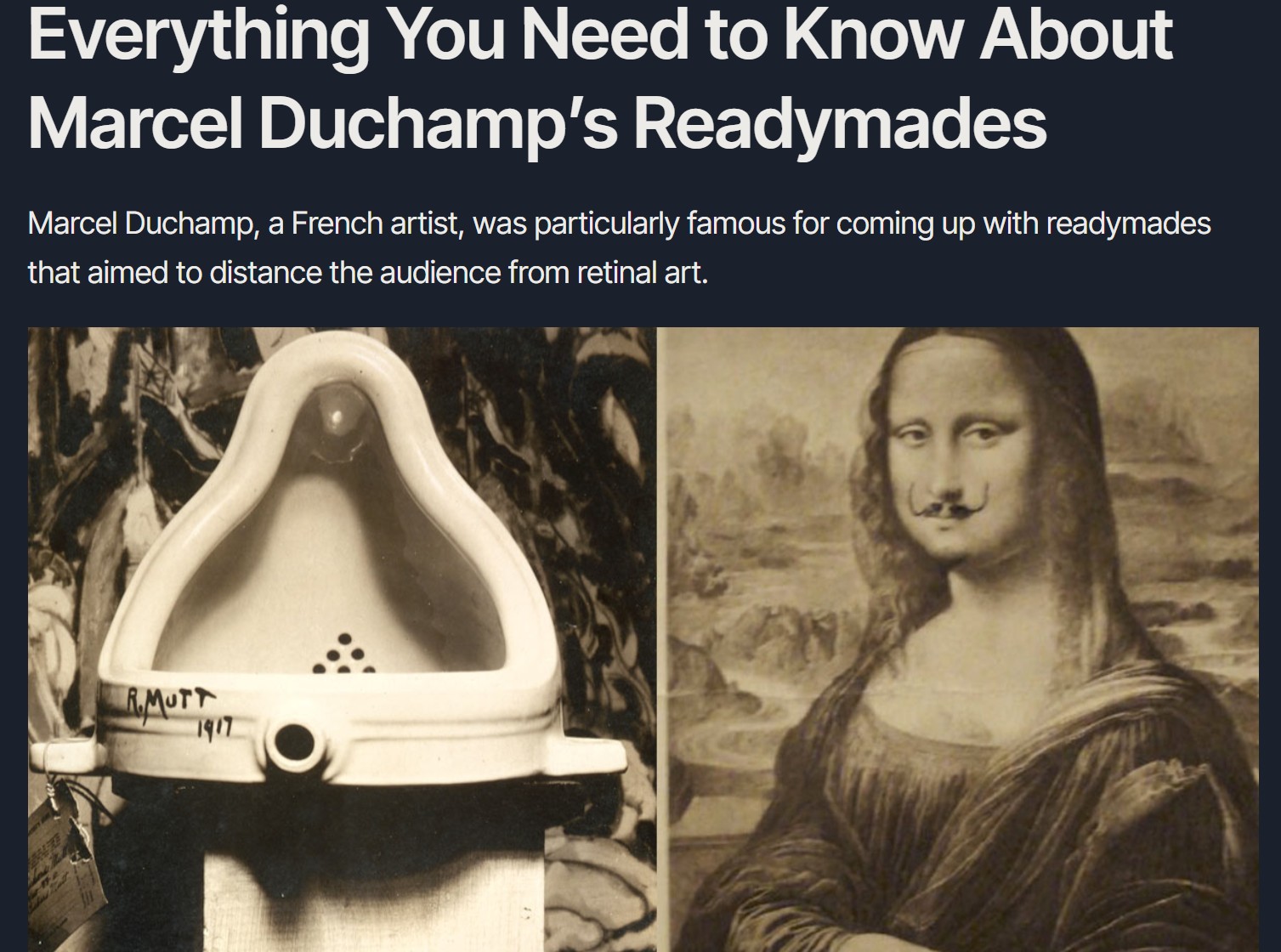
In doing so, he places himself within the tradition established by Marcel Duchamp’s readymades, in which the artist’s selection rather than manual craftsmanship confers artistic status upon an everyday object. Yet Banksy updates this idea for the twenty-first century. If Duchamp questioned what could become art, Banksy asks what becomes valuable once it carries the weight of a globally recognized name.
The irony is particularly acute because the object is a spray can—the very symbol of anti-establishment street art. Once intended to create works outside the commercial art world, it now becomes a highly sought-after collectible in its own right. The means of making art has itself become an object of desire.
There is another layer of humor in the suggestion that Banksy has effectively trademarked black spray paint. The absurdity is intentional. Gross Domestic Product was born from a legal battle over intellectual property, and the object quietly exposes the contradictions of a world in which an artist famous for challenging authority is compelled to navigate the mechanisms of branding and trademark law.
Yet this work occupies a unique position within that series. The spray can is not simply another consumer product; it is inseparable from Banksy’s own artistic identity. It represents the anonymous practice of painting walls at night, the physical act behind countless murals, and the mythology surrounding one of the world’s most famous yet unseen artists. By signing the can and presenting it as an artwork, Banksy creates what is perhaps his closest equivalent to a self-portrait—an object that speaks less about what he paints than about how he exists as an artist.
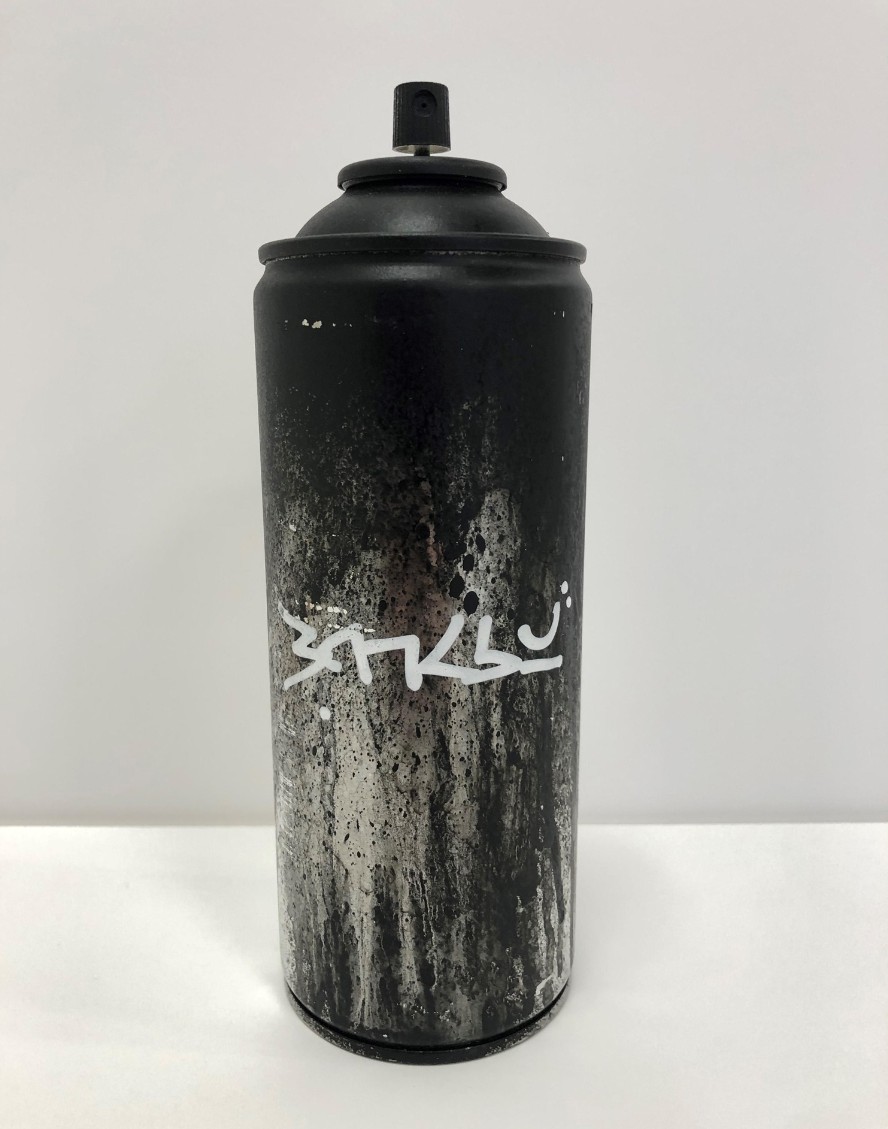
Banksy™ Black is far more than a novelty from Gross Domestic Product. It is a witty and sophisticated meditation on authorship, branding and artistic value. The work demonstrates that the true material of contemporary art is often not paint or bronze, but ideas. An old spray can remains an old spray can until the artist chooses to redefine it. In that simple act, Banksy invites us to question why certain objects become priceless while others remain disposable, and whether the value lies in the object itself or in the story attached to it.
Few works illustrate the contradictions of Banksy’s career more elegantly. The anonymous street artist who once used spray paint to evade institutions ultimately transforms that very can into a coveted collector’s item. The tool becomes the artwork, the artwork becomes the product, and the product becomes another satirical reflection on the strange relationship between art, commerce and authenticity.
Auction Results
PLEASE CLICK BELOW FOR AUCTION RESULTS