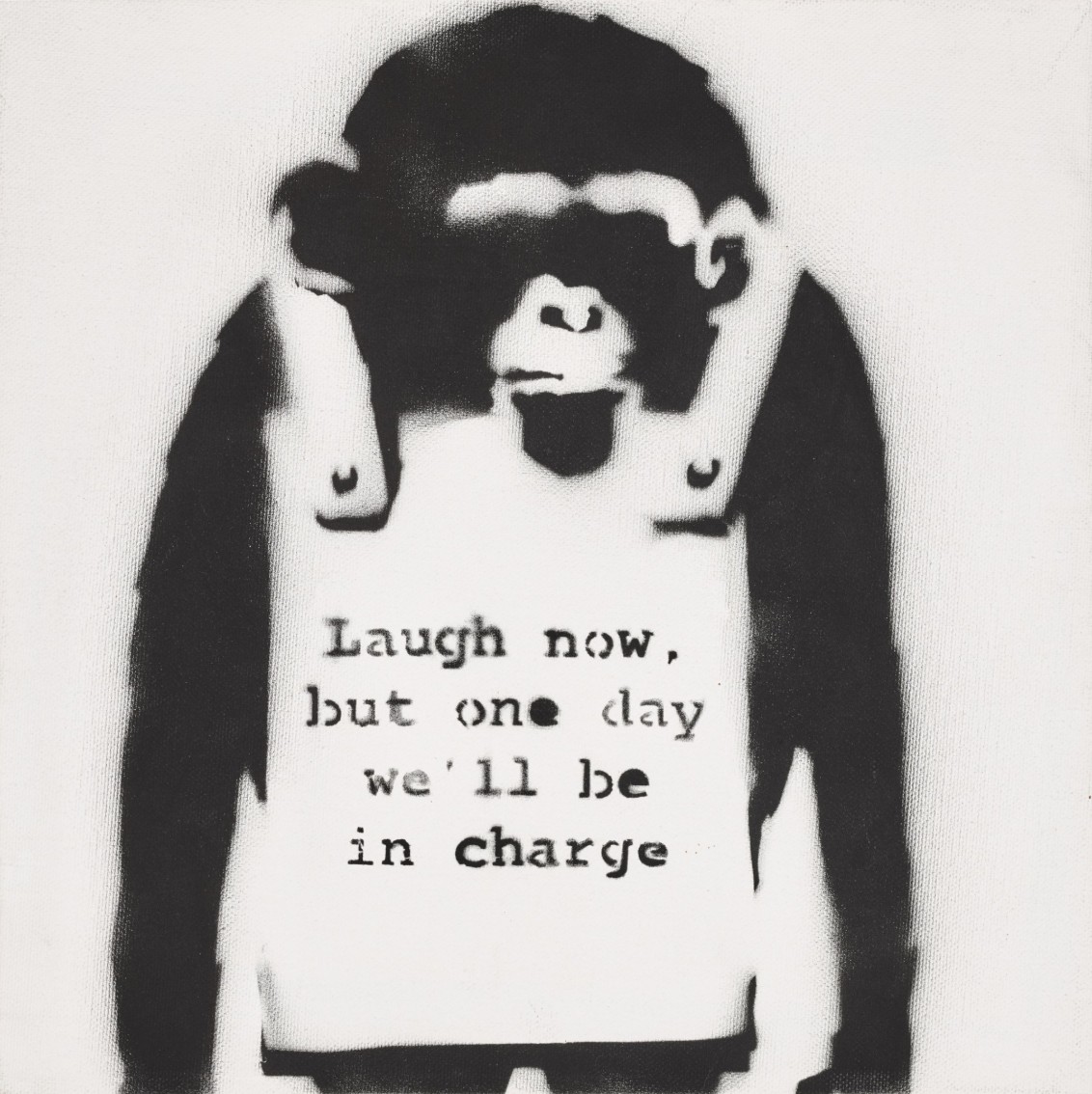
BANKSY
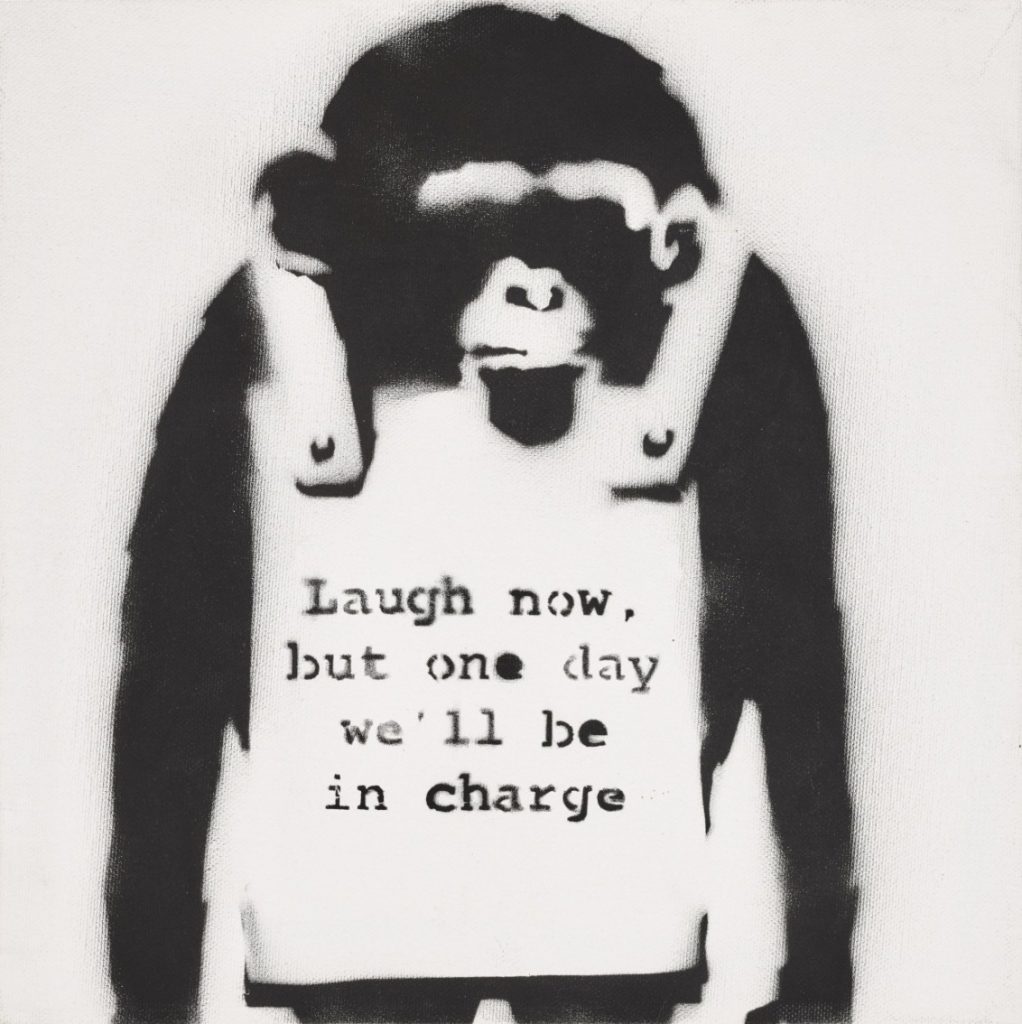
Laugh Now, 2002
Spray paint on canvas
30.5 x 30.5 cm (12×12 inches)
Stenciled with the artist’s signature on the overturn
Signed on the reverse
Provenance
Andipa Gallery, London
Acquired from the above by the present owner in 2010
Exhibited
Rome, Palazzo Cipolla, War Capitalism, May – September 2016
Auction History
| Sotheby’s London 13 April 2021 Est.: GBP 400,000 – 600,000 | Price Realized |
Catalogue Note
Executed in 2002, this intimate Laugh Now belongs to the earliest painted interpretations of Banksy’s defining monkey motif. Measuring just 30.5 × 30.5 cm, it demonstrates the artist’s remarkable ability to preserve the conceptual power of one of his most celebrated street images while translating it into a format of striking intimacy and restraint.

Unlike the monumental canvases inspired by the original Ocean Rooms mural, this composition encourages a far more personal encounter. Reduced to little more than the monkey’s upper body and its now-famous placard, the image acquires an almost portrait-like quality. The tightly cropped composition draws the viewer’s attention away from the figure’s physical presence and toward its psychological expression. The monkey appears contemplative rather than confrontational, its quiet gaze reinforcing the extraordinary ambiguity of the message it carries.
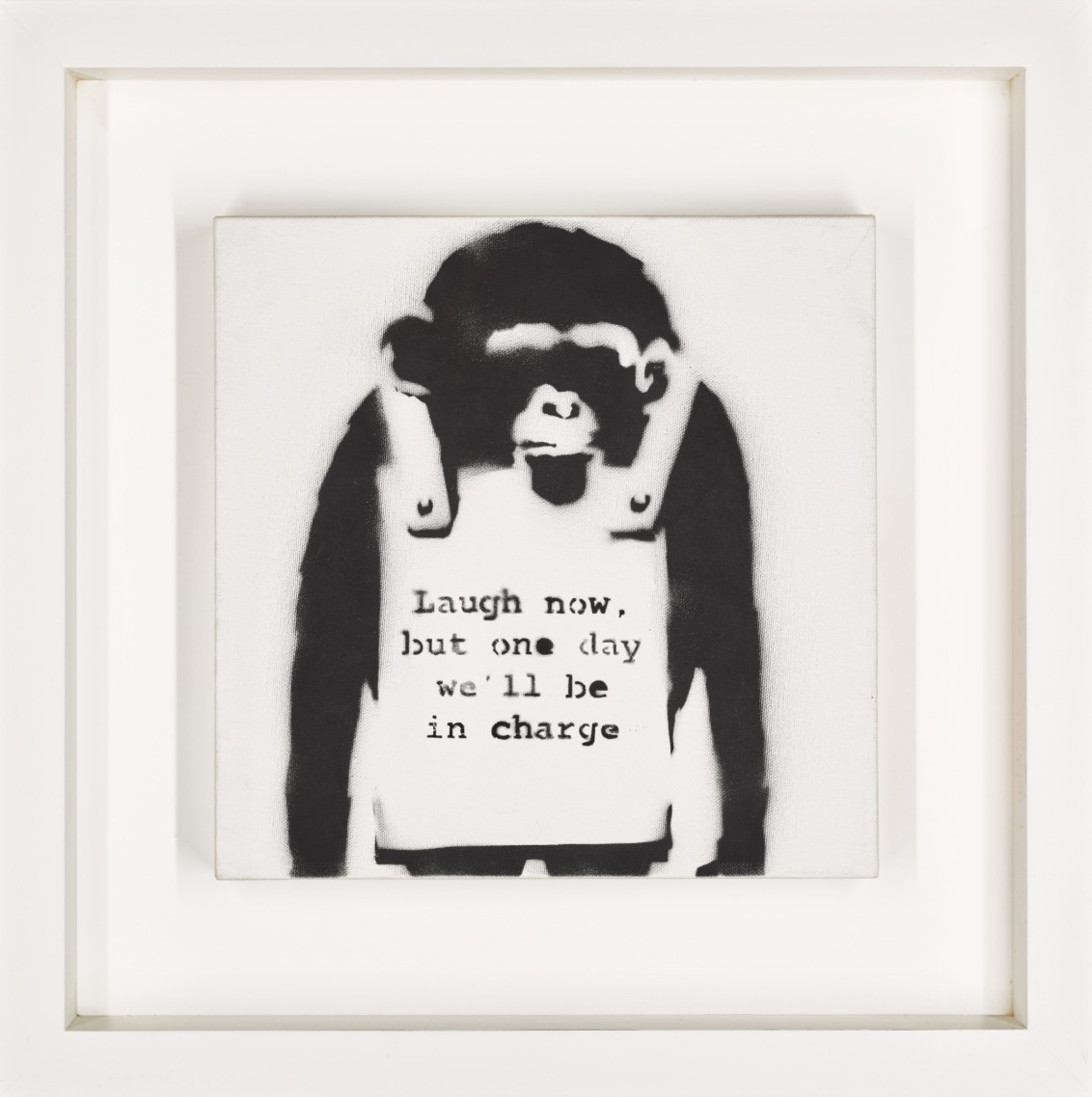
The stark black-and-white palette further enhances this sense of restraint. Devoid of elaborate backgrounds or expressive painterly effects, the composition relies entirely upon the dialogue between image and text. Banksy’s confidence in the motif is unmistakable. Every unnecessary element has been eliminated until only the essential remains: a silent monkey and a sentence whose meaning continues to evolve with each passing generation.
The intimate scale also transforms the famous slogan. Read from only a short distance away, “Laugh now, but one day we’ll be in charge” no longer functions as a public declaration addressed to the city at large. Instead, it becomes almost confidential, as though whispered directly to the viewer. This subtle shift profoundly alters the emotional character of the work. The prophecy feels less like a warning than a quiet statement of conviction, reinforcing the monkey’s remarkable dignity and self-possession.
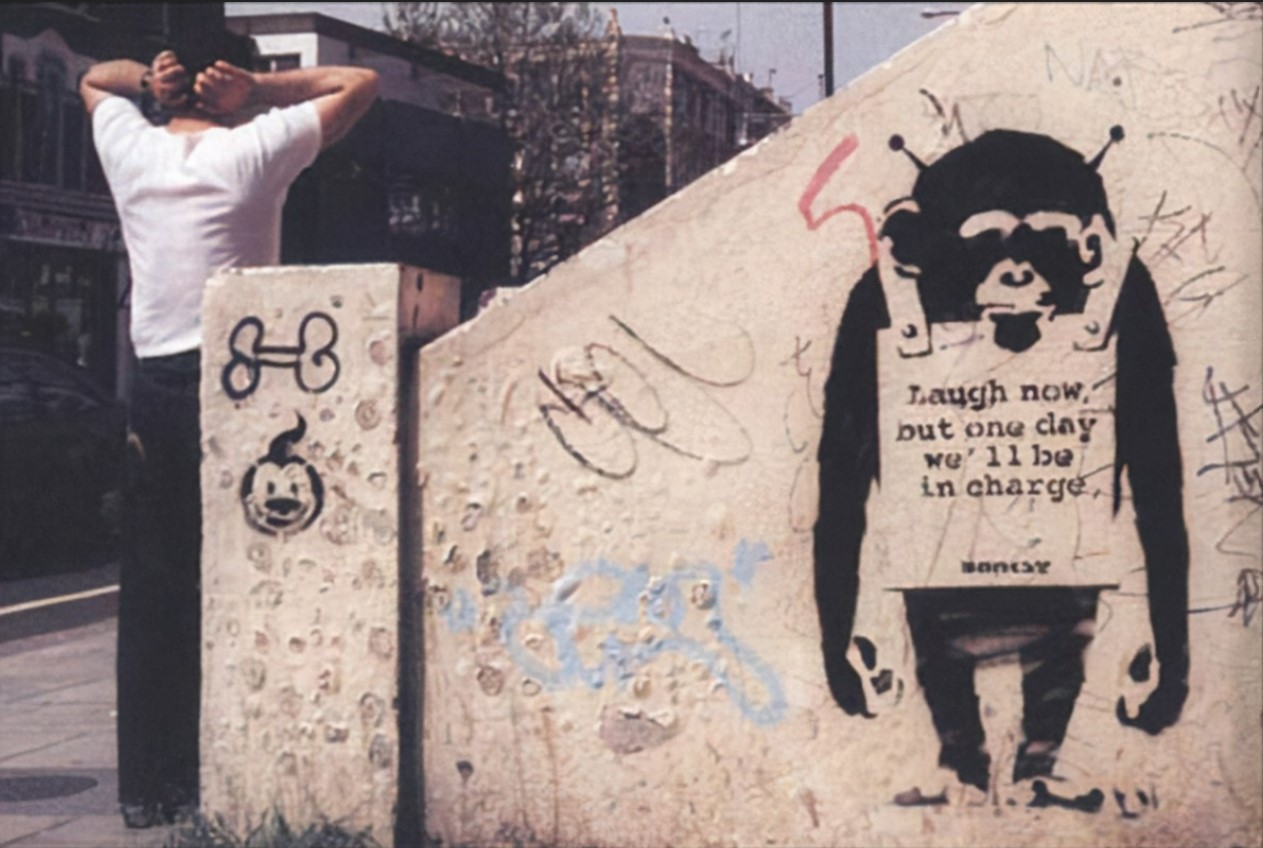
The composition is equally notable for its exceptional economy. By concentrating solely on the head, shoulders and placard, Banksy demonstrates how little is required to convey a complex political and philosophical idea. The monkey is stripped of any narrative context or environmental setting, becoming an almost universal symbol that transcends any specific place, period or social group. It is precisely this openness that has allowed Laugh Now to remain one of the artist’s most enduring and widely interpreted images.
Exhibited in War, Capitalism at the Palazzo Cipolla in Rome in 2016, this painting also illustrates the remarkable journey of Banksy’s work from the streets of Brighton to major international museum exhibitions. Once conceived as an ephemeral act of urban intervention, Laugh Now has become one of the defining visual icons of contemporary art without ever losing the directness and immediacy that made it so compelling in the first place.
PLEASE CLICK BELOW TO READ ABOUT LAUGH NOW
Elegant in its simplicity and exceptional in its intimacy, this early canvas demonstrates that the enduring strength of Laugh Now lies not in its scale but in the extraordinary clarity of its idea. More than twenty years after its creation, the monkey’s quiet prediction remains as thought-provoking—and as relevant—as ever.