Get Out While You Can
Editions
Signed Edition: 75
Unsigned Edition: 175
Some in red, some in pink (exact counts not specified)
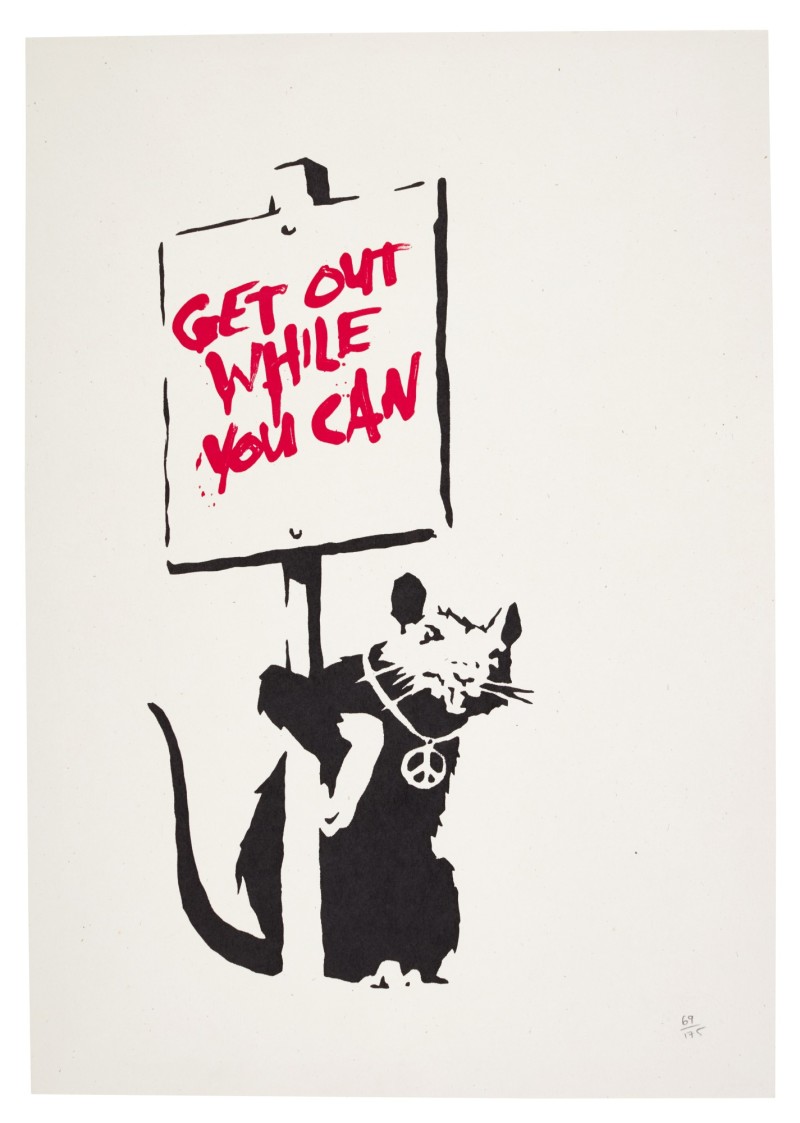
In 2004, Banksy produced one of his most concise and conceptually powerful groups of prints: the Placard Rats, published by Pictures on Walls. In this series, his now-iconic rat, long used as a symbol of marginality, survival, and quiet rebellion, stands upright holding a sign bearing a short, striking message. Drawing inspiration from George Marshall’s Get Out While You Can: Escape the Rat Race, Banksy transforms the rat into both victim and messenger, giving voice to the psychological pressures and contradictions of modern urban life. With their stark visual language and razor-sharp slogans, the Placard Rats distill Banksy’s practice into its purest form: immediate, ironic, and deeply unsettling.
From Statement to Warning
Among the three Placard Rats released in 2004, Get Out While You Can is perhaps the most urgent. If Because I’m Worthless reads like an internalized confession, this work shifts register entirely: it becomes a warning. The Placard Rats form a tightly conceived group of prints published by Pictures on Walls, directly connected to George Marshall’s Get Out While You Can, Escape the Rat Race. Banksy does not simply borrow the phrase: he weaponizes it. The rat, already symbolic of marginal existence and urban survival, now assumes a new role: not just a victim, but a messenger. In this image, the rat no longer describes its condition. It addresses us.
The composition follows the now-iconic formula: a black stenciled rat standing upright, holding a rectangular placard. The message, painted in vivid pink or red, reads “Get Out While You Can.” The visual economy is absolute. There is no background, no distraction: only the confrontation between figure and text. The rat appears alert, almost tense, as if caught in the act of communicating something that should perhaps not be said aloud.
As in Because I’m Worthless, the use of color is restrained but decisive. The red or pink lettering cuts through the image with immediacy, evoking urgency, alarm, even danger. It is not decorative; it is a signal. The placard is no longer a passive surface. It functions like an emergency broadcast.
Escape the Rat Race
The rat race, that endless cycle of work, consumption, and repetition seems to define modern urban existence. The phrase “Get Out While You Can” reads as a direct extension of Marshall’s critique, but Banksy distills it into something far more brutal and concise. There is no explanation, no argument. Only an imperative. The brilliance of the work lies in its ambiguity. What exactly are we meant to escape? A job? A system? A city? A way of thinking? Banksy refuses to specify, and in doing so allows the message to expand. The warning becomes universal. It also introduces a temporal dimension absent from the other placard rats. While you can. There is a suggestion here that the window is closing—that escape, if possible at all, is temporary and fragile. The rat, once again, knows something we do not.
Within the logic of the series, this print marks a subtle but important evolution. In Because I’m Worthless, the rat internalizes judgment. In Get Out While You Can, it externalizes knowledge. It has moved from self-definition to communication, from passive acceptance to active transmission. The rat becomes a whistleblower. This transformation is crucial to understanding Banksy’s broader practice. His figures often occupy this ambiguous space between innocence and awareness. They are not heroes, but they see clearly. They reveal, often in a single gesture, the absurdity or violence of the systems surrounding them. Here, the rat is no longer simply surviving the system. It is exposing it.

One of the most refined aspects of the work is its tone. The message is dramatic, even apocalyptic, yet the image remains understated. There is no explosion, no chaos, no visual dramatization of danger. Only a small animal holding a sign. This restraint is precisely what gives the work its power. The viewer is not overwhelmed; they are implicated. The warning is delivered quietly, almost casually, which makes it all the more unsettling. Banksy understands that true urgency does not need theatrics. It needs clarity.
If Because I’m Worthless exposes how individuals internalize systems of value, Get Out While You Can suggests that those systems themselves may be inescapable: or worse, collapsing. The work does not offer a solution. It does not even confirm that escape is possible. It simply raises the possibility, and in doing so creates unease. That is where Banksy is most effective: not in telling us what to think, but in placing us in a position where not thinking becomes impossible. Within the trio of Placard Rats, this print stands as the moment of rupture: the instant where awareness replaces resignation. And once seen, it is difficult to ignore….
Placard Rats were released by Pictures on Walls at the price of GBP 74.99 for an unsigned print, and GBP 150 for a signed print.

In the early 2000’s Banksy’s rats could be found all over London. Most of them have been lost to the various graffiti cleaning squads, removed for profit chancers, or painted over. However, this Placard Rat in Chiswell Street, London, has survived the ravages of time.

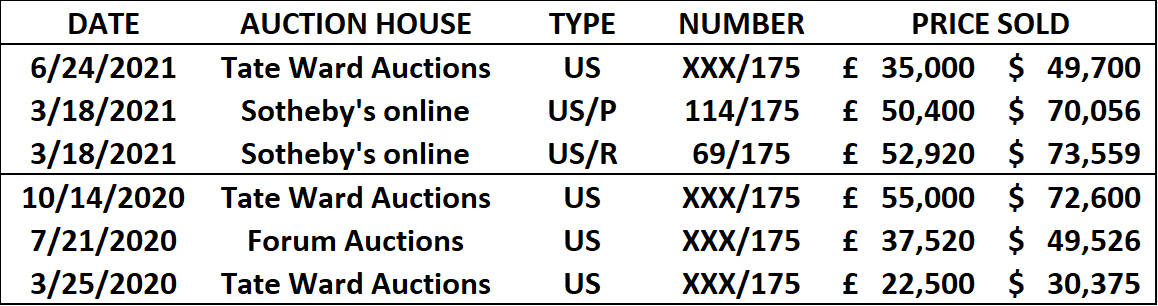
Auction Results
PLEASE CLICK BELOW FOR AUCTION RESULTS