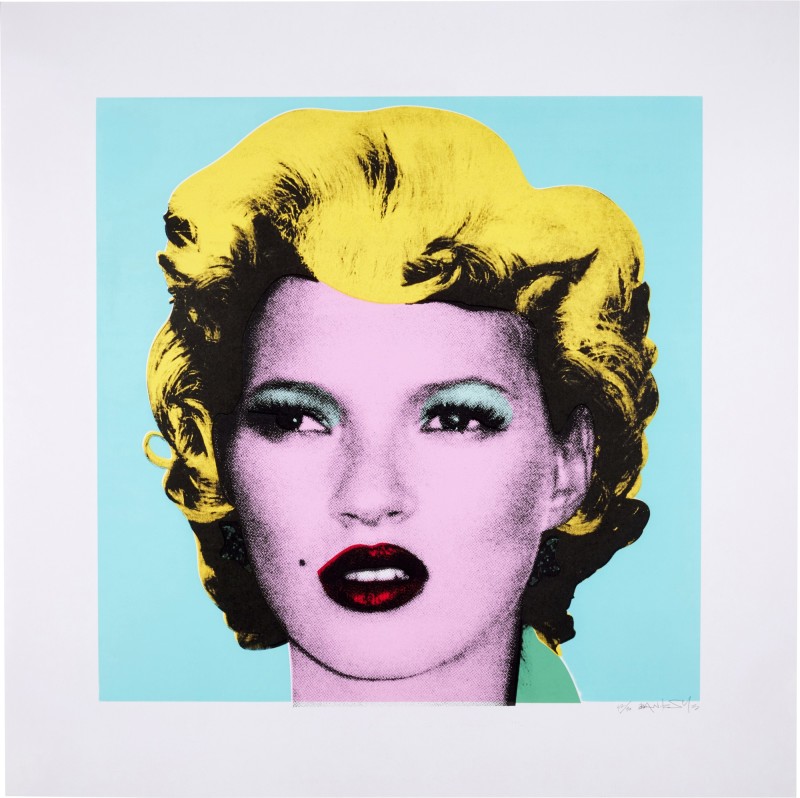
Kate Moss
Printer & Publisher: Pictures on Walls, London
Editions
Original Colorway: 50 signed
Colorways Editions: 20 signed each
Apricot/Gold, Green/Turquoise, Purple, Red/Green, Pink, Blue/Grey
VIP Edition (Red Lips): 12 signed AP
An Icon Reimagined
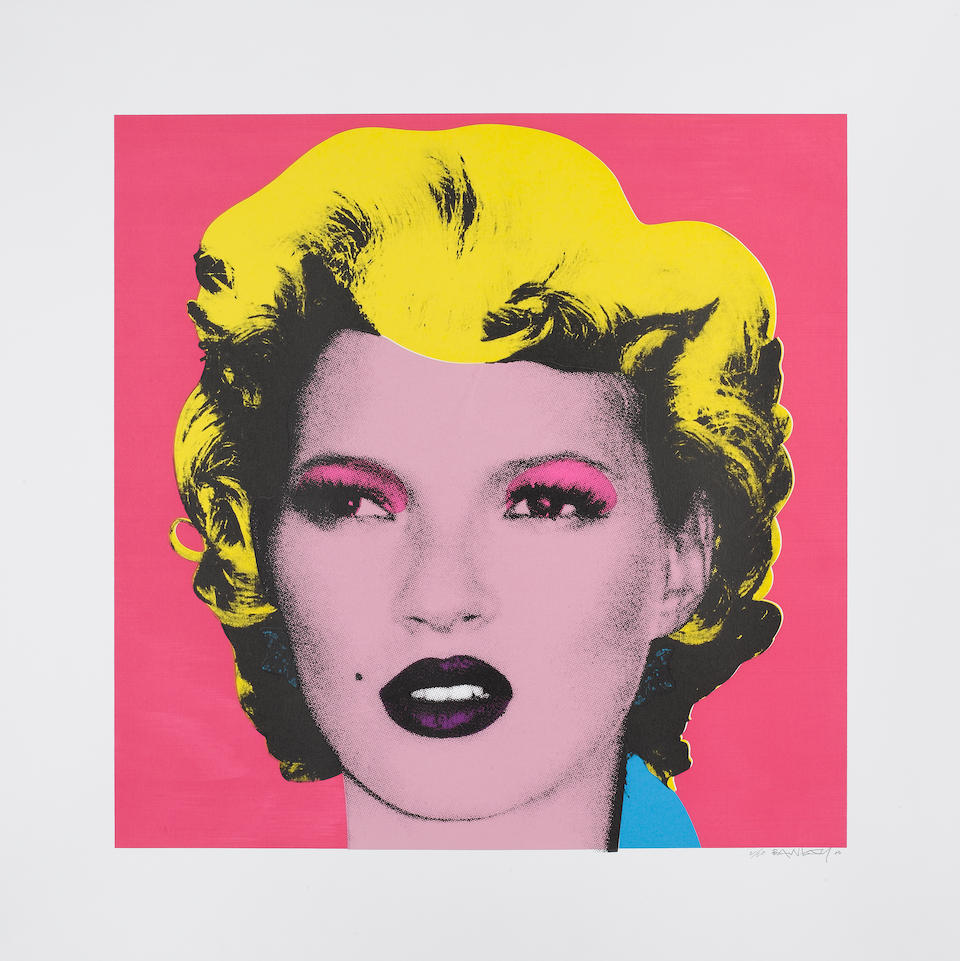
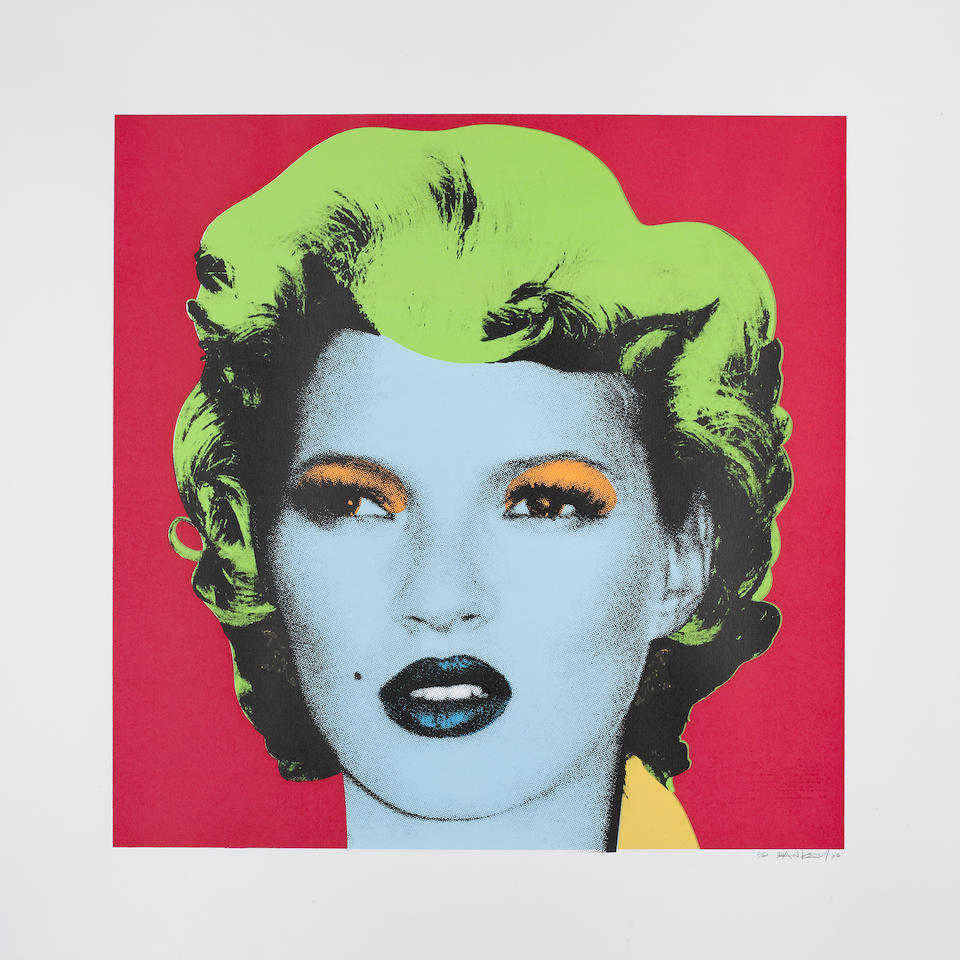
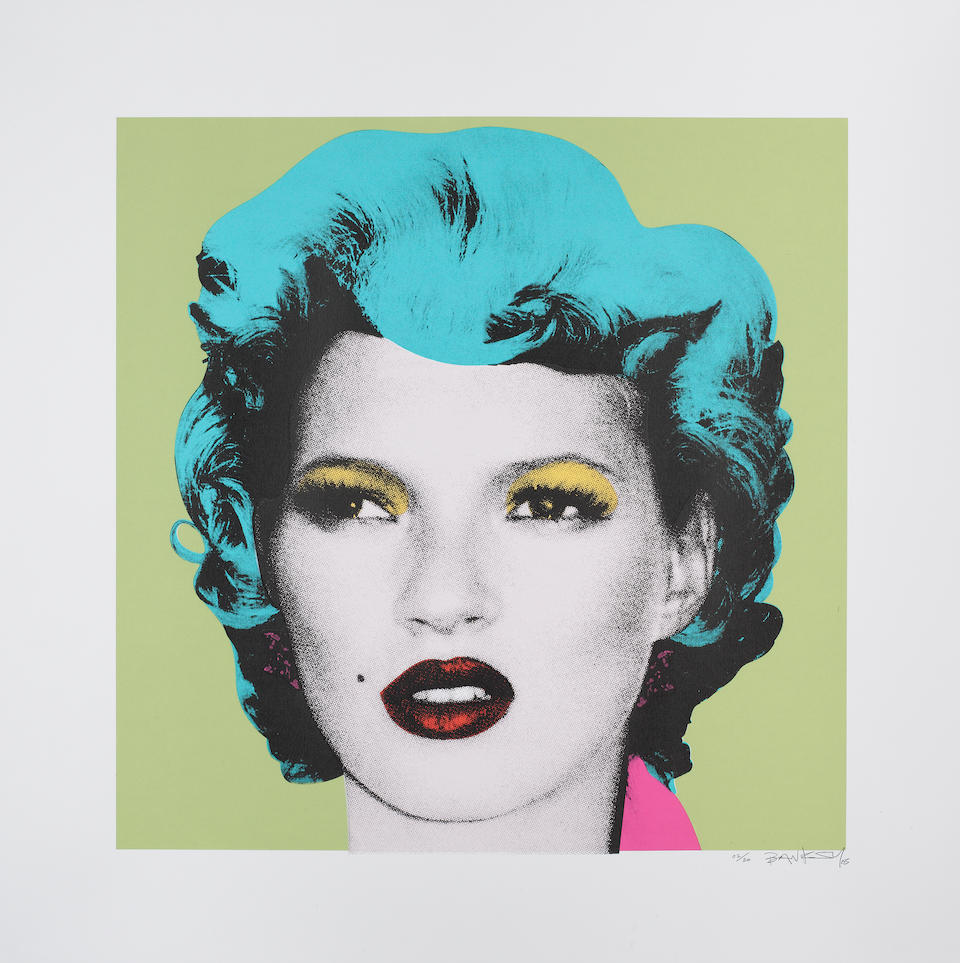
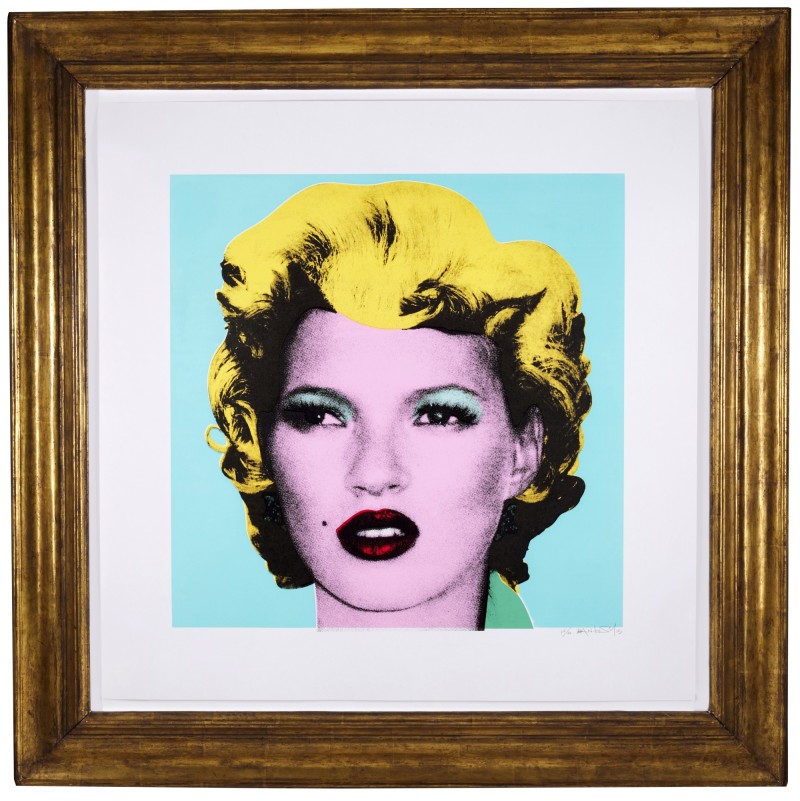
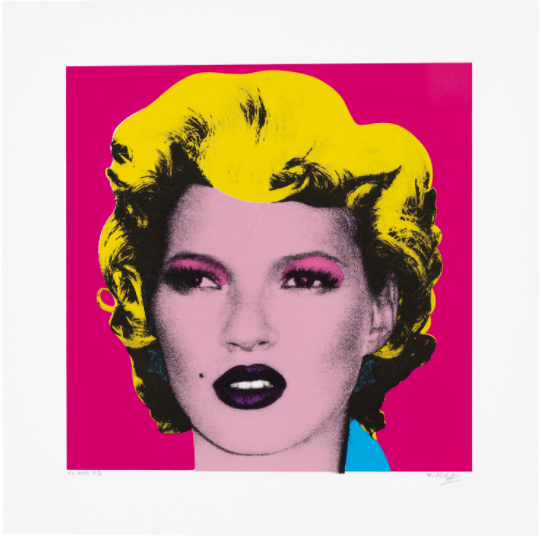
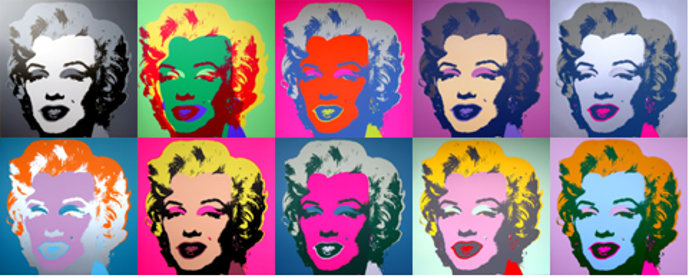
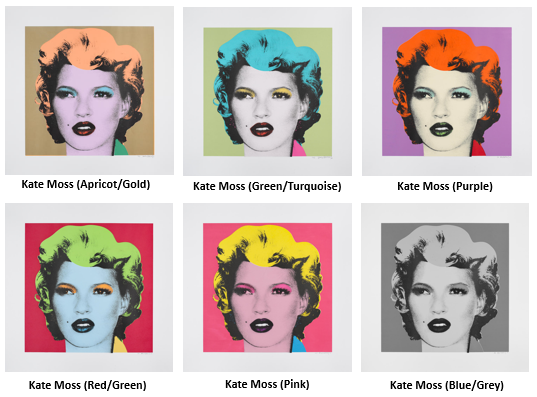
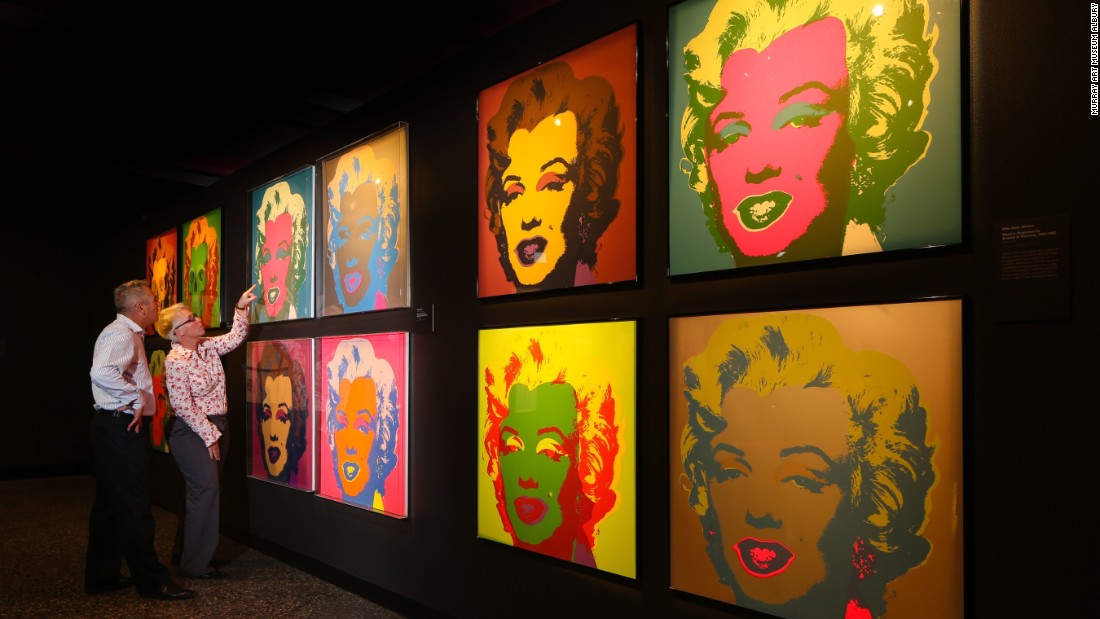
The composition mirrors Warhol’s Marilyn format with striking precision. The face is centrally framed, flattened, and repeated across multiple panels, each rendered in varying color combinations. Yet the subject has changed. Where Warhol’s Marilyn embodied the glamour and tragedy of mid-century Hollywood, Banksy’s Kate Moss represents a different era: one defined by fashion, media saturation, and relentless image circulation. The repetition is crucial. It transforms the individual into a pattern, dissolving uniqueness into a sequence of interchangeable images.
Banksy adopts the visual vocabulary of Pop Art: bold color blocks, high contrast, and mechanical repetition, while maintaining the immediacy of his own approach. The screenprint format reinforces this logic of reproduction. Each variation in color appears distinct, yet structurally identical, echoing the mass production of celebrity imagery in contemporary culture. The work operates within the aesthetic framework established by Warhol but redirects it toward a new context: one in which image has become even more pervasive and detached from reality.
Few works demonstrate Banksy’s ability to engage with art history while dissecting contemporary culture as sharply as Kate Moss. By reworking one of the most iconic images of the 20th century with a figure of modern celebrity, the artist creates a work that is both homage and critique—revealing how fame, repetition, and image have evolved in the age of mass media. Kate Moss stands as one of Banksy’s most refined engagements with the legacy of Andy Warhol. Drawing directly from Warhol’s treatment of Marilyn Monroe, Banksy substitutes a defining figure of 1960s celebrity with a contemporary icon, Kate Moss. The result is a work that reflects on the continuity of fame, while exposing the increasing detachment between image and identity.
Fame Without Substance
Kate Moss is a work about transformation, specifically, the transformation of identity into image. By placing a contemporary figure within Warhol’s framework, Banksy suggests that the mechanisms of fame have not disappeared but intensified. The work raises a subtle but critical question: what remains of the individual once their image has been endlessly reproduced? In this context, Kate Moss becomes less a person than a surface: an icon defined not by biography, but by visibility. The work reflects a culture in which recognition replaces understanding, and where repetition erodes meaning.

Andy Warhol’s Marilyn

Kate Moss Colorways
Kate Moss was first released in 2005 in light blue as an edition of 50 prints signed. Shortly afterwards, another series of 120 prints was released in six different colorways: Pink, Apricot/Gold, Blue/Grey, Green/Turquoise, Red/Lime, and Purple/Red with 20 prints of each. All prints are signed by the artist. The legend says that in 2011, Banksy created a unique edition for Kate Moss herself, as a wedding gift on the occasion of her honeymoon, where she was surprised to find the artwork in her hotel bathroom waiting for her.
Kate Moss (Original), 2005
Edition: 50 signed
Edition: 20 signed
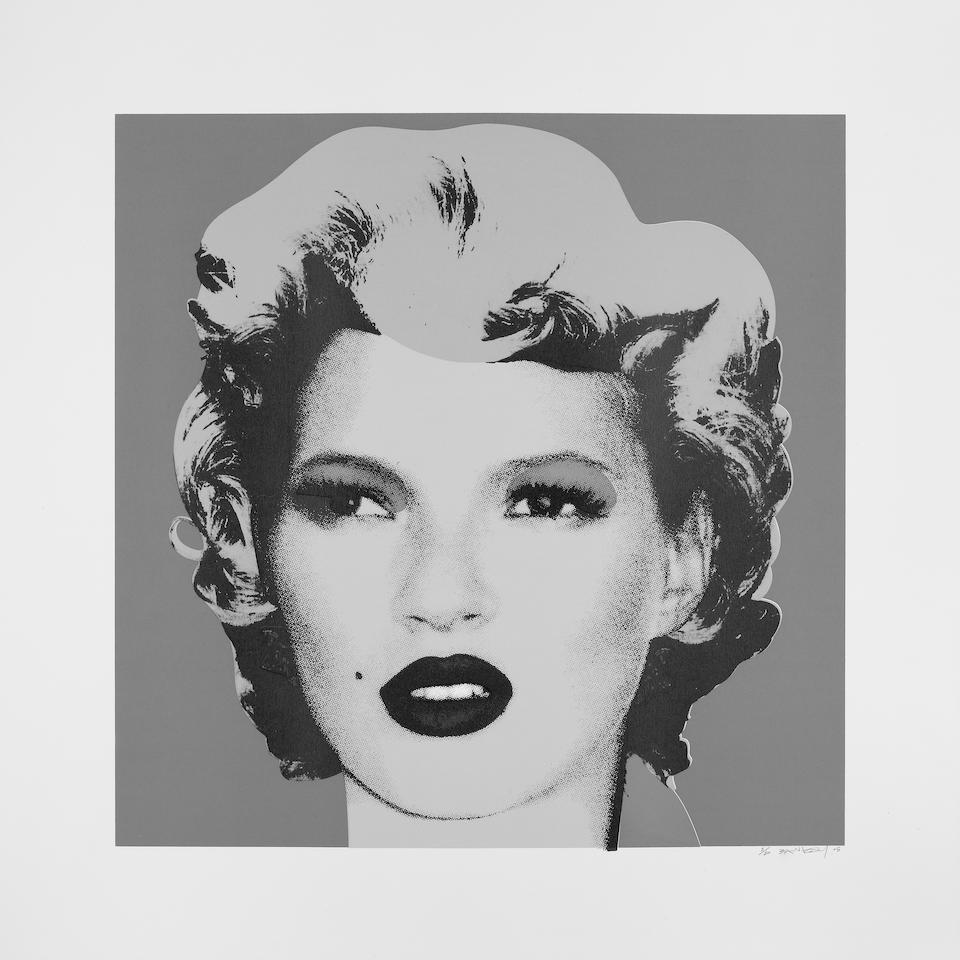
Kate Moss (Red Lime), 2005
Edition: 20 signed


Kate Moss (Green Turquoise), 2005

Kate Moss (Purple Red), 2005

Kate Moss (Apricot/Gold), 2005


Auction Results
PLEASE CLICK BELOW FOR AUCTION RESULTS