BANKSY
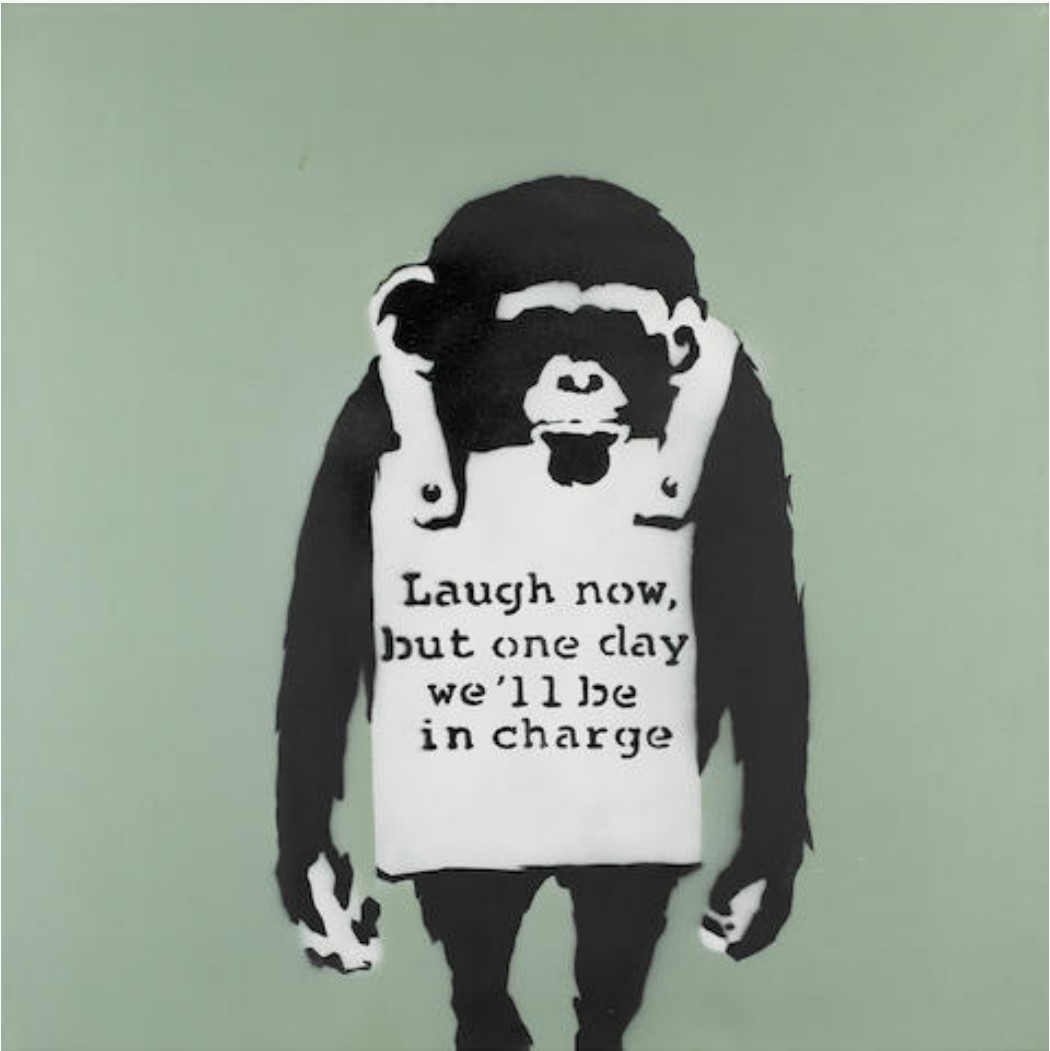
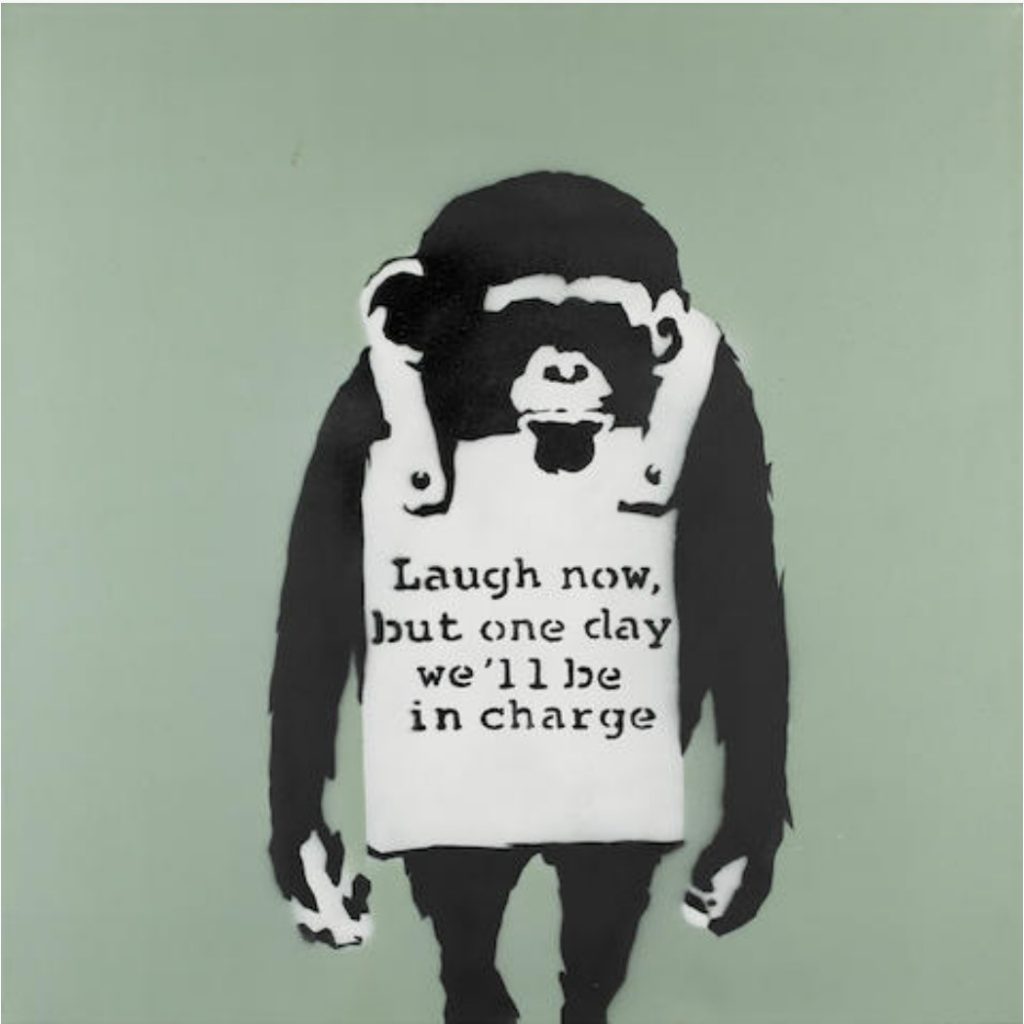
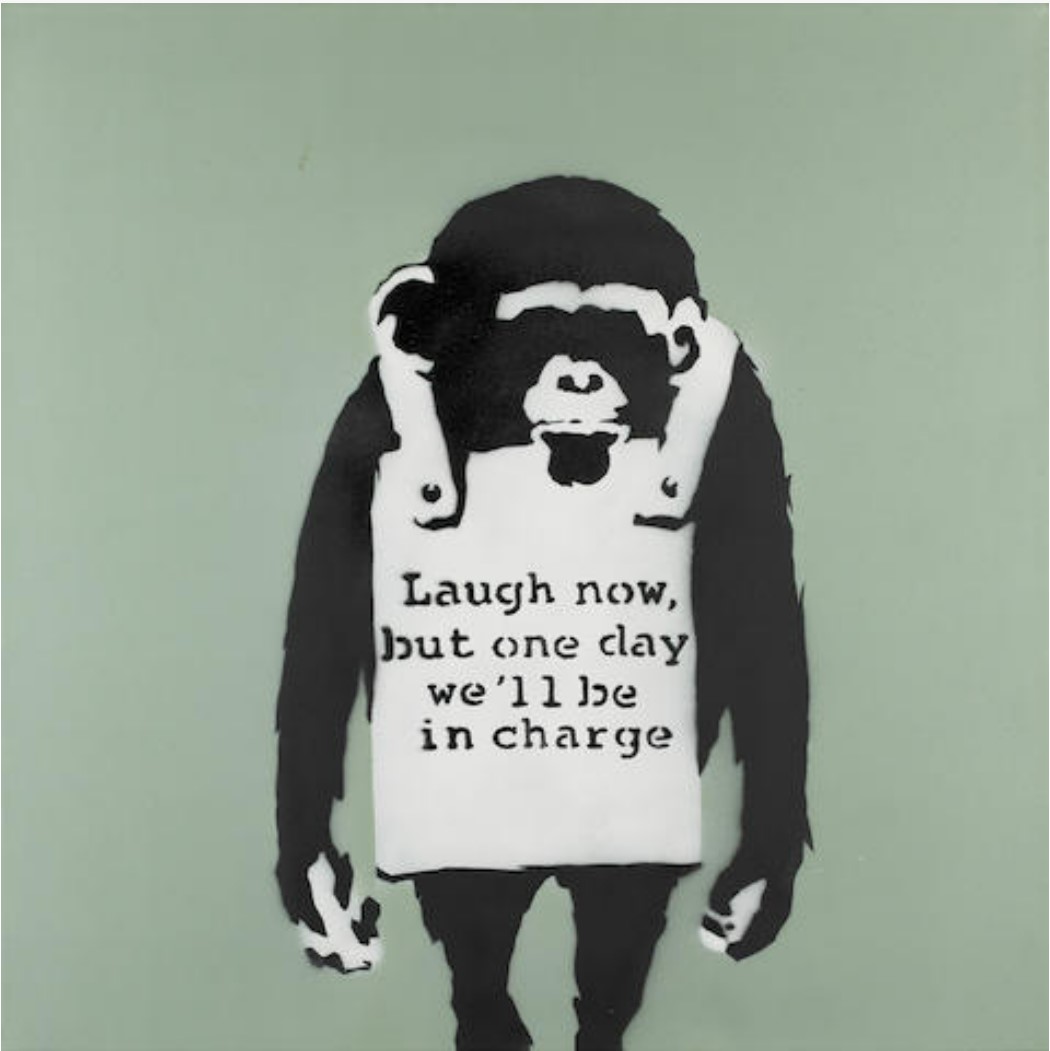
Laugh Now, 2002
Stencil spray-paint on canvas
76×76 cm (29 15/16 x 29 15/16 inches)
Stencil-signed “BANKSY” on the overlap
Westbourne Studios, London
Auction History
| Bonhams London 23 October 2008 Est.: GBP 60,000 – 80,000 |
Price Realized
GBP 108,000 / USD 141,615 |
Catalogue Note
Executed in 2002, this unique Laugh Now belongs to the earliest group of original canvases exploring Banksy’s defining monkey motif. Produced during the formative years of the series, the work demonstrates the artist’s continued experimentation with subtle variations in scale, presentation and colour while preserving the remarkable conceptual clarity that made Laugh Now one of his most enduring images.
This particular example is distinguished by its unusual pale green background, a colourway encountered only rarely within the series. Softer than the dramatic slate-grey versions and warmer than the stark white canvases, the muted celadon tone transforms the emotional atmosphere of the composition. Rather than creating visual tension, the background introduces a quiet sense of balance, allowing the monkey to emerge with remarkable clarity while softening the graphic severity of the black-and-white stencil. The result is a work of understated elegance that feels almost meditative despite the strength of its political message.
The restrained palette also reinforces one of Banksy’s greatest artistic qualities: his ability to achieve maximum impact through minimal means. There are no expressive paint drips, distressed supports or elaborate painterly effects. The composition relies entirely upon the interaction between figure, colour and text, demonstrating the artist’s complete confidence in the power of the image itself. Every unnecessary element has been eliminated until only the essential remains.
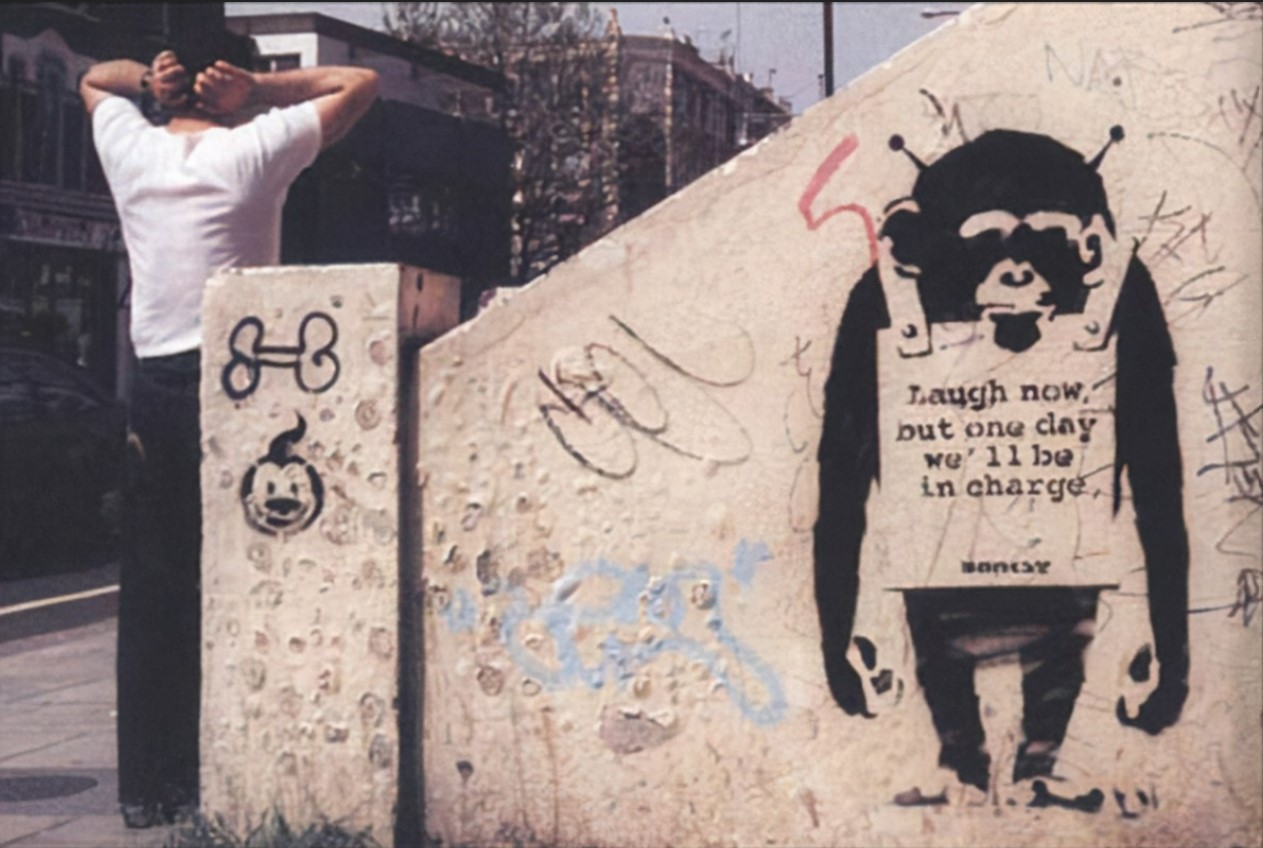
The monkey continues to embody one of Banksy’s most psychologically nuanced creations. Its lowered shoulders speak of marginalization and quiet endurance, yet its firmly planted stance and relaxed posture suggest resilience rather than defeat. The famous placard—“Laugh now, but one day we’ll be in charge”—retains its remarkable ambiguity. Read today, it functions simultaneously as social commentary, quiet optimism and prophetic observation, allowing each generation to project its own political and cultural concerns onto the image.
The generous monochromatic background further isolates the figure, freeing it from any specific architectural or geographical setting. Unlike the plaster wall versions or works executed on reclaimed materials, this canvas intentionally abandons the physical vocabulary of the street in favour of a more timeless presentation. The monkey becomes less an urban intervention than an enduring emblem of resistance, capable of speaking across cultures and historical moments.
Originating from Westbourne Studios in London, a creative hub closely associated with the city’s flourishing street art scene during the early 2000s, the painting also reflects the environment in which Banksy’s reputation rapidly expanded beyond graffiti into the broader world of contemporary art. Yet despite this transition, the work retains the directness and immediacy that remained fundamental to his practice.
PLEASE CLICK BELOW TO READ ABOUT LAUGH NOW
Elegant in both its restraint and its rare color palette, this early Laugh Now demonstrates how subtle changes in atmosphere can profoundly transform a familiar image. Without altering the composition itself, Banksy creates a version that feels quieter, more contemplative and almost introspective, confirming that the enduring power of the series lies not only in its iconic message but also in the artist’s continual refinement of one of the defining images of contemporary art.