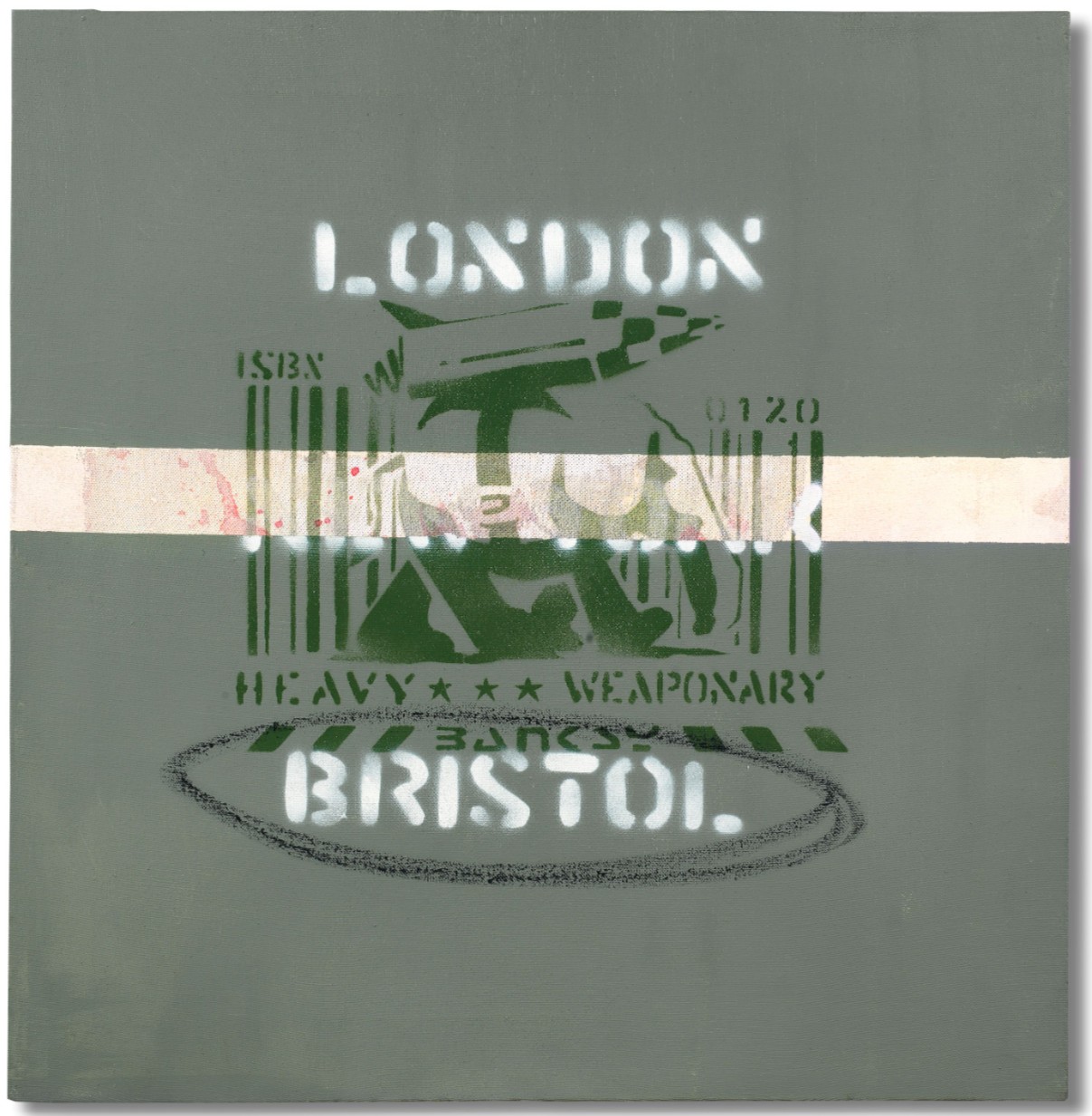
Medium: Spray-paint and emulsion on canvas
Edition: 10 (each is a unique variation)
Numbered /10 in black marker on the reverse
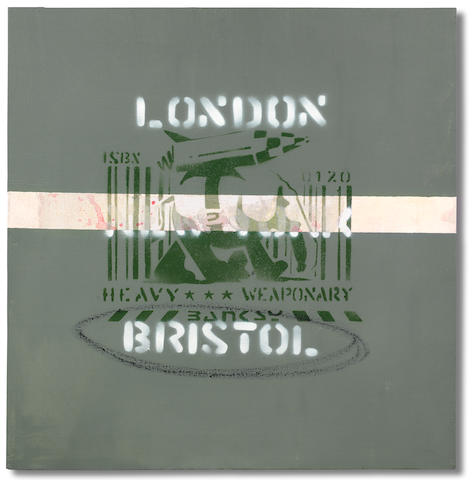
Created in 2000, London, New York, Bristol (Heavy Weaponry) is a unique variation from Banksy’s edition of ten Heavy Weaponry canvases. Executed in spray paint and emulsion, the work layers the original elephant-and-barcode stencil beneath additional interventions, most notably the stenciled city names London, New York and Bristol. Rather than replacing the original composition, these successive layers partially obscure it, creating the impression of an urban wall repeatedly painted, marked and reclaimed. The result is a composition that feels both deliberate and accidental, echoing the constantly evolving surfaces of the city itself.
“As soon as I cut my first stencil I could feel the power there. I like the political edge. All graffiti is low-level dissent, but stencils have an extra history. They’ve been used to start revolutions and to stop wars.”
Unlike the standard Heavy Weaponry edition, this variation introduces geography as an essential part of the work’s meaning. The three cities are not arbitrary. Together they trace the evolution of modern graffiti and street art. New York represents the birthplace of contemporary graffiti writing during the 1970s, where lettering first emerged as a powerful form of urban expression. Bristol, Banksy’s hometown, became one of Europe’s most influential centres for stencil art and politically engaged street practice during the 1980s and 1990s. London, meanwhile, became the international stage on which Banksy’s work reached a global audience and transformed from anonymous intervention into a cultural phenomenon.
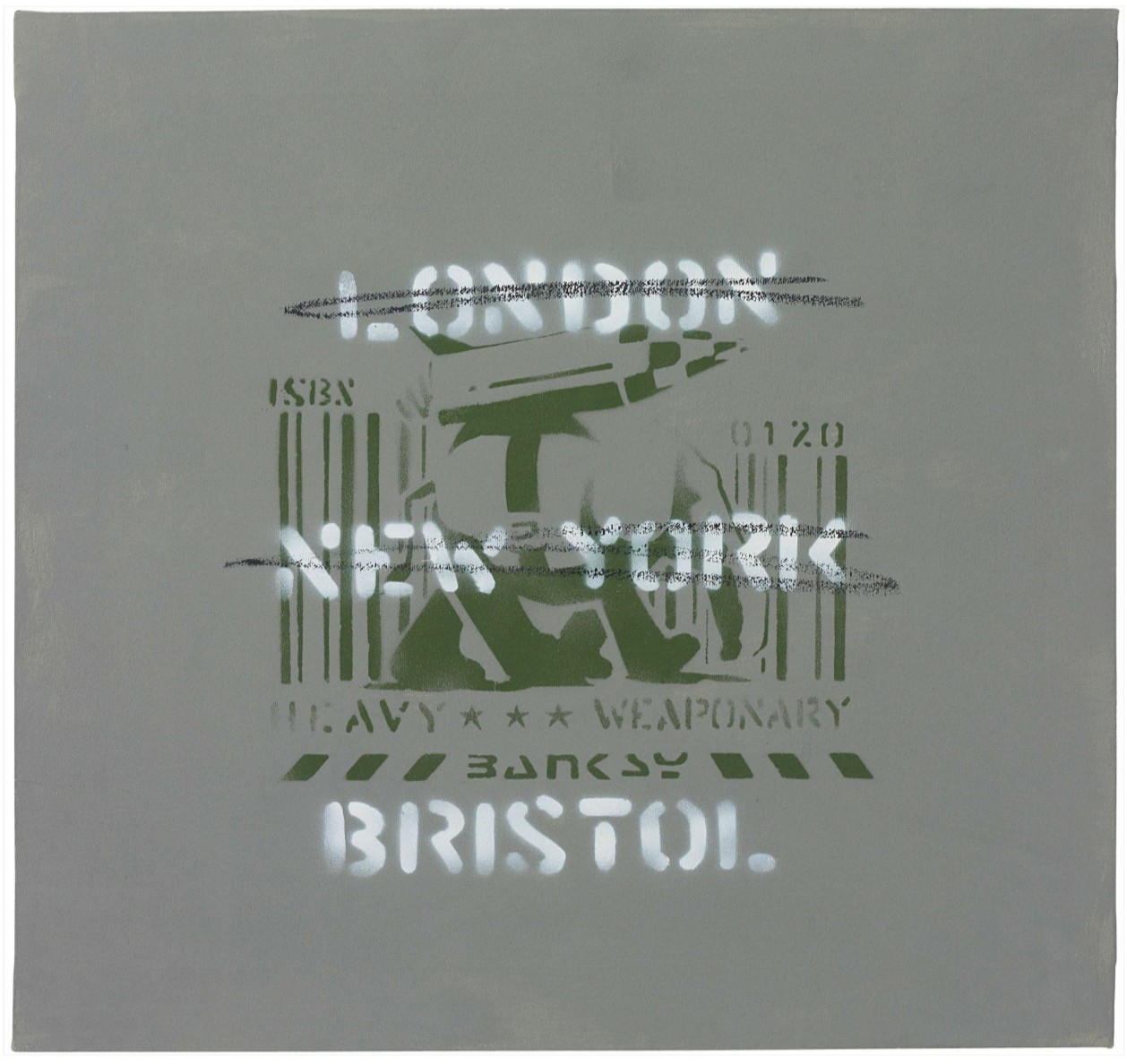
Rather than presenting these cities as separate places, Banksy stacks them upon one another, suggesting that street art is a continuous conversation rather than a local movement. Ideas migrate, evolve and are constantly repainted, much like the walls on which they first appeared. The partially obscured elephant remains visible beneath these layers, quietly linking the work to the earlier Heavy Weaponry composition. The image becomes less about a single symbol and more about accumulation itself. Every generation of artists paints over the previous one, yet traces always remain beneath the surface.
This work belongs to an important group of early editions in which Banksy embraced imperfection, repetition and variation. Although issued as an edition of ten, each canvas differs slightly, reinforcing the idea that no two walls—and no two acts of street painting—are ever identical. It also reflects Banksy’s continued engagement with the physical language of graffiti. Unlike many of his later editions, which present highly refined and isolated stencil images, London, New York, Bristol (Heavy Weaponry) retains the layered, provisional quality of an actual urban surface. The painting feels less like an image reproduced from the street than like a fragment of the street itself.
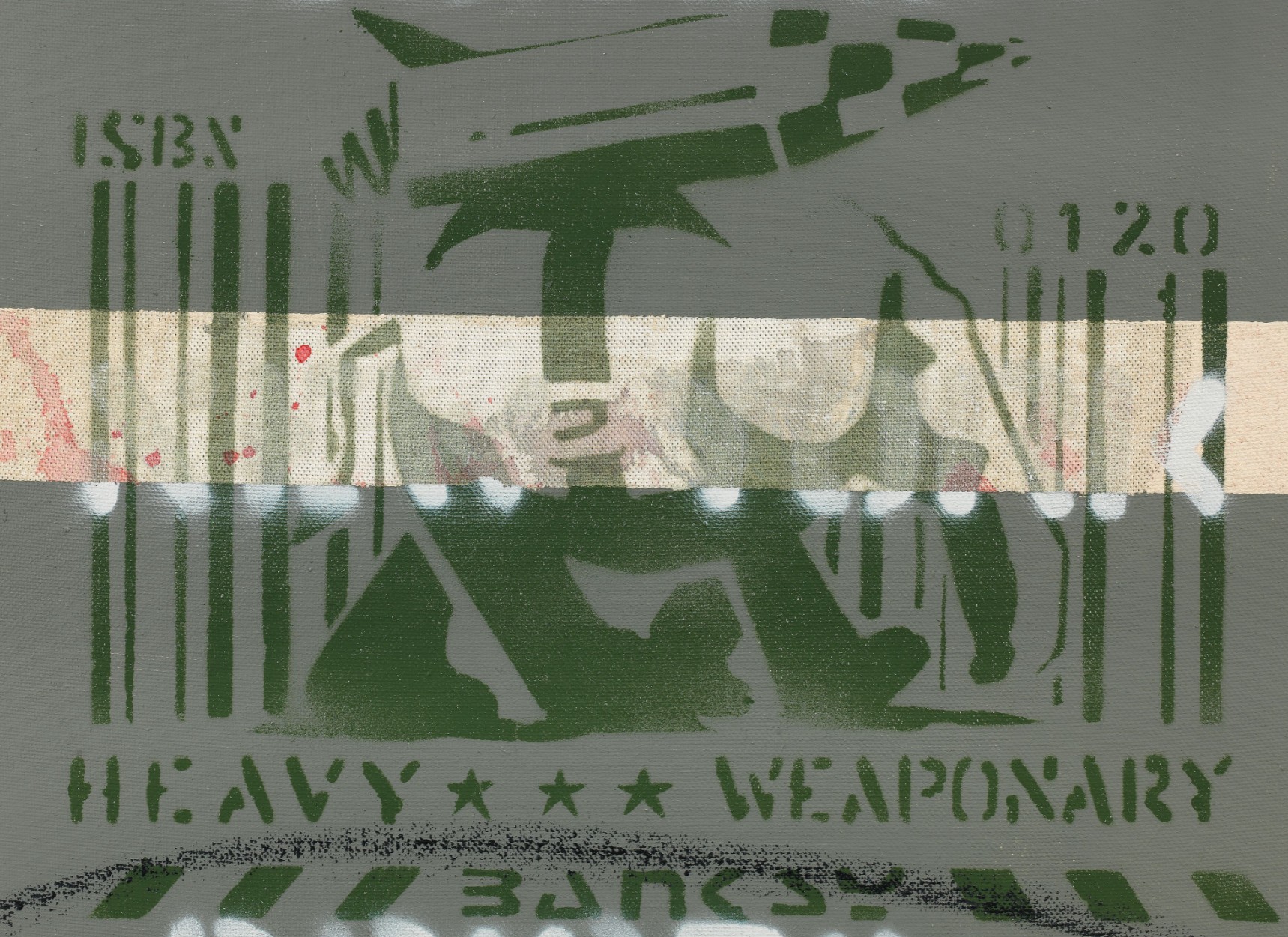
London, New York, Bristol (Heavy Weaponry) captures an important moment in Banksy’s artistic evolution, when his work still openly acknowledged the culture from which it emerged. The layered composition reminds us that graffiti is never static; it exists through continual transformation, erasure and renewal. By bringing together three cities central to the history of street art, Banksy quietly places his own practice within a broader international lineage. The work is therefore not simply a variation of Heavy Weaponry, but a reflection on how artistic ideas travel across borders, are absorbed into new contexts and continue to evolve long after the original mark has been made.
Auction Results