Petrolhead
Year: 2003
Medium: Acrylic and spray-paint stencil on canvas
Dimensions: 30×30 cm (11 3/4 x 11 3/4 inches)
Edition: 25
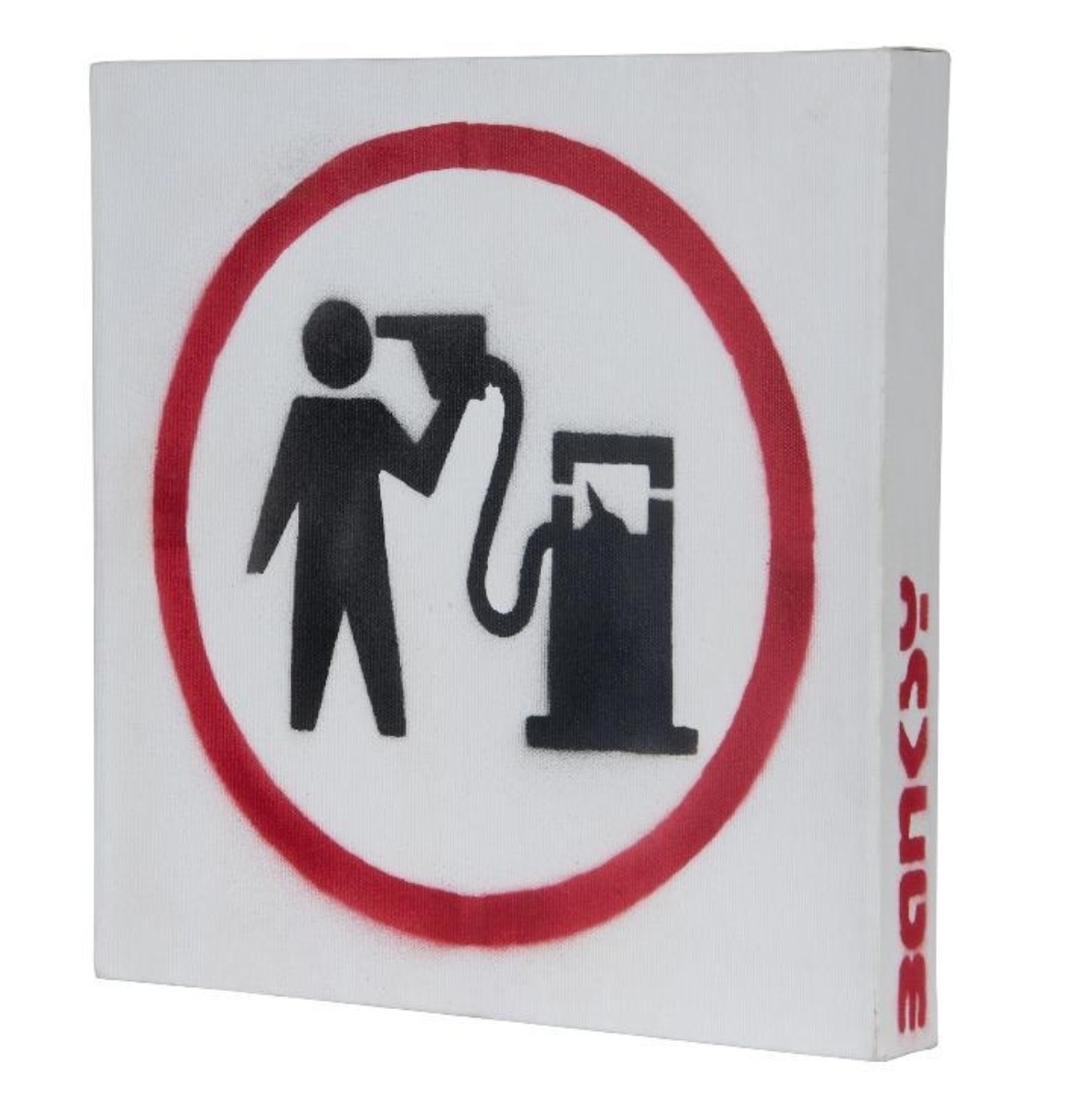
Tagged on the right-side edge
Dated and numbered on the stretcher
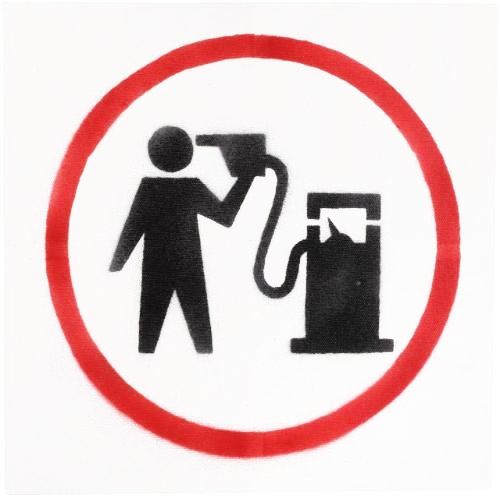
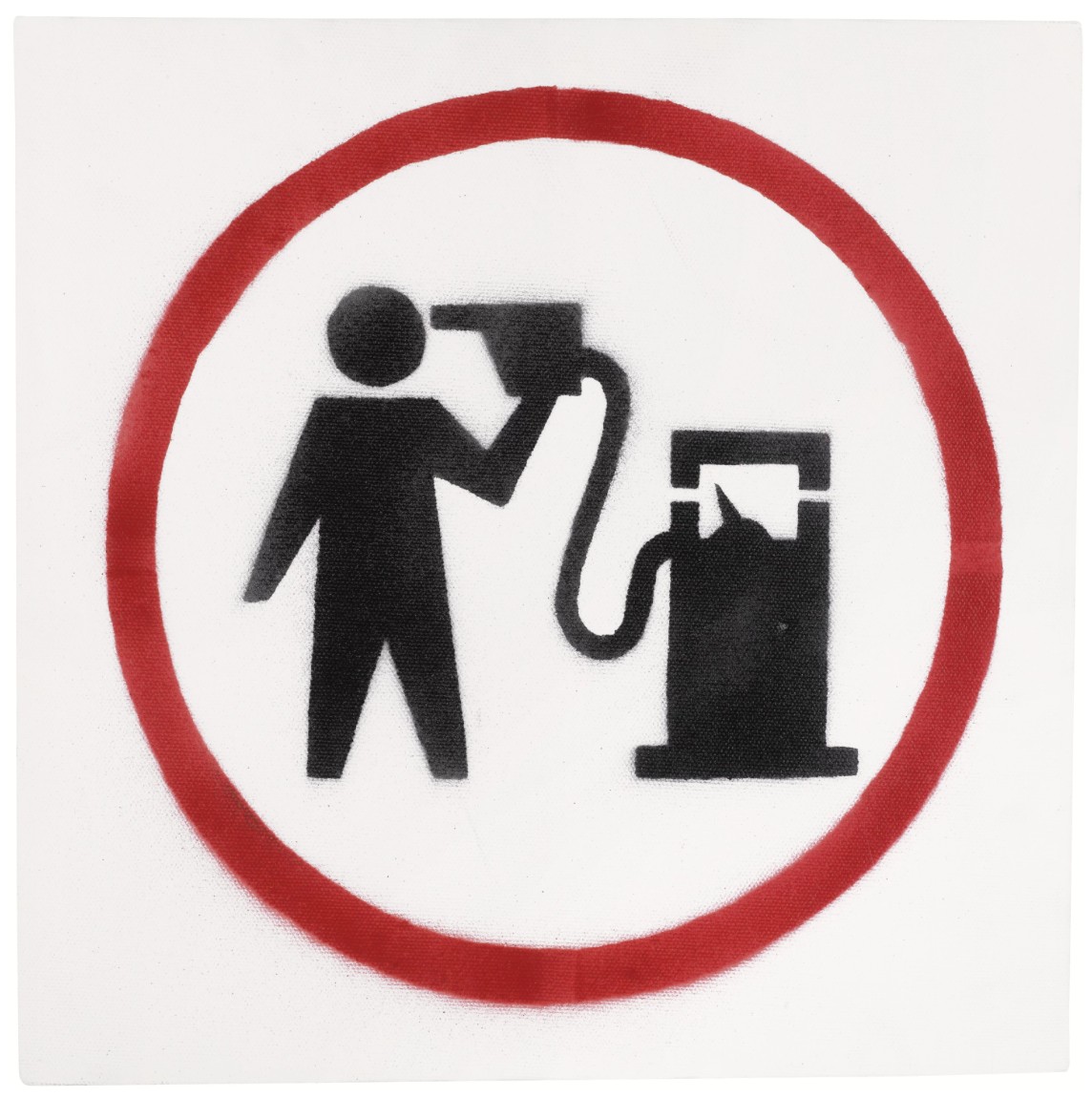
Created in 2003, Petrolhead is one of Banksy’s most minimalist editioned works. Executed in acrylic and stencil spray paint, the composition appropriates the familiar visual language of road signage, depicting a simplified figure refueling not a vehicle, but its own head. Enclosed within a bold red circle, the image resembles an official warning or instructional sign, immediately recognizable yet quietly unsettling. By reducing the composition to universally understood pictograms, Banksy transforms an everyday symbol into a sharp commentary on modern society.
Like much of Banksy’s work, Petrolhead derives its power from a simple visual reversal. The act of refueling, normally associated with machines, is redirected towards the human figure itself. The implication is immediate: oil has become so central to contemporary life that it no longer powers only our vehicles, it fuels our existence, our economies and, perhaps, our thinking. The title reinforces the irony. Traditionally, a “petrolhead” is someone passionately devoted to cars and engines. Banksy expands the term into a broader metaphor for a civilization whose dependence on fossil fuels has become almost instinctive. The work gently suggests that society’s relationship with oil is no longer merely practical, but psychological.
There is also a characteristic ambiguity. The figure is not portrayed as a victim, nor as a villain. Instead, Banksy leaves open the uncomfortable possibility that we all participate in this dependency. The image is therefore less an accusation than an invitation to reflect on habits that have become so ordinary they often pass unnoticed.
Petrolhead belongs to a group of early works in which Banksy appropriated the graphic language of public information systems, warning signs and universally recognized symbols. Rather than inventing new imagery, he subtly altered familiar visual codes, allowing viewers to recognize the joke before realizing its broader implications. The work also anticipates Banksy’s long-standing interest in environmental and political themes. Petrolhead questioned the relationship between modern lifestyles and the resources that sustain them.
“The Ghetto is partly a shameless commercial enterprise, and partly about promoting art. But basically it is a piss-take on Christmas.”

Auction Results
PLEASE CLICK BELOW FOR AUCTION RESULTS