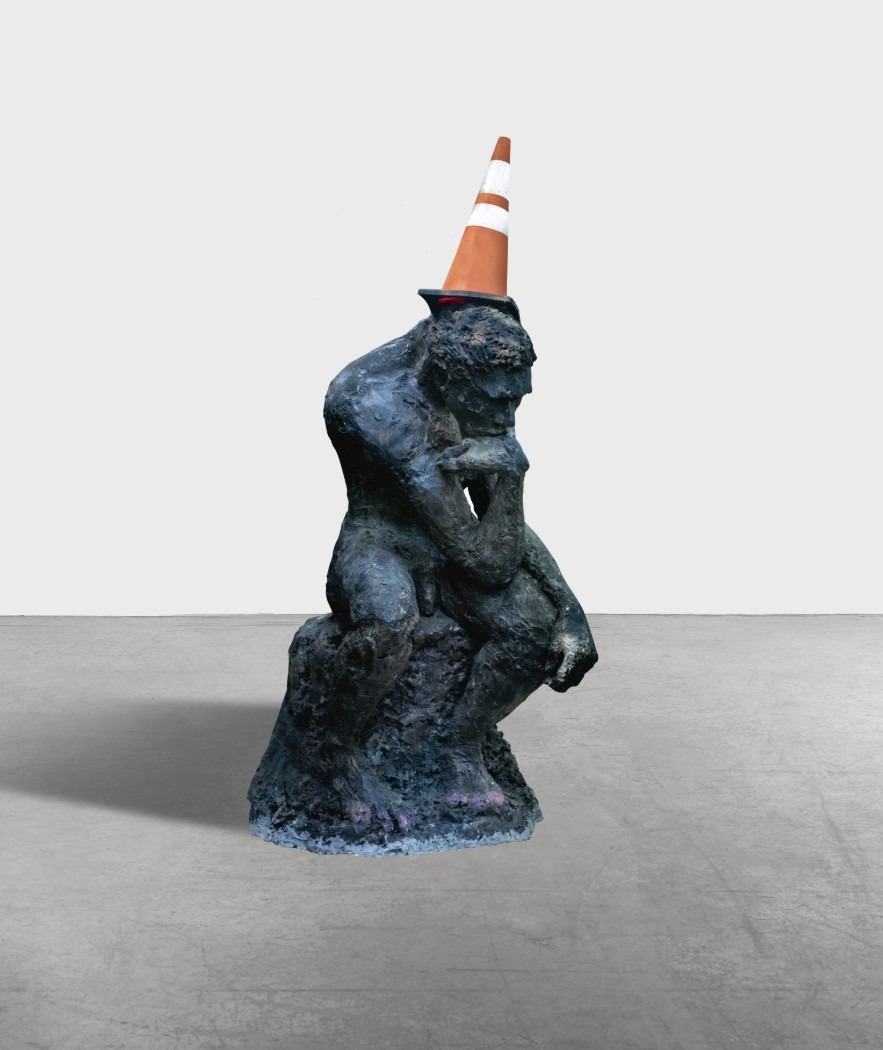
BANKSY
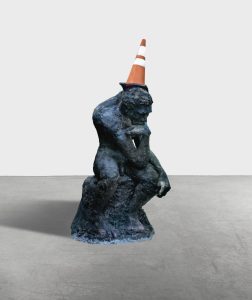
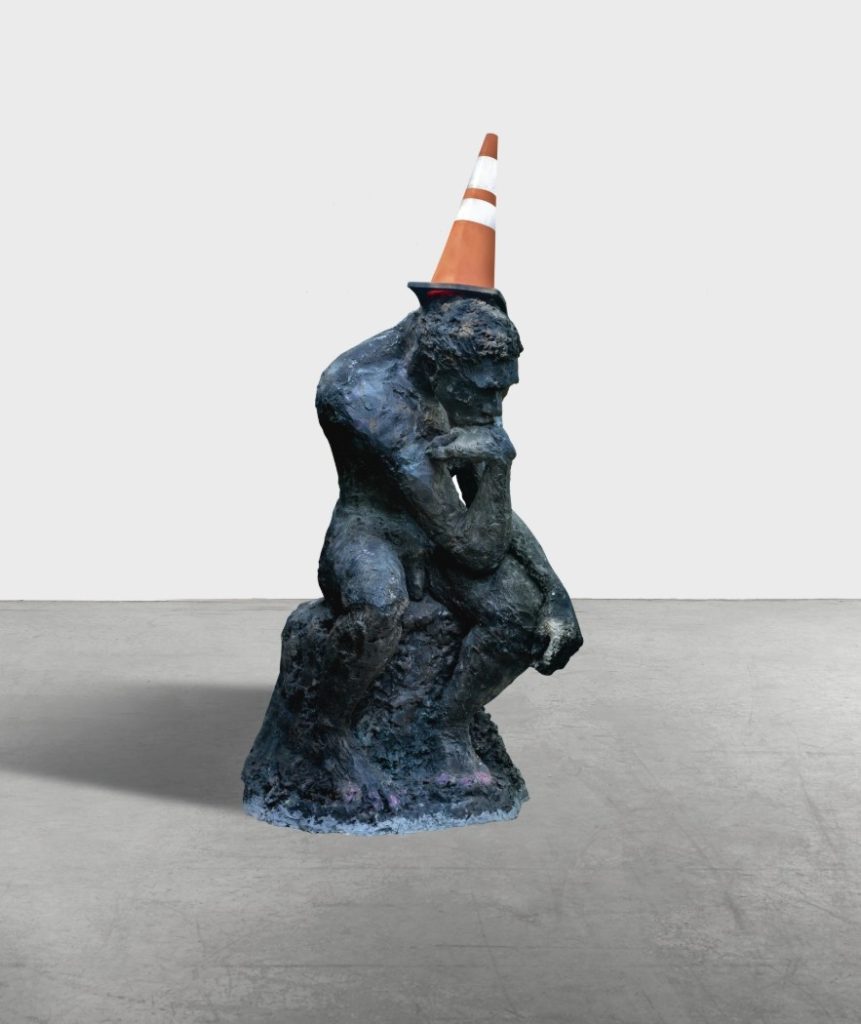
The Drinker, 2004
Mixed media sculpture
220x130x155cm
Provenance
The Artist
Steve Lazarides, United Kingdom
Acquired directly from the above by the present owner in 2014
Catalogue Note
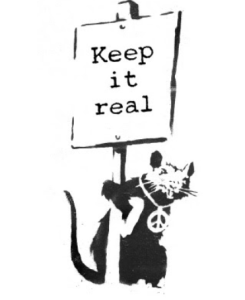
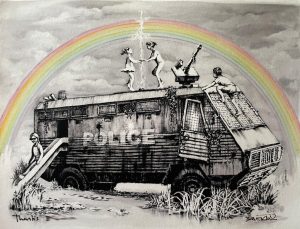
Few artists have challenged the authority of art history with as much wit and irreverence as Banksy. Throughout his career, he has repeatedly appropriated some of Western civilisation’s most celebrated masterpieces, not to mock them, but to force us to look at them anew. Whether vandalising Monet’s tranquil water lilies with abandoned shopping carts, placing a smiley face upon a masterpiece, or inserting riot police into pastoral landscapes, Banksy has consistently demonstrated that the history of art is not a sacred monument but an ongoing conversation. The Drinker belongs among the most ambitious examples of that dialogue.
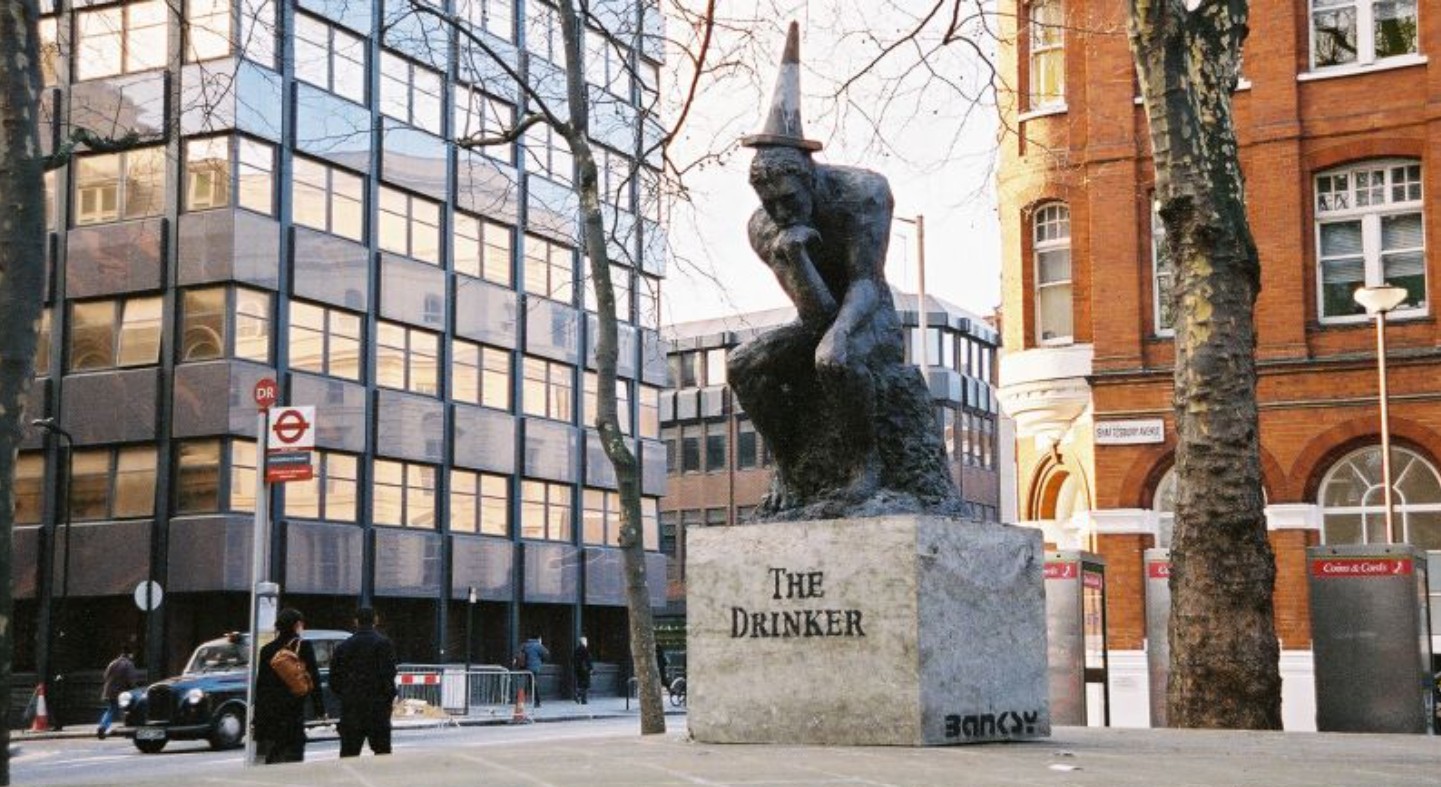
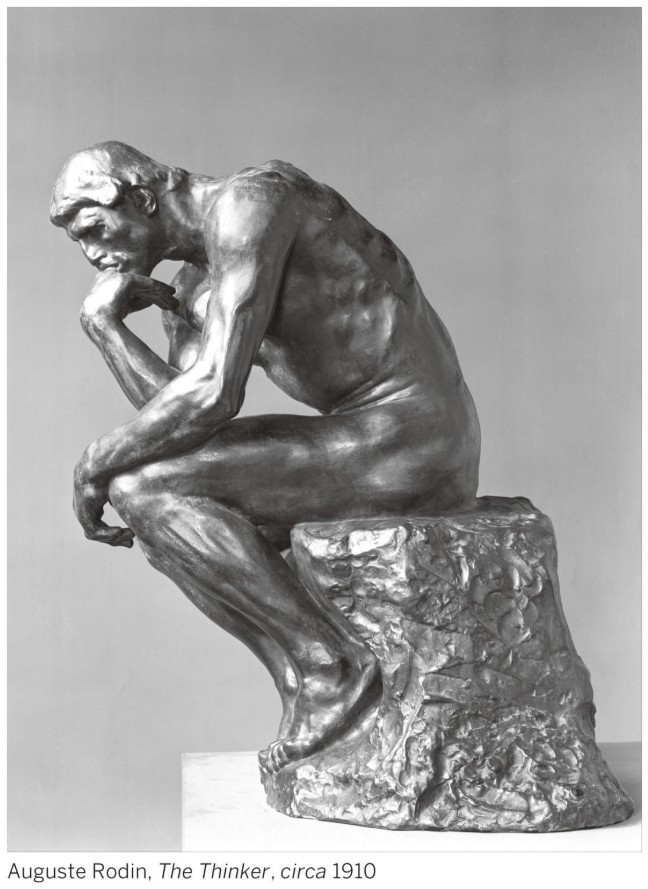
Installed overnight in 2004 on Shaftesbury Avenue in London’s West End, The Drinker immediately announced itself as an act of artistic mischief on a monumental scale. Standing over two metres high and weighing more than three tonnes, the sculpture is an unmistakable parody of Auguste Rodin’s The Thinker, one of the most recognisable sculptures in the history of art. Yet Banksy’s figure has abandoned philosophical contemplation. Slumped forward with a traffic cone balanced awkwardly upon his head, he resembles the last reveller left outside a British pub at closing time rather than humanity’s greatest intellectual. The transformation is both comic and strangely poignant. In a single gesture, Rodin’s universal symbol of reason becomes an icon of intoxication, vulnerability and contemporary urban life.
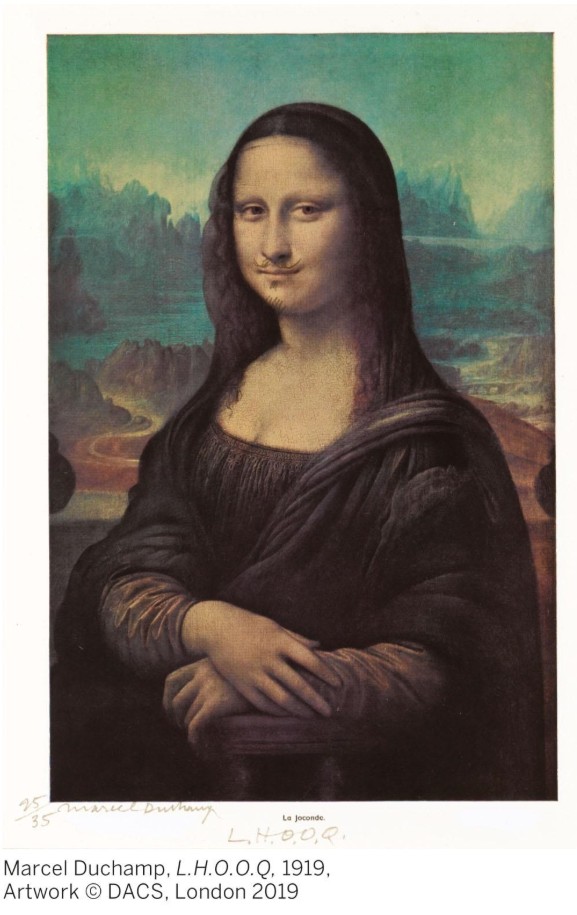
The intervention is deceptively simple. Banksy does not destroy Rodin’s masterpiece; he merely alters its context. Like Marcel Duchamp’s legendary L.H.O.O.Q., in which a cheap reproduction of Leonardo’s Mona Lisa acquired a moustache and goatee, The Drinker demonstrates that even the most revered works of art are not beyond reinterpretation. The orange traffic cone functions much like Duchamp’s pencil moustache: a deliberately banal object capable of collapsing centuries of artistic reverence into a moment of laughter. It is an act of what might be called affectionate vandalism, acknowledging the greatness of the original while simultaneously liberating it from the solemnity that museums often impose.
Yet Banksy’s choice of the traffic cone carries a distinctly British resonance. In Britain, placing a traffic cone upon statues has long been a form of spontaneous public humour, nowhere more famously than the Duke of Wellington in Glasgow, whose cone has become almost as celebrated as the monument itself. By incorporating this familiar urban gesture into a monumental sculpture, Banksy elevates everyday folk mischief into high art. The cone ceases to be a prank; it becomes a sculptural intervention in its own right, blurring the distinction between official monument and public participation.
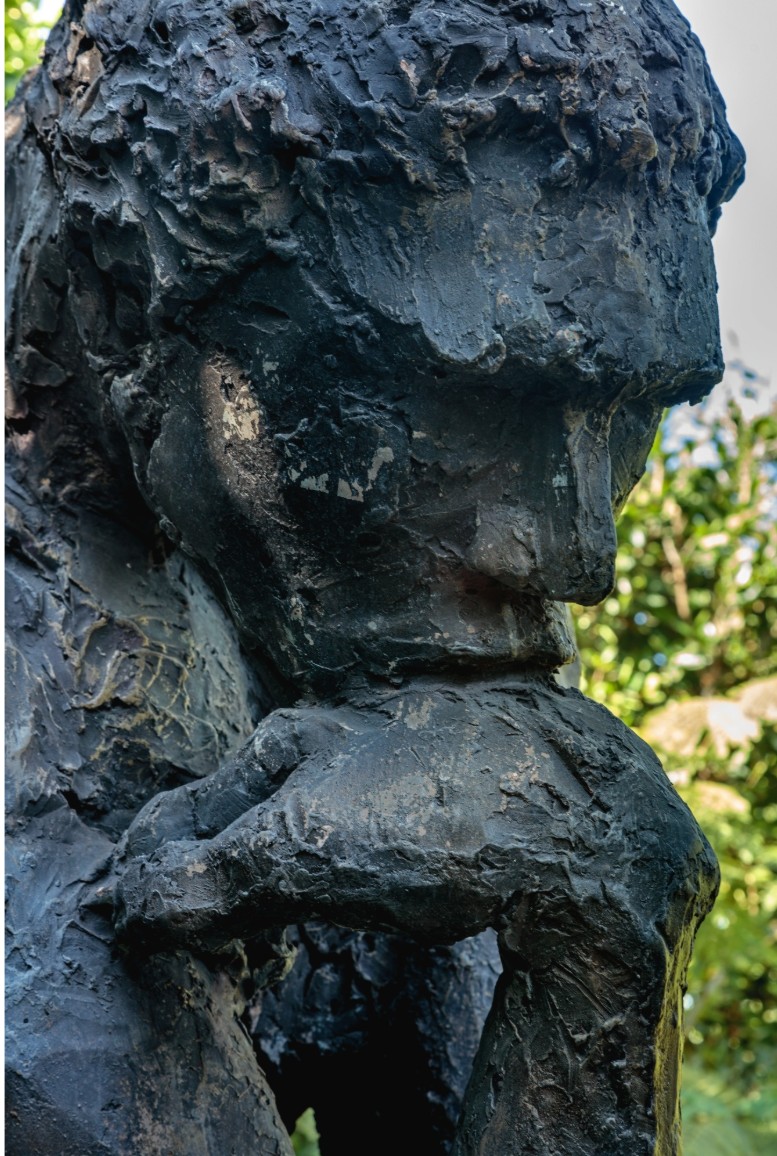
The title itself invites deeper reflection. Rodin’s figure thinks. Banksy’s figure drinks. The substitution is more profound than it first appears. If The Thinker represents the triumph of reason, introspection and intellectual ambition, The Drinker embodies a very different aspect of the human condition: escape, excess, vulnerability and the quiet absurdity of modern life. Banksy replaces heroic contemplation with ordinary humanity. His figure is not an idealised philosopher but an unmistakably familiar character, one encountered outside pubs, football grounds and city centres across Britain. In doing so, Banksy asks a deceptively simple question: what does the contemporary human condition actually look like?
The sculpture’s extraordinary history only reinforces its conceptual power. Almost immediately after its installation, The Drinker was kidnapped by a self-proclaimed collective of “art terrorists” known as Art Kieda, led by the guerrilla artist AK47. The group demanded a ransom of £5,000 or a signed Banksy painting in exchange for the sculpture’s return. Banksy’s response was characteristically deadpan. He reportedly offered them £2 towards a can of petrol, remarking that the sculpture might actually look better on fire than it did already. The exchange transformed the work into a piece of performance art in its own right, blurring the boundaries between artist, artwork, thieves and media spectacle. In a curious twist worthy of a Banksy installation, the stolen sculpture was itself stolen once again before eventually finding its way back into the artist’s possession and later receiving authentication from Pest Control. Few contemporary sculptures possess a provenance so improbable that it could itself become the subject of a feature-length documentary, yet that is precisely what happened with The Banksy Job (2015).
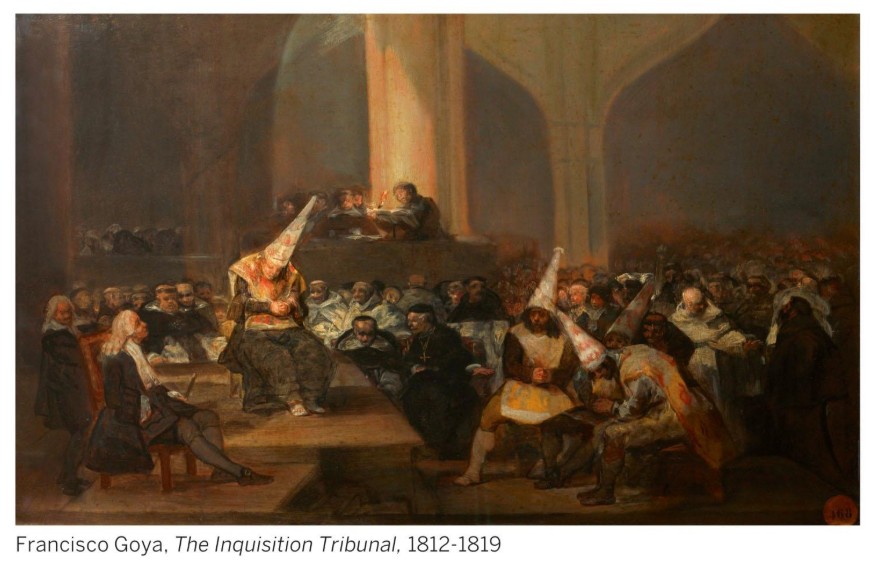
There is another, more subtle historical echo running through the work. Francisco Goya’s The Inquisition Tribunal depicts prisoners wearing the infamous coroza, the conical hats forced upon those condemned by the Spanish Inquisition as symbols of public humiliation. Although Banksy’s traffic cone belongs to an entirely different cultural tradition, the visual resemblance is striking. Both transform headwear into an instrument of ridicule. One recalls institutional punishment; the other popular humour. Banksy repeatedly explores this tension between authority and mockery, reminding us that monuments derive their power only so long as society agrees to treat them with reverence. Once laughter enters the equation, authority begins to crumble.
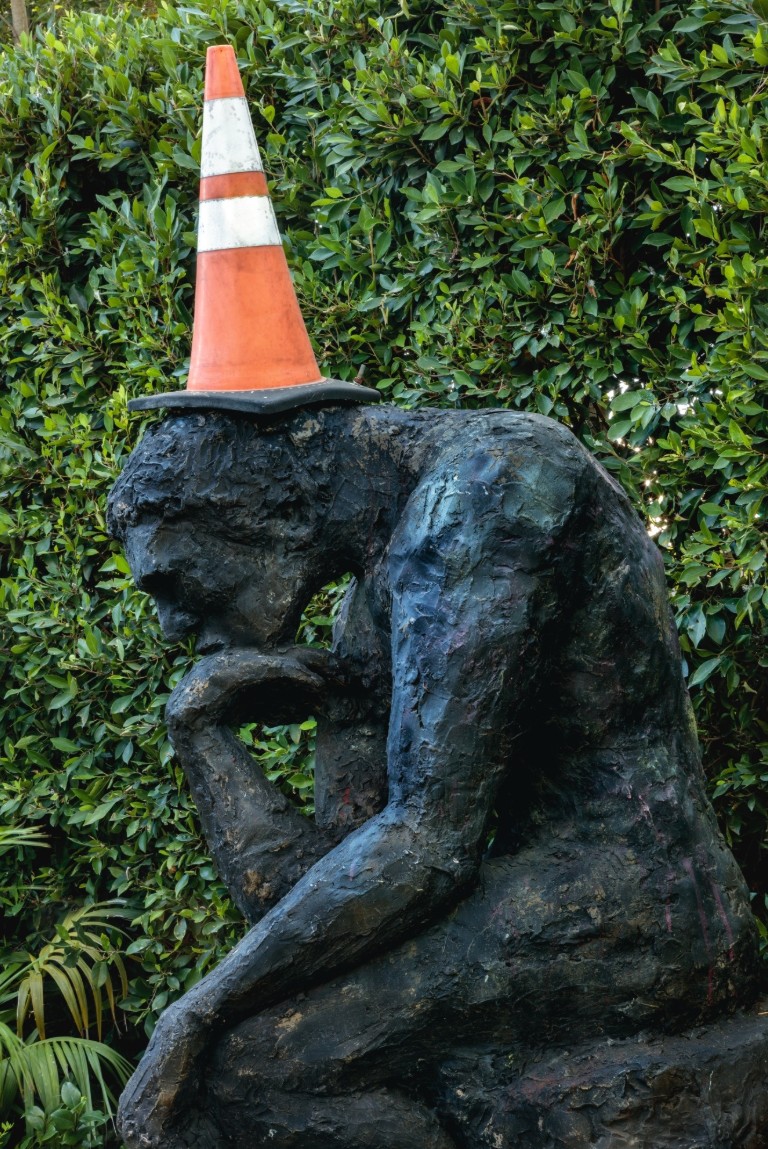
Like many of Banksy’s greatest works, The Drinker exists simultaneously as sculpture, performance, public intervention and conceptual art. It belongs to the lineage of Rodin and Duchamp, yet it also belongs unmistakably to the street. It demonstrates that parody need not diminish a masterpiece; on the contrary, it often renews it. By replacing solemn contemplation with a drunken slouch and crowning one of art history’s greatest thinkers with an orange traffic cone, Banksy reminds us that culture survives not because it remains untouched, but because every generation finds new ways to question it.
Ultimately, The Drinker is not a joke at Rodin’s expense. It is a celebration of art’s extraordinary capacity for reinvention. Like Duchamp before him, Banksy understands that sometimes the smallest intervention—a moustache, a traffic cone, a smile—can fundamentally alter the way we see the world. And perhaps that is the true lesson of The Drinker: even the greatest masterpieces should never become so sacred that they cease to make us think… or smile.