Barcode
Editions
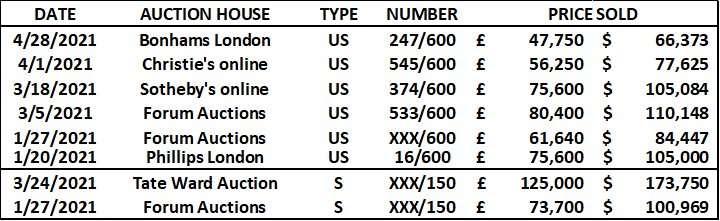
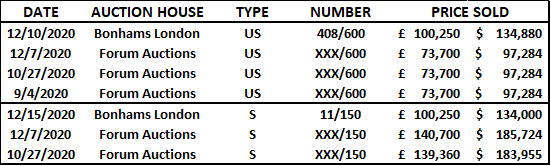
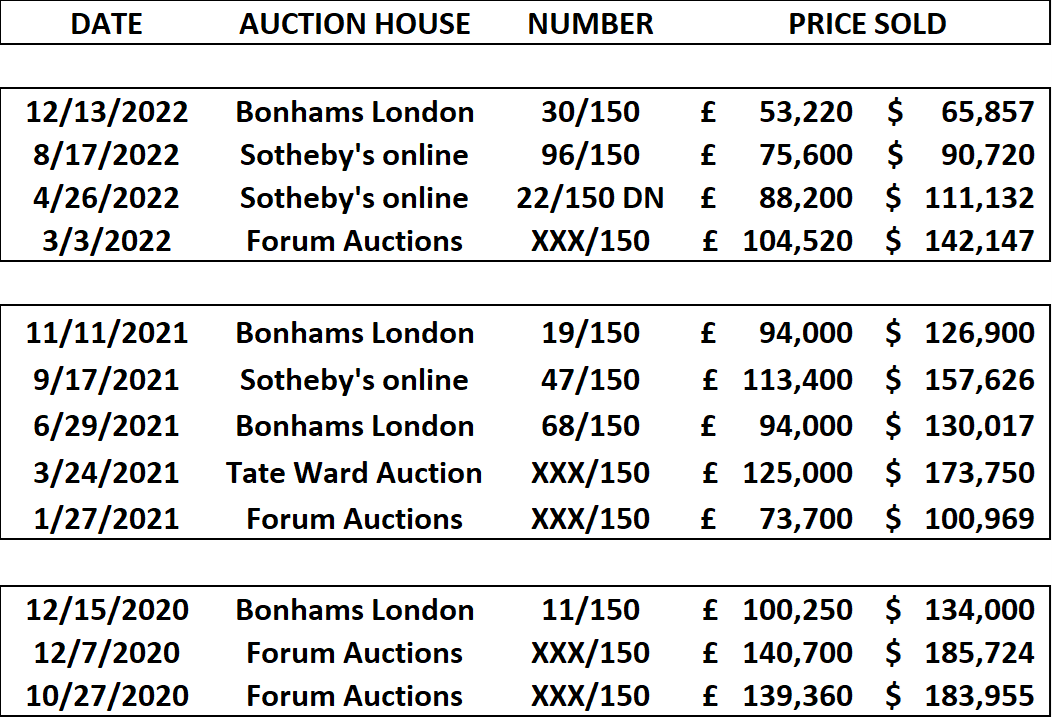
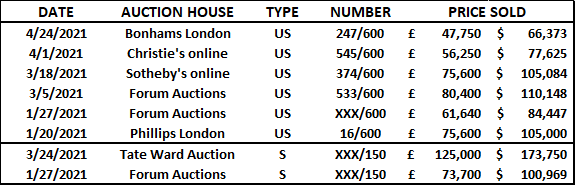
Signed Edition: 150
Unsigned Edition: 600
Artist’s Proofs: Unknown number
Numbering and Signature
Numbered in pencil, lower right, no publisher’s blindstamp
Some with the Banksy stamp in red ink
Signed either in pencil or in black ink
Introduction
The composition is anchored by a large barcode, rendered in rigid vertical black lines. Mounted on small wheels, the structure resembles a mobile cage: mechanical, functional, and entirely devoid of emotion. Emerging from within this structure is a leopard. The animal appears mid-escape, its body extending beyond the confines of the barcode, as if it has just broken free. Its posture is tense, alert, and unmistakably alive, contrasting sharply with the inert geometry of the cage behind it.

With Barcode, Banksy delivers one of his most controlled and visually incisive critiques of modern consumer culture. Reduced to a stark black-and-white composition, the work transforms a banal commercial symbol into a scene of latent tension—where nature, once confined and commodified, appears on the verge of reclaiming its autonomy.
Nature as Product, Power Contained
At its core, Barcode is a critique of commodification, not in the abstract, but in its most tangible and unsettling form. The barcode is a universal symbol of trade. It reduces objects to data, identity to code, and value to price. By transforming it into a cage, Banksy makes explicit what is usually invisible: the system that contains, categorizes, and ultimately exploits. The leopard introduces a crucial shift in tone. Unlike passive animals often depicted in captivity, the leopard embodies strength, autonomy, even a form of latent violence

Its escape suggests resistance. But the fact that it emerges from a barcode, rather than a natural enclosure, points to a deeper critique: nature itself has been processed, packaged, and made into a commodity. As it is often the case with Banksy (if not all the time), Barcode can be read in many different manners: reflection on zoos and systems of entertainment, a critique of illegal wildlife trade and poaching, or a broader indictment of how living beings are reduced to economic units Banksy does not depict suffering directly. Instead, he reveals the structure that produces it.
Release Context
Barcode first appeared on the side of a house on Pembroke Road in Bristol. The stencil was quickly removed from the wall but reappeared a few years after on the occasion of an exhibit in Somerset. Barcode first appeared within Banksy’s street practice, where its immediate readability allowed it to function as a sharp visual interruption within urban space. The image was later released as a print edition in 2004 through Pictures on Walls (POW), marking a period in which Banksy was refining his ability to circulate subversive imagery beyond the street.

This transition is significant: the critique of commodification enters the market, the image itself becomes a collectible object, and the tension between message and medium intensifies. Barcode operates precisely within this contradiction.
Animals as Mirrors of Human Systems
Animals occupy a central role in Banksy’s visual language, often serving as proxies through which human systems are exposed. In Barcode, the leopard is not symbolic in a decorative sense: it is structural. It represents what cannot be fully controlled or what resists reduction. Yet the barcode-cage suggests that even this resistance is temporary. The system is always present, always capable of reasserting itself.

Barcode Leopard, 2002
Stencil spray-paint on canvas
43×51 cm (17×20 inches)
Edition of 5
Barcode remains one of Banksy’s most elegant and conceptually resolved works. Its strength lies in its balance and obvious visual clarity together with a layered interpretation. The image continues to resonate across contexts, from environmental discourse to critiques of global trade. Its relevance has only intensified as conversations around wildlife exploitation and ecological systems have become more urgent.
Barcode Leopard, 2002

Barcode Leopard, 2002
Spray paint and emulsion on canvas
60×85 cm (23 5/8 x 33 1/2 inches)
Stenciled with the artist’s name
Barcode is not a depiction of escape: it is a moment suspended between capture and release. The cage remains. The system persists. But for an instant, the structure fractures. And in that fracture, Banksy reveals both the violence of the system: and the possibility, however brief, of resistance.
Auction Results
PLEASE CLICK BELOW FOR AUCTION RESULTS