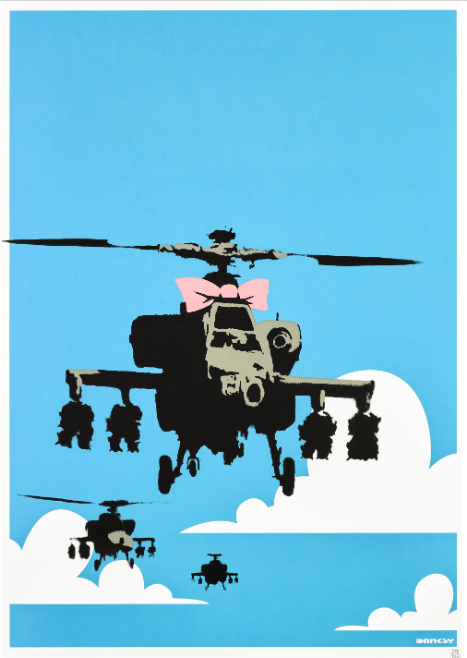
Happy Chopper
Editions
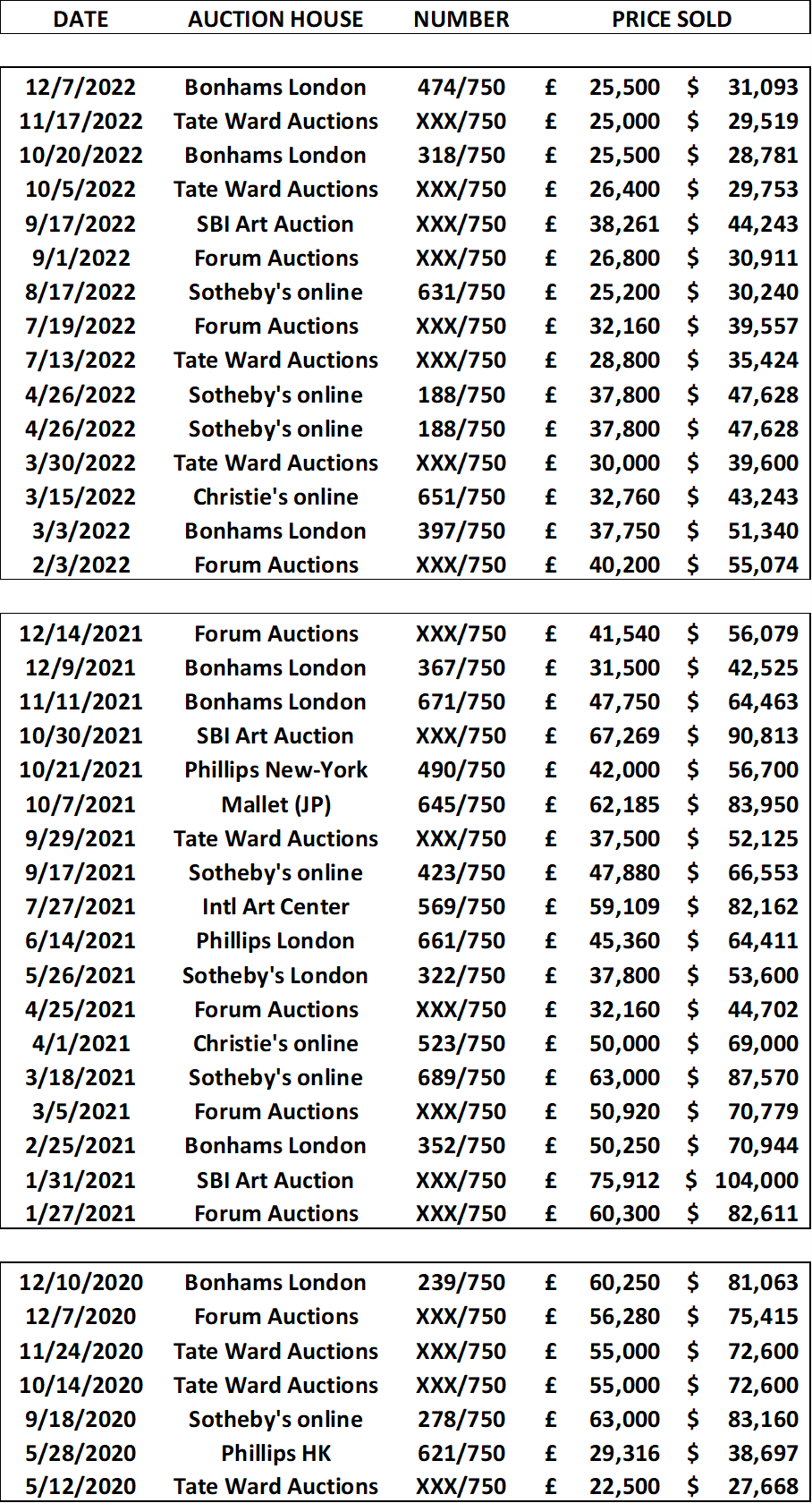
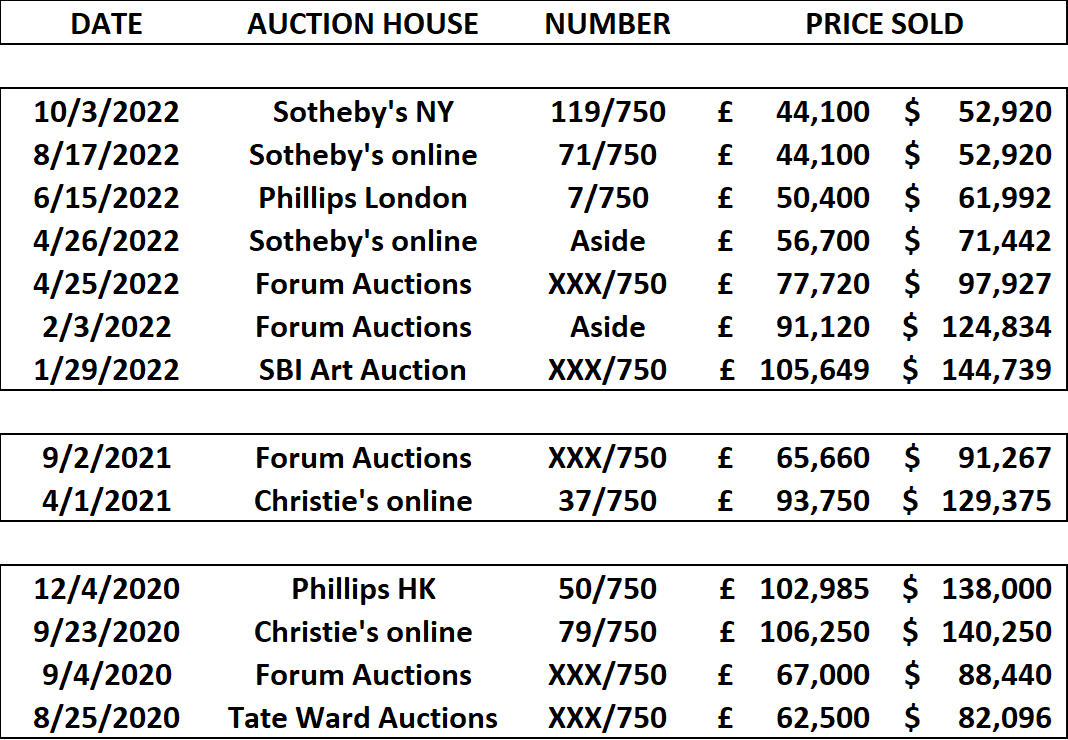
Edition: 750 (of which 150 signed)
Artist’s Proofs: 31 signed AP
A set of 31 Artist’s Proofs has been released in 2005 for Lazarides Gallery.
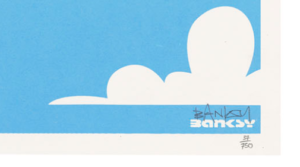
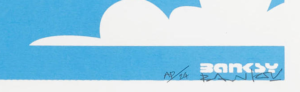
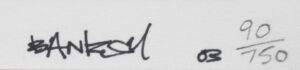
Numbering and Signature
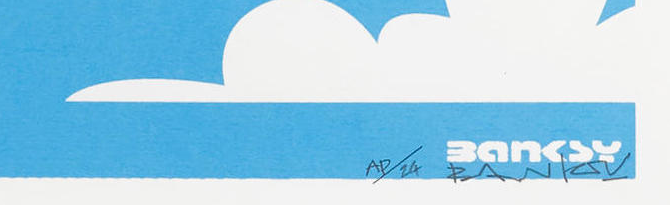
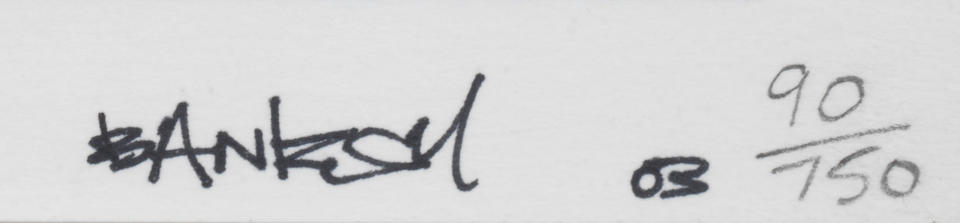
Numbered /750 in pencil, lower right
Signed either in pencil or in black pen, lower right
A War Machine Gift-Wrapped
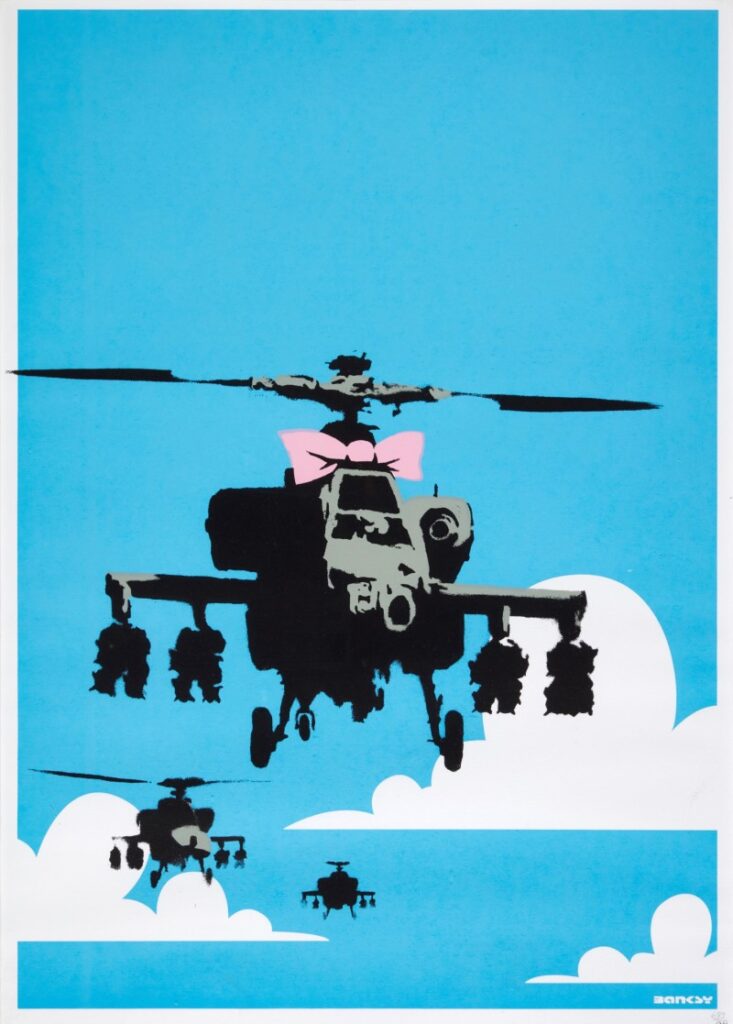
Few images in Banksy’s early oeuvre capture so succinctly his ability to fuse humor, violence, and political unease as Happy Chopper. At first glance, the work appears almost playful: a cartoonish military helicopter adorned with a pink ribbon. Yet, as is often the case with Banksy, the visual dissonance quickly unfolds into a far more unsettling reflection on power, conflict, and the normalization of war.
“A 5-color deluxe print lovingly crafted on heavyweight cartridge paper.
This beautiful image captures the magical moment
American Apache gunship helicopters visit chaos and terror
on screaming civilian populations across the world.
An ideal gift.”
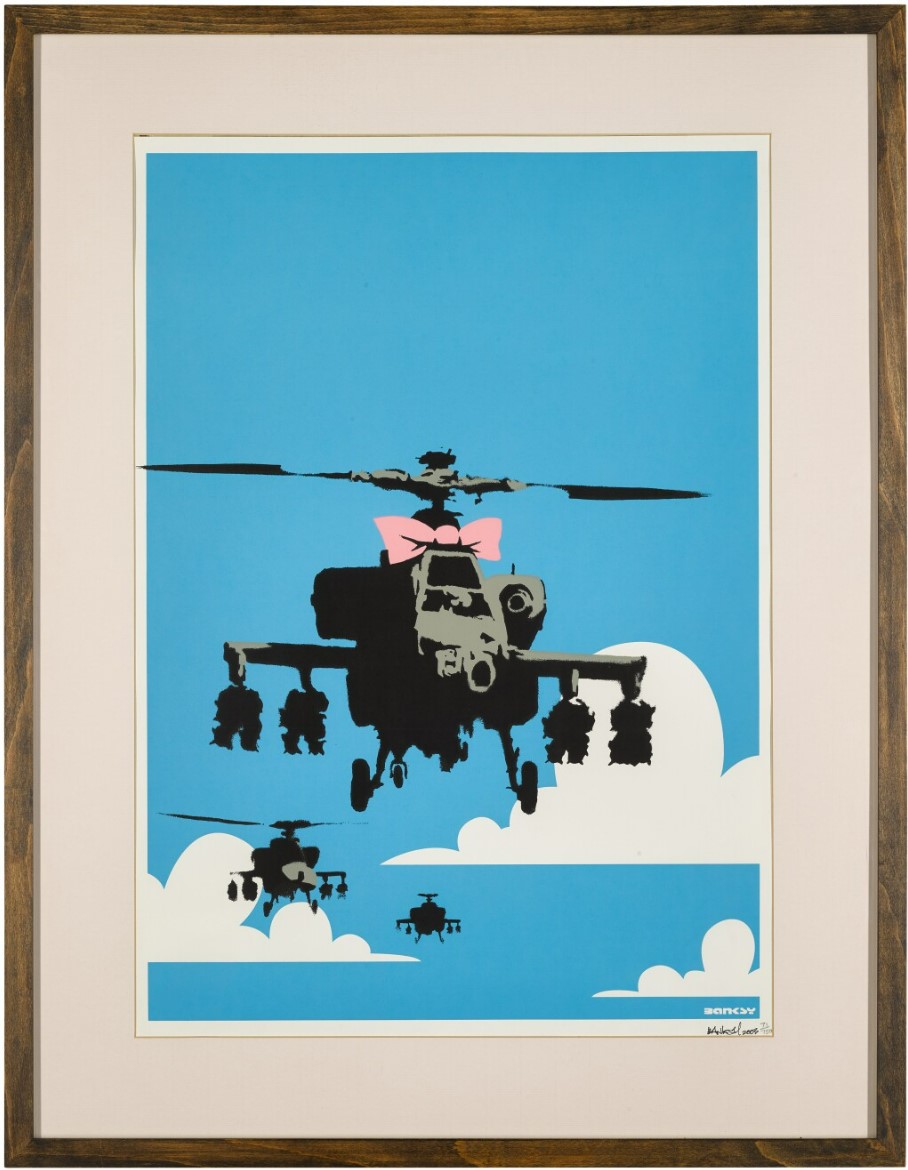
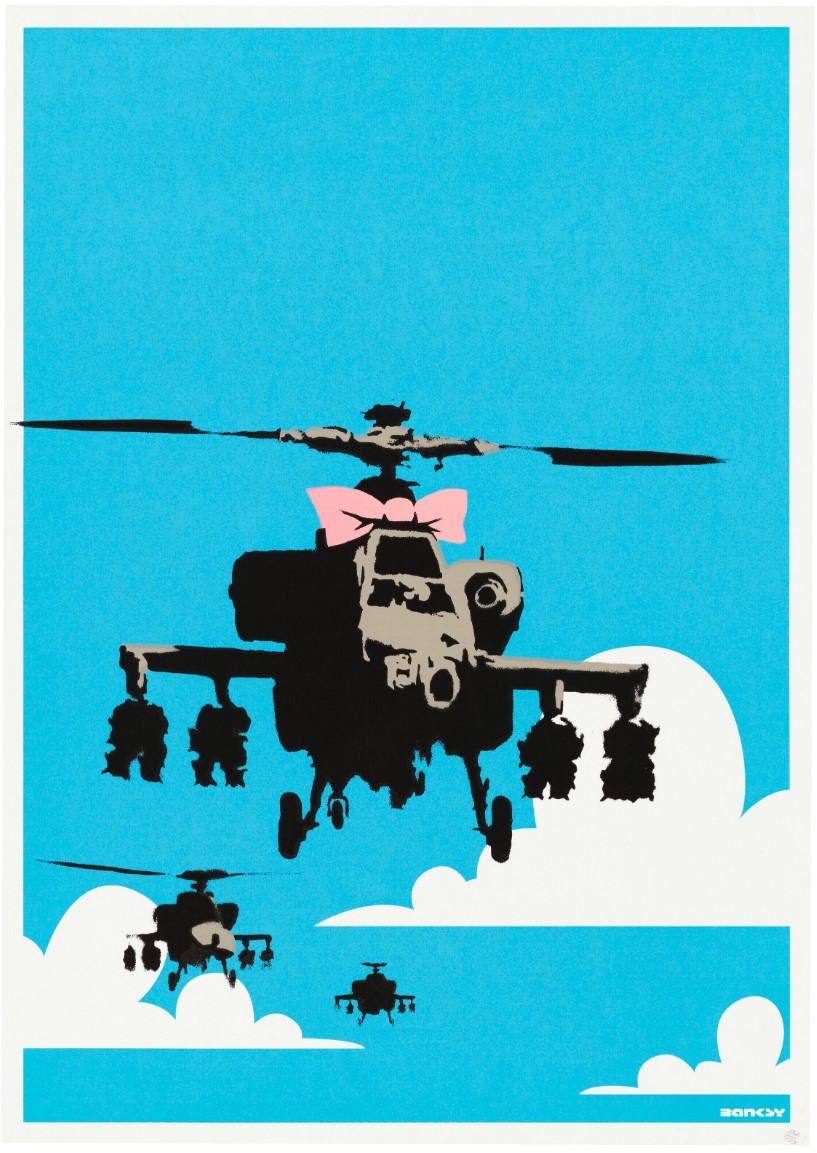
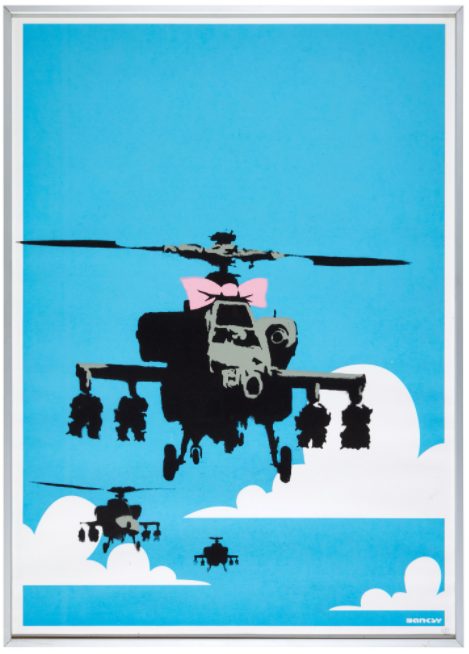
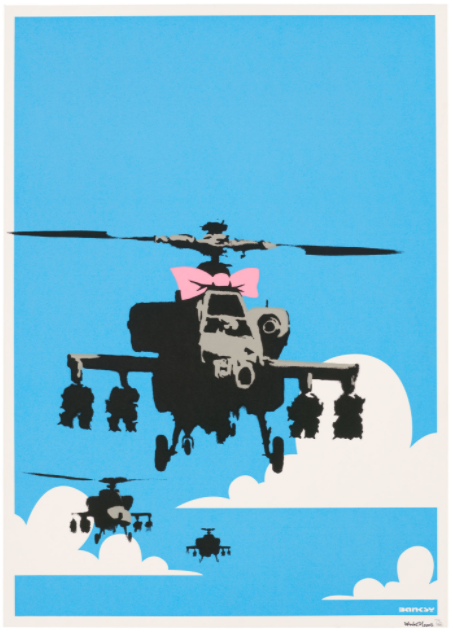
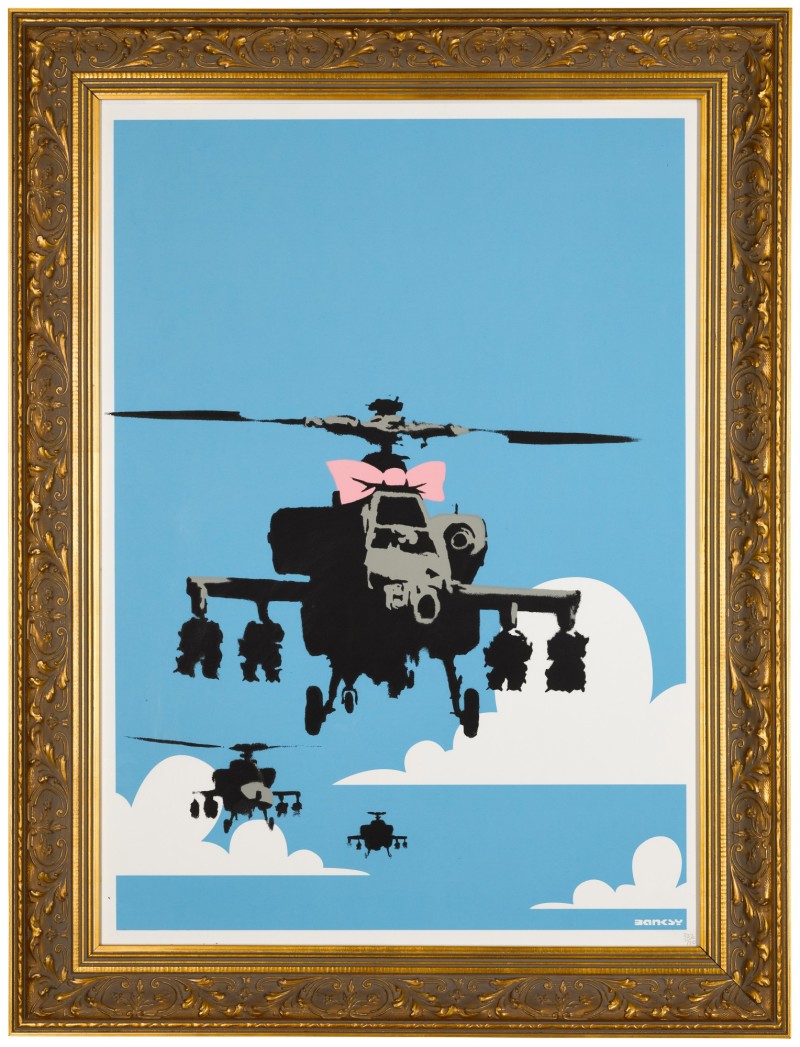
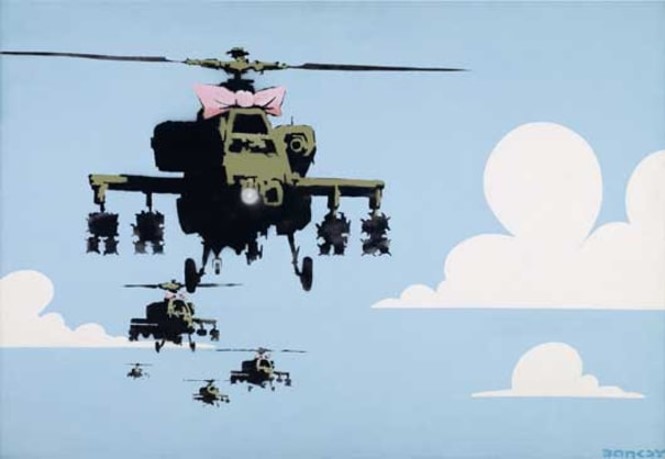
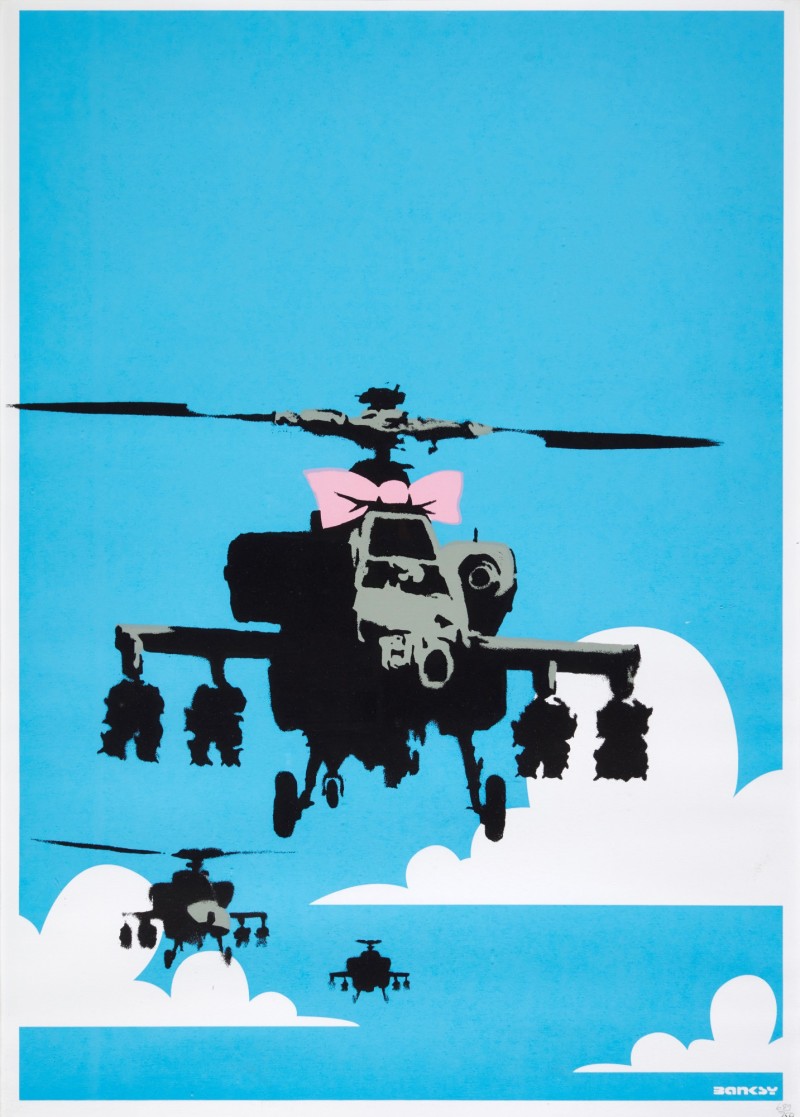
Happy Chopper depicts a squadron of armed military helicopters against a bright blue sky. In stark contrast with the cartoony fluffy clouds, the incoming choppers (American slang for helicopters) are rendered in much greater detail, in dark colors, with graphic emphasis on their heavy and threatening weaponry, evoking a sense of imminent danger.
Between Innocence and Violence
The contrast at the heart of Happy Chopper brings together two opposing visual languages. The cold precision of a military aircraft meets the softness of a decorative ribbon, often associated with childhood, care, or celebration. This juxtaposition does not resolve. Instead, it intensifies the presence of both elements. The bow does not soften the helicopter, it exposes it. By dressing violence in the language of innocence, Banksy reveals how unsettling that combination truly is.
As with many of Banksy’s works, Happy Chopper functions as a quiet lesson in perception. It suggests that the way violence is presented (framed, packaged, or aestheticized) can alter how it is received. The ribbon becomes a visual metaphor for this process. It is superficial, almost insignificant, yet it transforms the entire meaning of the image. The work invites the viewer to question how easily perception can be influenced by surface.
Helicopters, particularly in urban environments, have become part of the visual background—symbols of authority that are rarely questioned. Their presence is constant, almost absorbed into everyday life. By introducing an element that feels absurdly out of place, Banksy interrupts this normalization. The viewer is forced to look again, to reconsider what had previously been accepted without thought. The humor is immediate, but the unease lingers.
From the Streets…
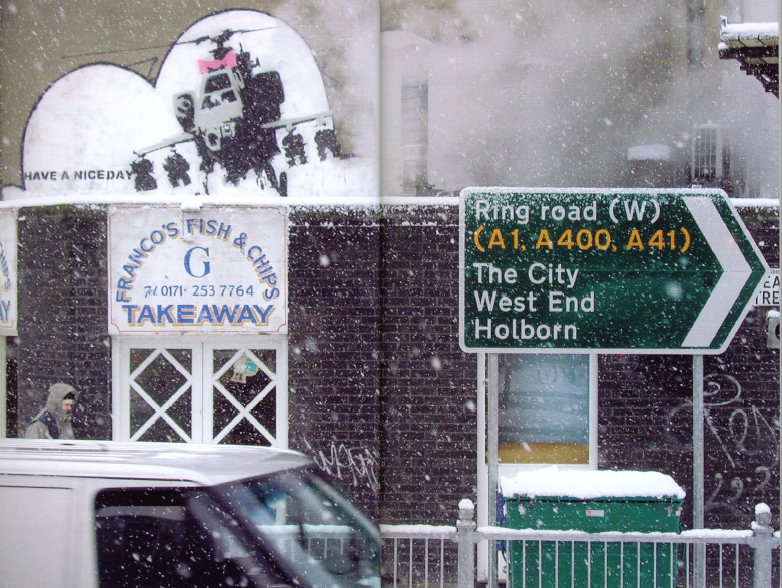
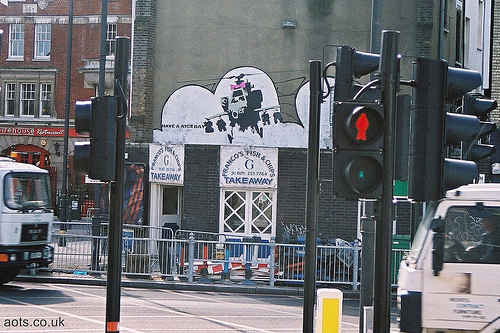
Placed within the street, the work interacts with its surroundings in a way that prints cannot fully replicate. The immediacy, the scale, and the unexpected nature of its placement reinforce the tension between humor and critique that defines the image.
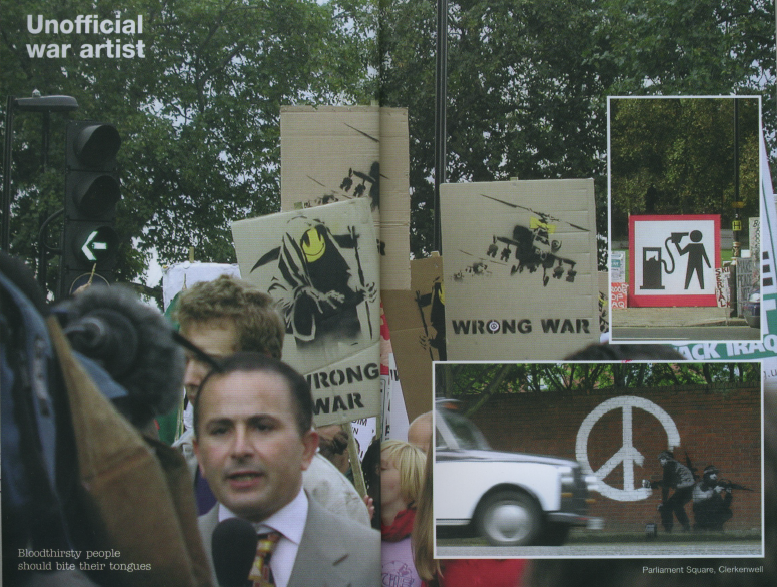
The Apache Helicopter has been a recurring theme in Banksy‘s work. This helicopter often adorned with a pink or yellow ribbon has been used in various anti-war protests in London. It is associated with the war in Iraq, indeed, this conflict was the subject of considerable debate at the time, as accusations were made that the military intervention was primarily motivated by Iraq’s oil supply, and not the fight for democracy and freedom as we were led to believe.
… To Major Art Collections
Beyond its mural and print forms, Happy Chopper also exists as a series of original works on canvas, where the motif is developed with greater material presence and scale. Among these, a major painting dated 2006 holds particular significance.
Happy Choppers, 2006
Phillips London: 5 March 2026
Estimated: GBP 1,000,000 – 1,500,000
GBP 1,520,000 / USD 2,030,570
Banksy Modern & Contemporary Art Evening Sale
REPEAT SALE
Creating A Stage: The Collection Of Marsha And Robin Williams
Sotheby’s New-York: 4 October 2018
Estimated: USD 400,000 – 600,000
USD 735,000
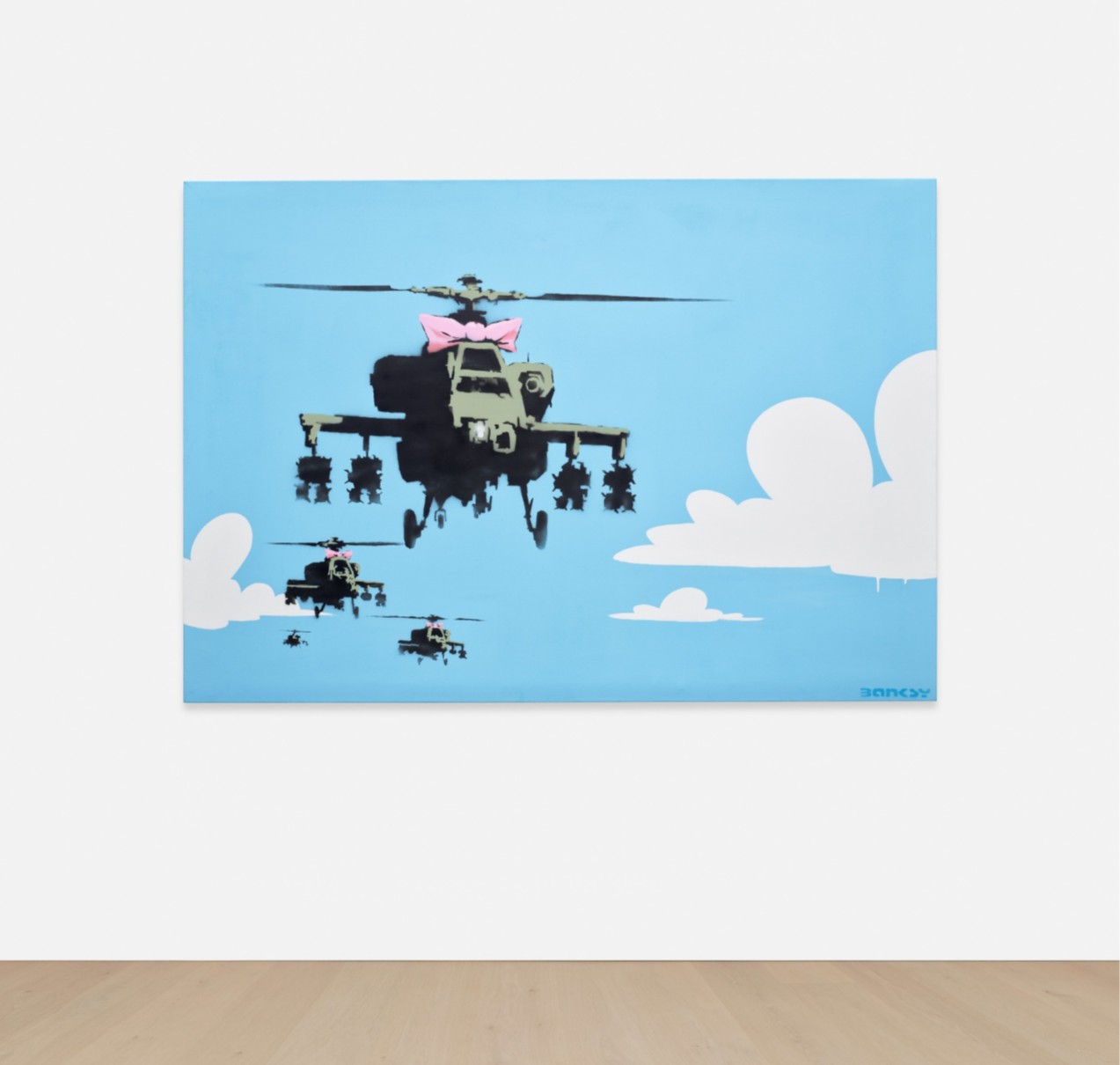
BANKSY
Happy Choppers, 2006
Spray paint and emulsion on canvas
126.9 x 182.9 cm (49-7/8 x 72 inches)
Stencilled ‘BANKSY’ lower right
Signed, numbered and dated ‘BANKSY 12/2/2006 1/3’ on the overlap
This work is number 1 from an edition of 3
This work was exhibited in Banksy’s landmark Los Angeles exhibition Barely Legal, a pivotal moment in his career that marked his transition from street artist to a figure of global recognition within the contemporary art world. The painting, coming from the collection of Robin Williams, further reinforces its importance, situating it within a discerning and culturally attuned provenance. In these painted versions, the image gains a different weight. Removed from the immediacy of the street, the composition becomes more deliberate, more permanent. The contrast between the mechanical form and the delicate ribbon is no longer fleeting, it is fixed, inviting prolonged contemplation.
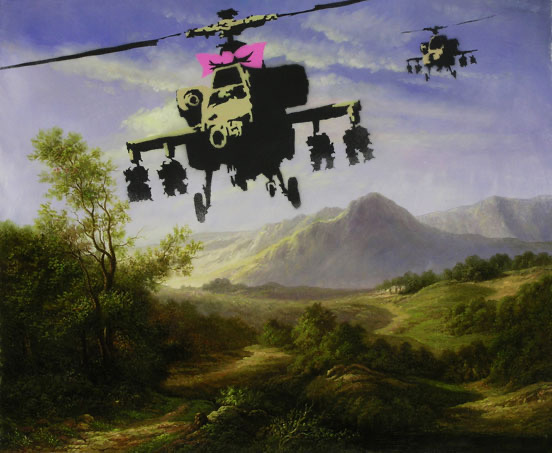
Vandalised Oil (Choppers), 2005
Sotheby’s London: 3 March 2022
Estimated: GBP 2,500,000 – 3,500,000
GBP 4,384,900 / USD 5,861,380
Vandalised Oil (Choppers) | The Now Evening Auction | 2022 | Sotheby’s (sothebys.com)

Vandalised Oil (Choppers), 2005
Oil and spraypaint on canvas
94×61 cm (37×24 inches)
Happy Choppers, 2002
Estimated: GBP 40,000 – 60,000
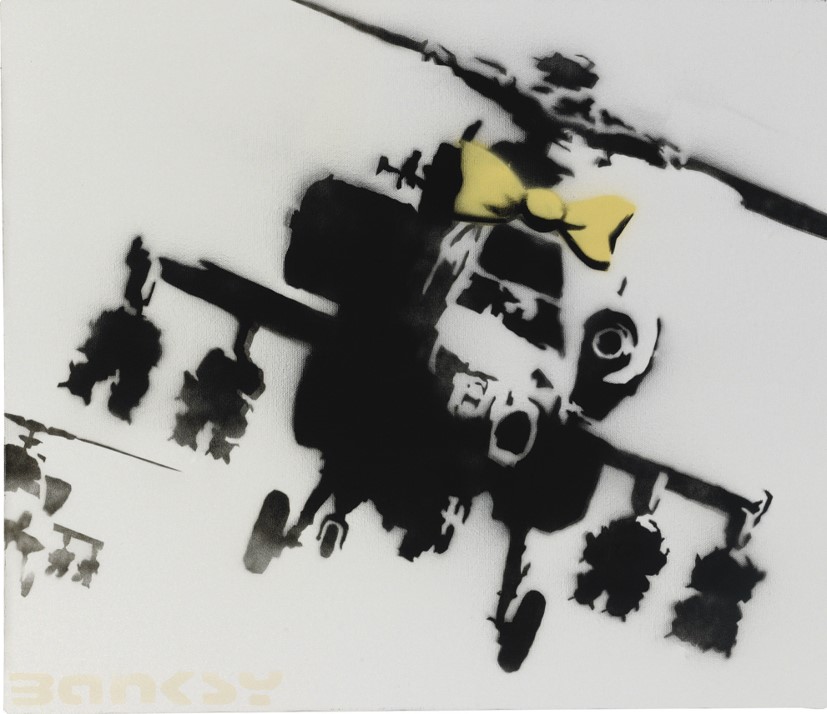
Happy Choppers, 2002
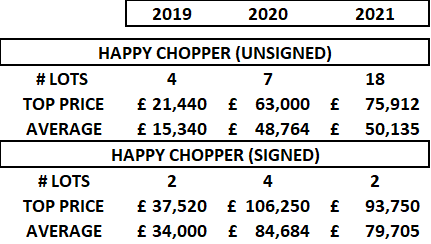
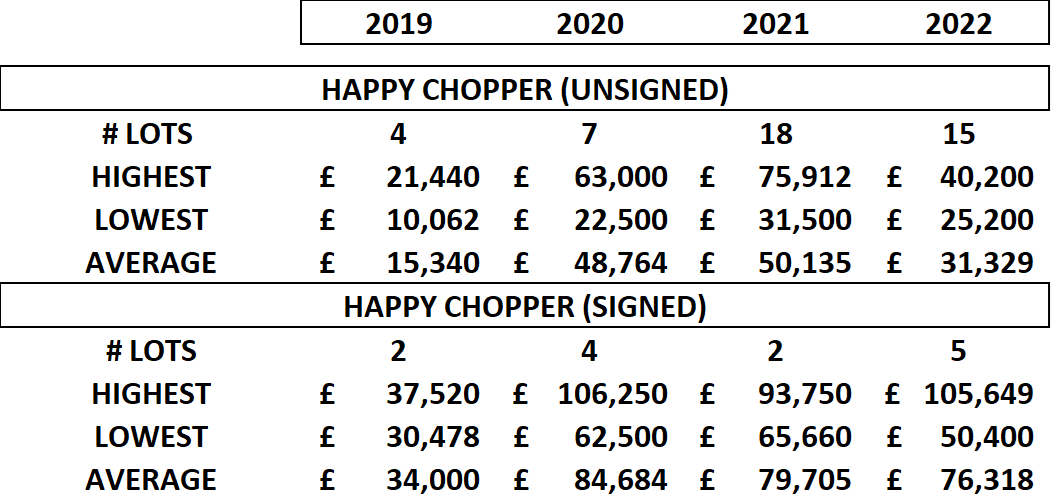
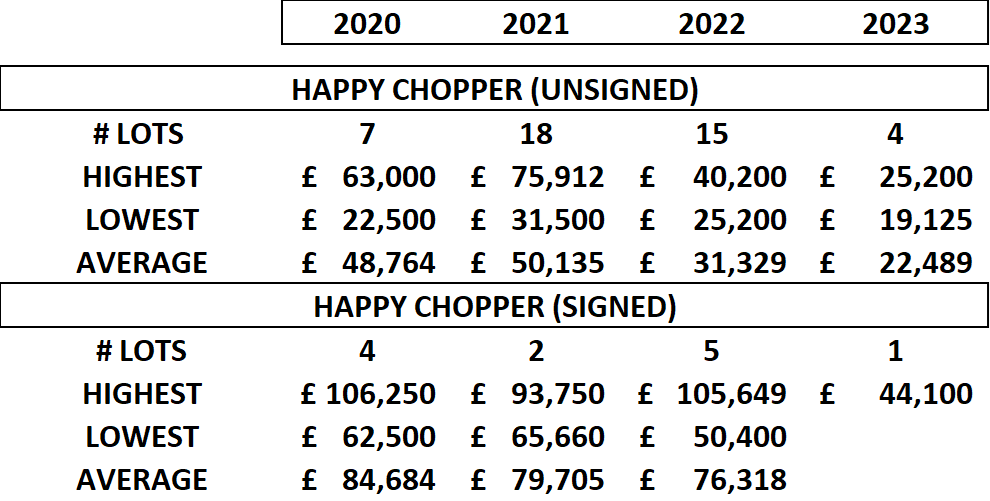
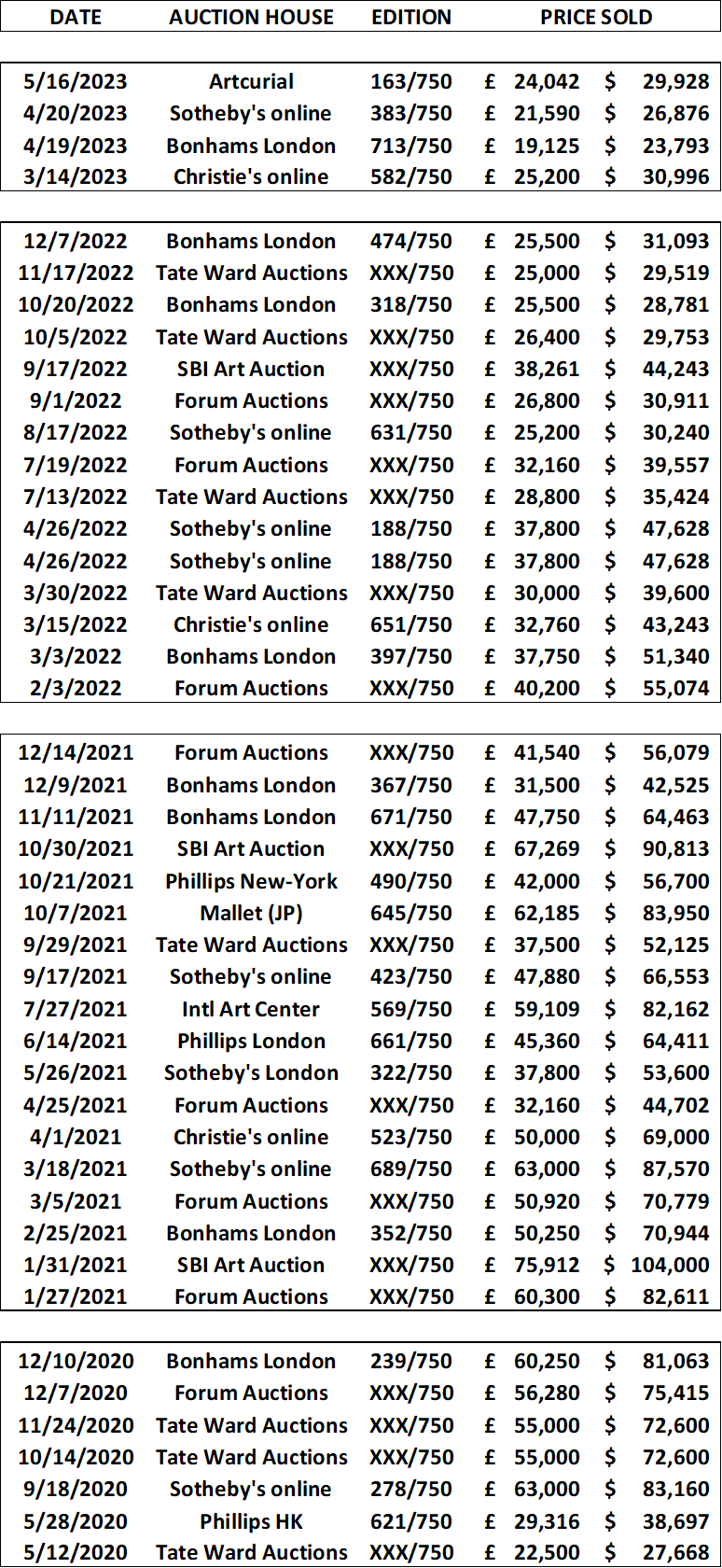
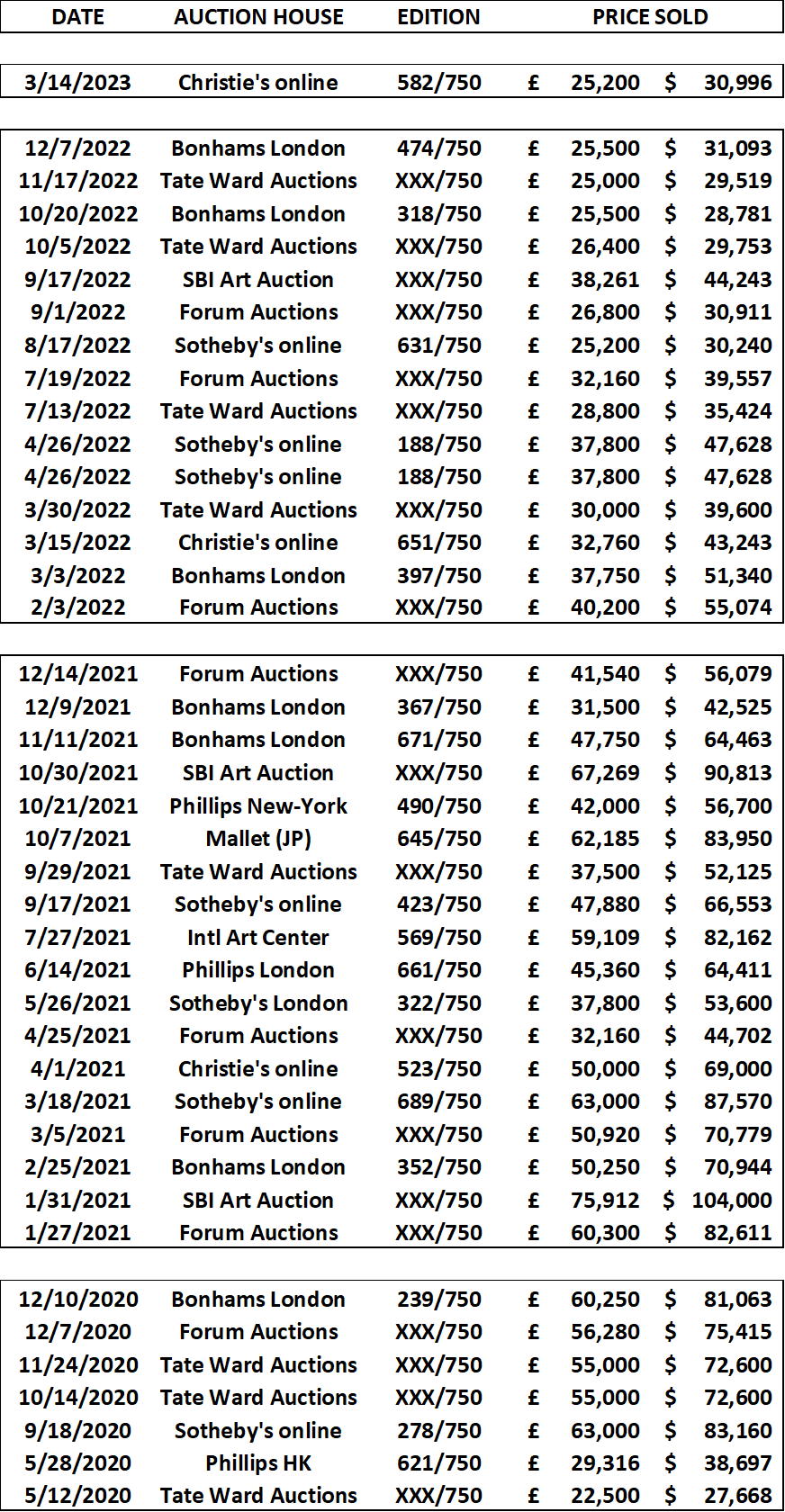
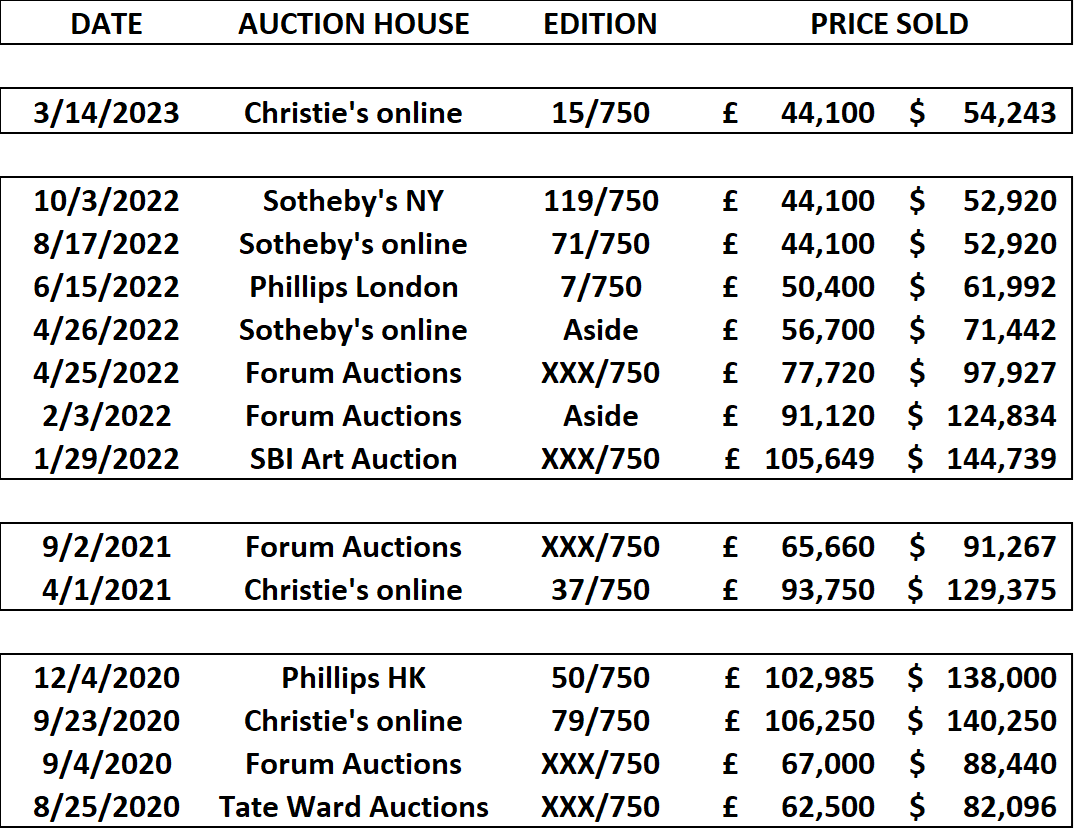
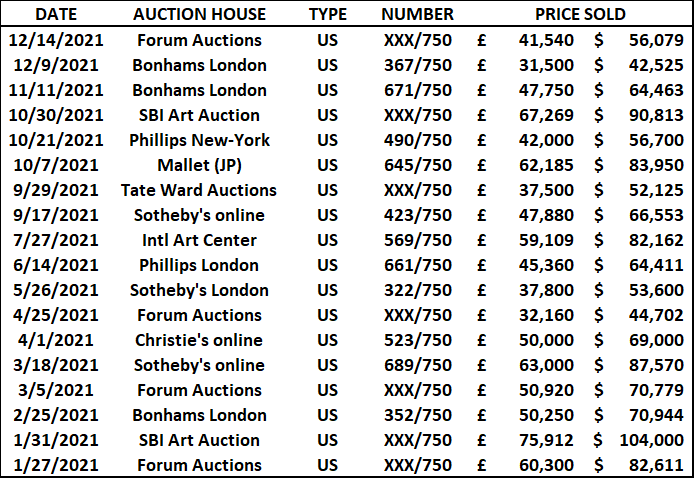
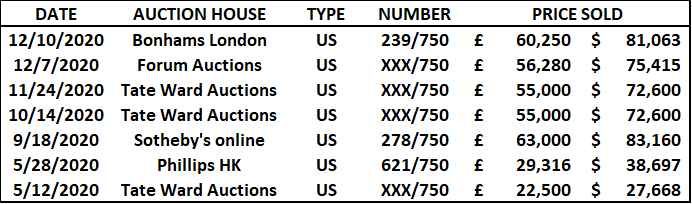
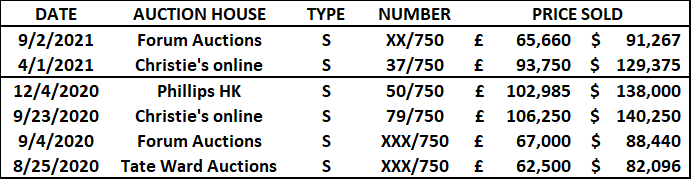
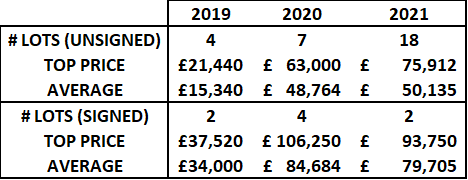
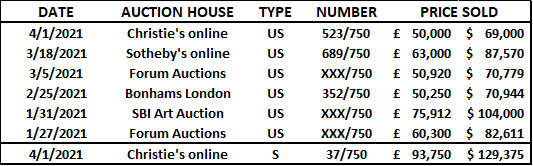
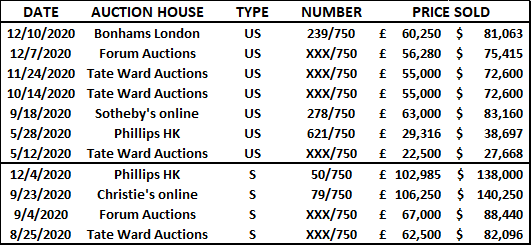
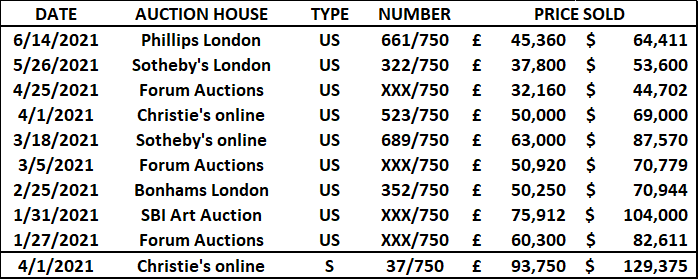
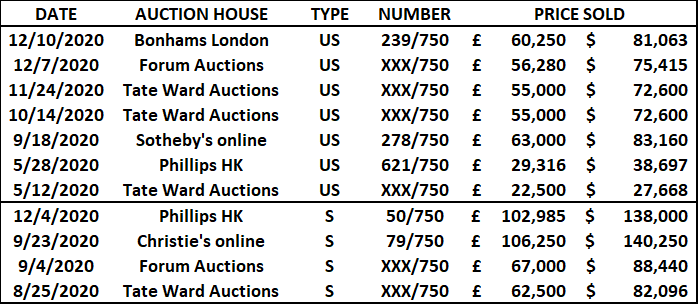
Auction Results
PLEASE CLICK BELOW FOR AUCTION RESULTS