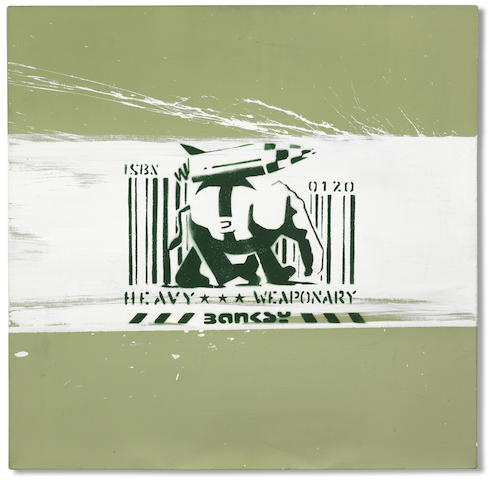

Heavy Weaponry
Year: 2000
Medium: Spray-paint and emulsion on canvas
Dimensions: 61×61 cm (24×24 inches)
Edition: 10
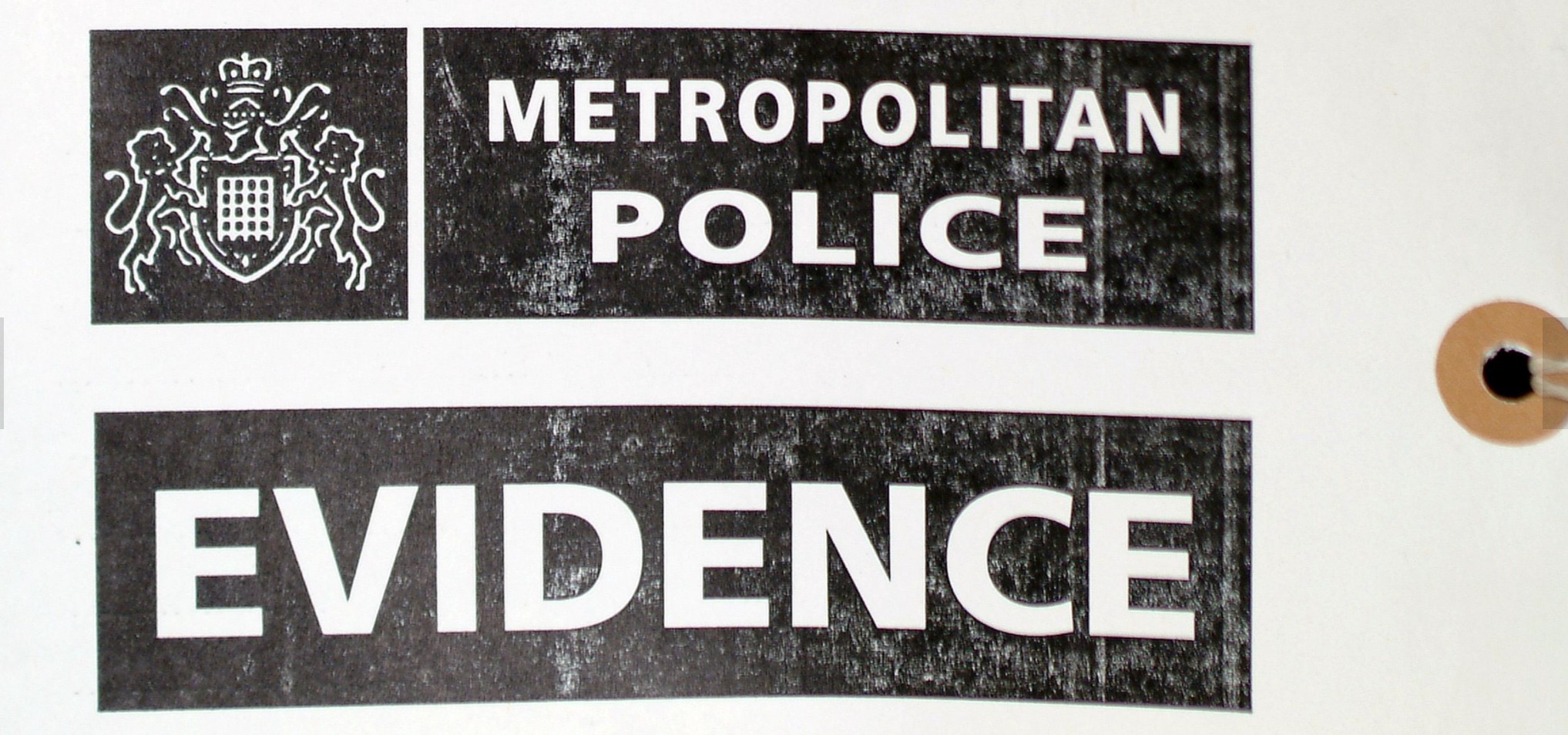
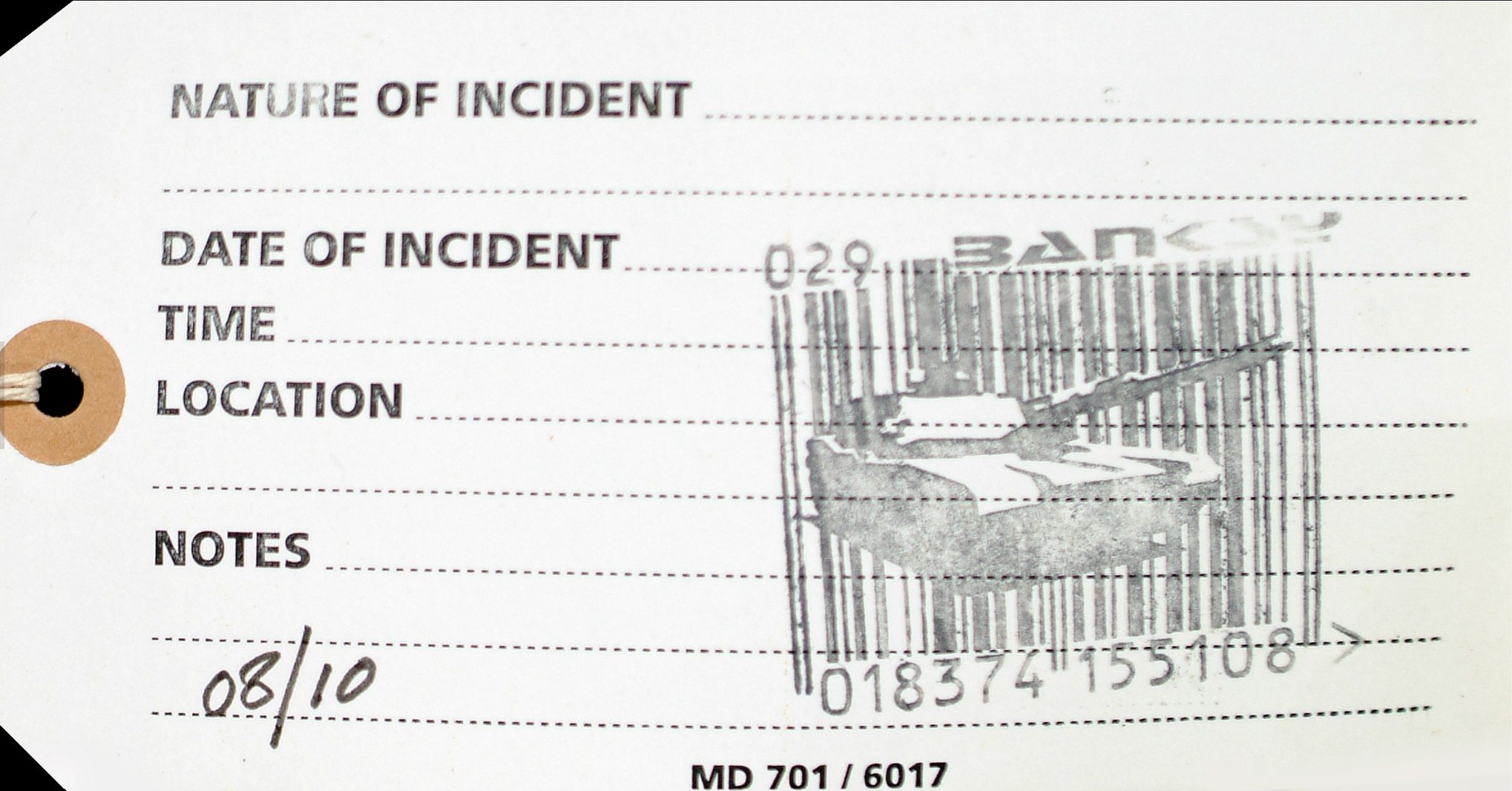
Original Metropolitan Police Evidence label with Banksy barcode stamp
Numbered /10 attached to the stretcher
Executed in 2000, Heavy Weaponry is one of Banksy’s earliest editioned works and a striking example of his ability to transform simple imagery into pointed social commentary. Against an austere olive-green background, a military-style stencil depicts an elephant enclosed within a barcode and labelled “Heavy Weaponry.” The composition deliberately mimics the appearance of official military packaging or evidence labels, reinforced by the original Metropolitan Police evidence label and Banksy’s own barcode stamp attached to the reverse. Minimal in color yet rich in symbolism, the work demonstrates the graphic clarity that would soon become one of Banksy’s defining visual signatures.
At the heart of Heavy Weaponry lies a deliberately absurd contradiction. An elephant, traditionally associated with memory, intelligence and peaceful strength, is reclassified as a dangerous weapon. By presenting the animal through the bureaucratic language of military inventory and product identification, Banksy exposes the arbitrary nature of official classification systems. The work suggests that institutions often determine what society should fear through labels rather than through reality itself. Once something is officially designated as a threat, its true nature becomes almost irrelevant. The barcode reinforces this critique by reducing the elephant to a coded commodity, simultaneously catalogued, controlled and stripped of individuality.
As in much of Banksy’s early work, humor serves a serious purpose. The image invites a smile before provoking a more uncomfortable question: who decides what is dangerous, and on what basis?

Heavy Weaponry belongs to an important group of early works in which Banksy appropriated the visual language of authority (warning signs, official markings, military graphics and institutional typography) to undermine the very systems they represent. Rather than confronting power directly, he imitates its aesthetic, allowing satire to emerge from subtle displacement rather than overt accusation. The work also anticipates Banksy’s lifelong fascination with bureaucracy, surveillance and institutional control. Whether depicting policemen, soldiers, security barriers or government signage, Banksy repeatedly questions the mechanisms through which authority defines order, danger and legitimacy.
Although visually understated, Heavy Weaponry reveals many of the ideas that would shape Banksy’s career. It demonstrates his remarkable ability to challenge assumptions through the smallest possible intervention, inviting viewers to reconsider the labels and narratives imposed by institutions. More than two decades after its creation, the work remains strikingly relevant. In an age increasingly shaped by surveillance, categorization and official narratives, Banksy’s elephant reminds us that the greatest distortions often begin not with violence itself, but with the language used to define it.
Auction Results
PLEASE CLICK BELOW FOR AUCTION RESULTS