Share on twitter
Share on facebook
Share on pinterest
Share on email

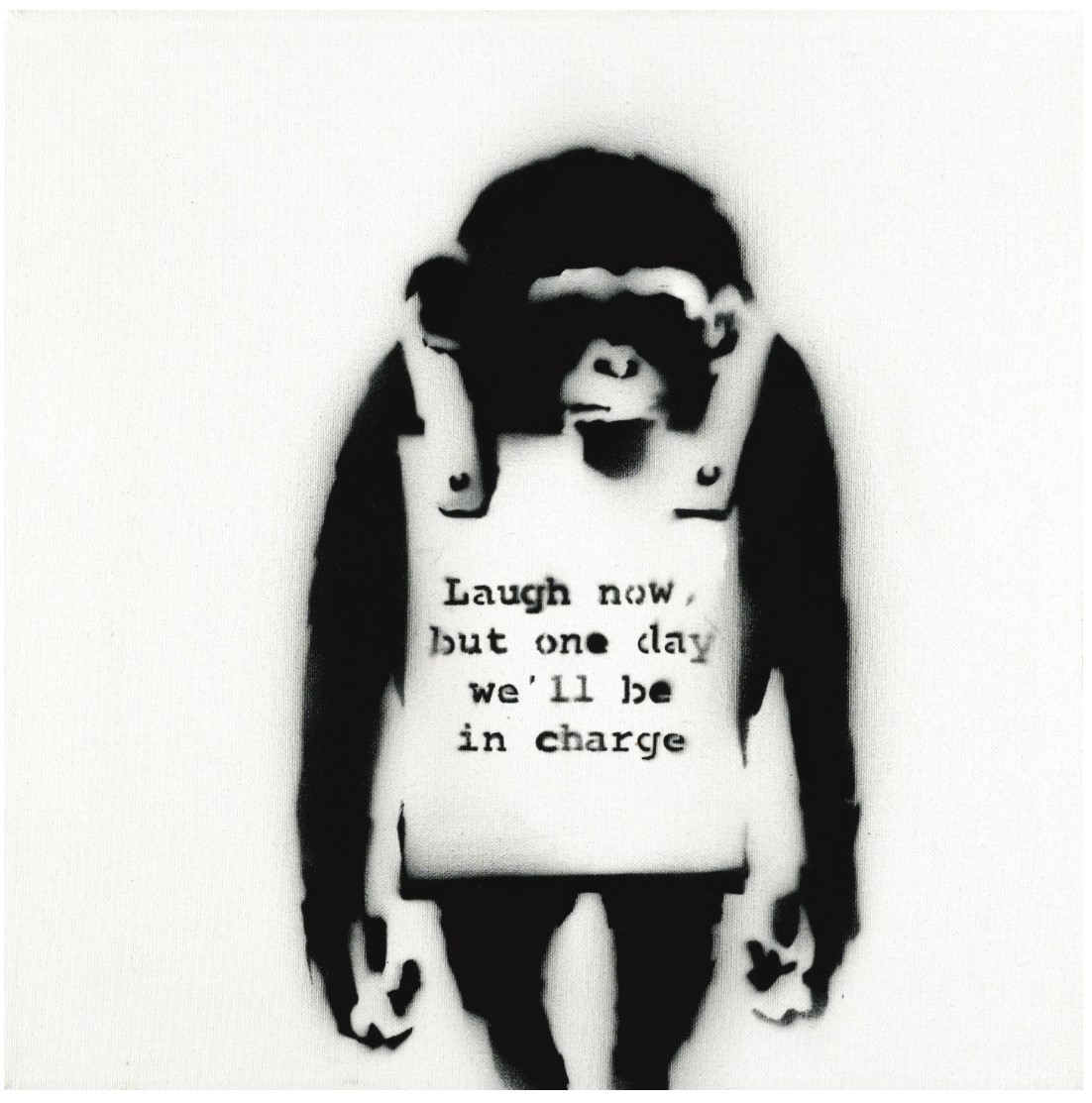
Laugh Now (LA version), 2002

BY

BANKSY
Laugh Now,
2002
Spray-paint on canvas
43×43 cm (17×17 inches)

Stenciled with the artist’s name on the right overturn edge
Signed, numbered 4/5 and dated LA 2002 on the stretcher

Exhibited
33 1/3 Gallery, Los Angeles

Provenance
33 1/3 Gallery, Los Angeles
Private Collection, Los Angeles
Sale: Sotheby’s, London, Contemporary Art, 2 July 2008, Lot 307
Acquired directly from the above by the present owner

Auction History

Sotheby’s London
11 February 2015

Est.: GBP 35,000 – 45,000
Price Realized
GBP 87,500 / USD 133,850


BANKSY
Laugh Now, 2002
Acrylic and spray enamel on canvas
43×43 cm (17×17 inches)
Signed, dated 2002 and numbered 5/5 on the stretcher
Stenciled with the artist’s name on the right lateral edge

Provenance
33 1/3 Books & Gallery Collective, Los Angeles
Acquired by the present owner from the above in 2002

Auction History

Sotheby’s New-York
14 November 2013

Est.: USD 50,000 – 70,000

Price Realized

USD 137,000
(#427) Banksy

Catalogue Note

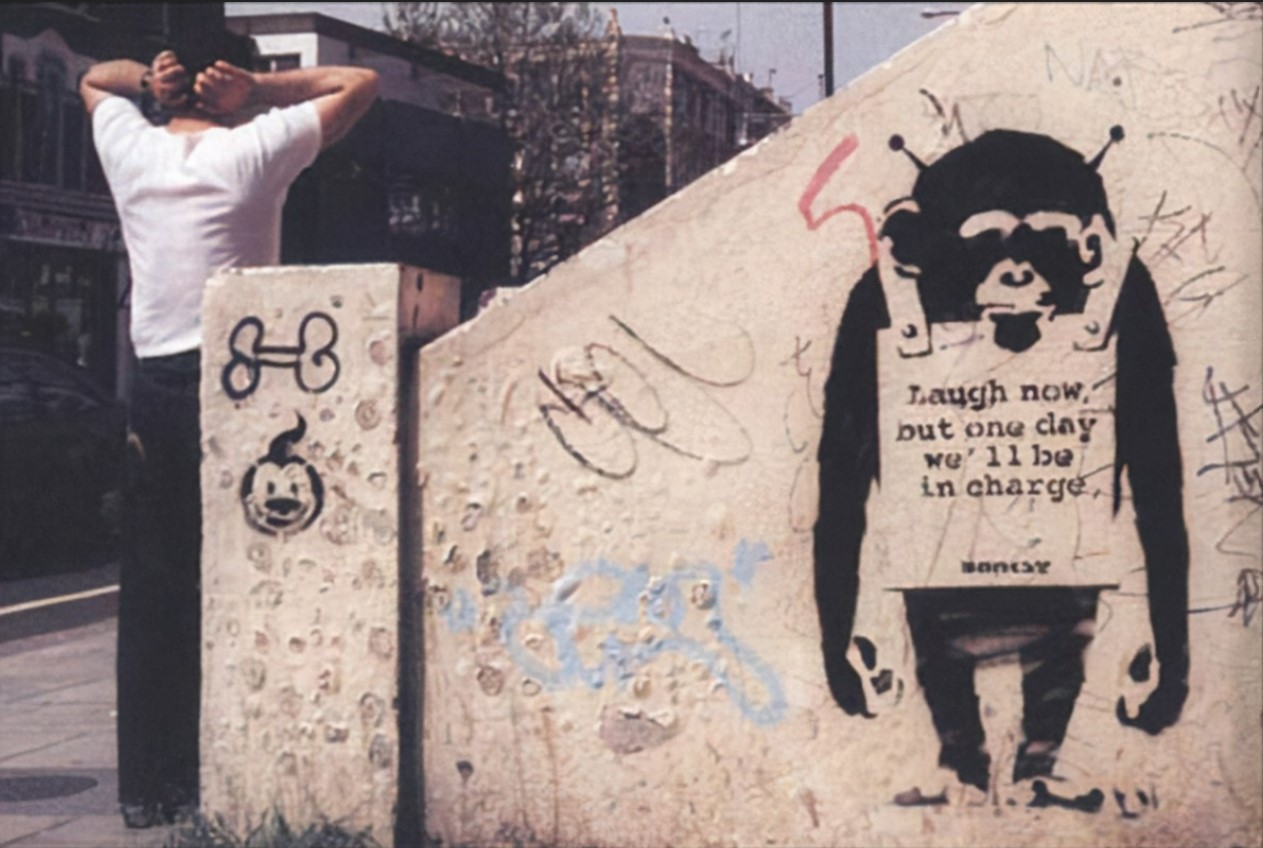
Executed in 2002, this Laugh Now belongs to the earliest group of unique canvases exploring Banksy’s defining monkey motif. It reflects the period during which Banksy began translating one of his most successful street interventions into a series of original studio works, each preserving the visual immediacy of the original stencil while subtly exploring differences in scale, presentation and context.

Measuring 43×43 cm and released in an edition of 5 on canvas, this example occupies an intermediate scale between the intimate cabinet-sized versions and the later monumental canvases. The balanced proportions allow the composition to breathe, presenting the monkey as a complete figure while preserving the directness and immediacy that define the image. Neither monumental nor miniature, the painting possesses an understated presence that focuses the viewer’s attention entirely on the dialogue between the solitary figure and its now-famous placard.

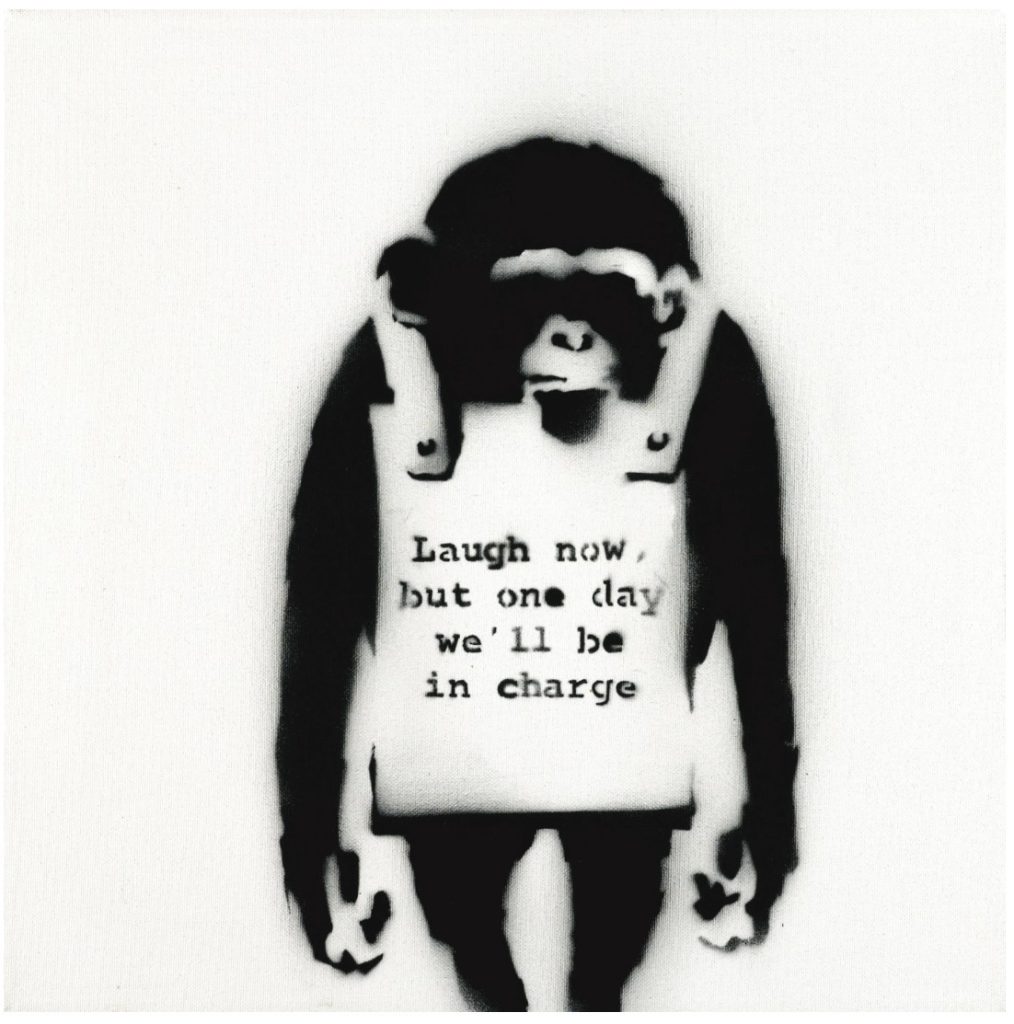
Executed in Banksy’s characteristic black-and-white stencil technique against a pristine white background, the composition demonstrates the remarkable confidence of the artist’s visual language. There are no expressive paint drips, distressed surfaces or additional painterly interventions to distract from the image itself. Instead, Banksy relies entirely upon the extraordinary economy of the motif. Every unnecessary element has been removed until only the essential remains: a monkey, a placard and a single sentence whose meaning continues to evolve more than two decades after it first appeared.

The figure itself embodies one of the defining ambiguities of the Laugh Now series. Its slightly lowered shoulders suggest resignation, yet its upright posture, planted stance and quiet expression convey dignity rather than defeat. Banksy deliberately resists caricature, presenting the monkey neither as comic nor tragic but as an observer patiently awaiting history’s inevitable reversals. The celebrated slogan, “Laugh now, but one day we’ll be in charge,” therefore reads less as a threat than as a calm statement of conviction, allowing the work to transcend any single political interpretation.

This example is further distinguished by its early exhibition at 33 1/3 Gallery in Los Angeles, one of the first galleries to actively promote Banksy’s work in the United States. At a time when street art had yet to gain widespread institutional recognition, exhibitions such as these played an important role in introducing Banksy’s imagery to an international audience beyond its urban origins. The work therefore documents not only the evolution of the Laugh Now motif, but also the growing recognition of Banksy’s practice within the contemporary art world.

PLEASE CLICK BELOW TO READ ABOUT LAUGH NOW

Elegant in its restraint and exemplary in its clarity, this early canvas demonstrates the enduring strength of one of Banksy’s most recognizable creations. Free from unnecessary embellishment, it reminds us that the lasting power of Laugh Now lies not in spectacle, but in the remarkable ability of a single image and a single sentence to express ideas that remain as relevant today as they were in 2002.

Gallery

wpChatIcon
wpChatIcon