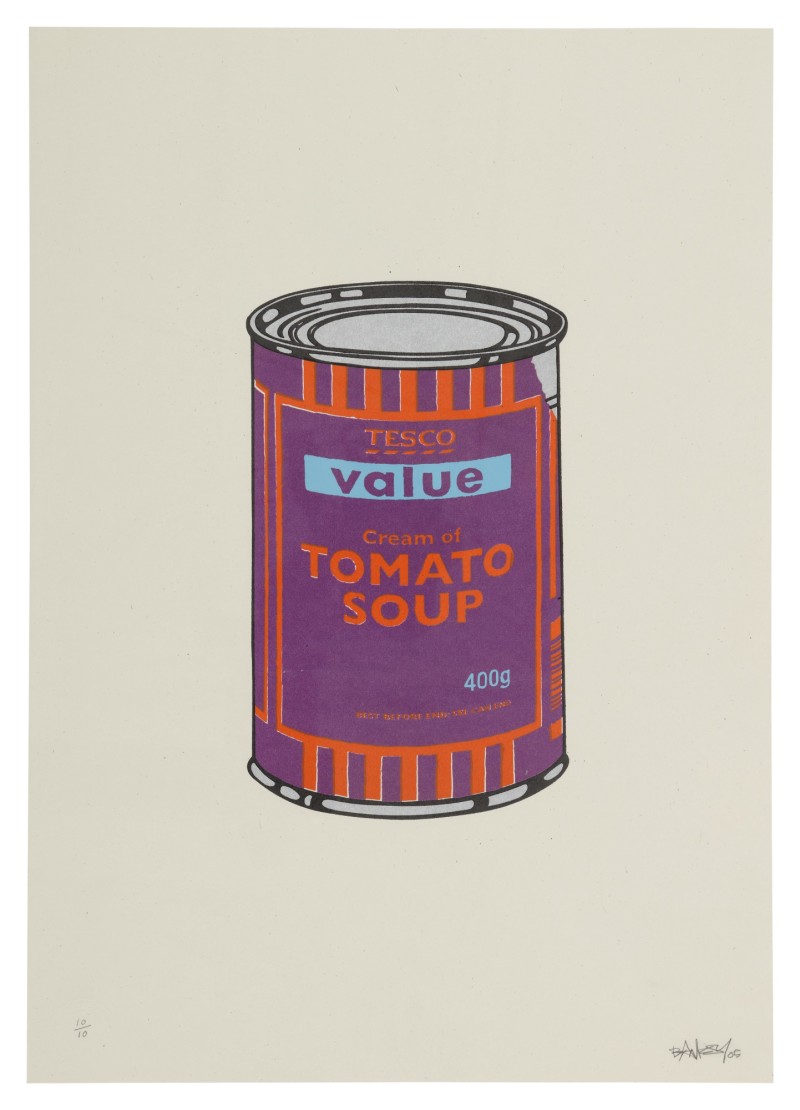
Soup Can
Sheet: 50×35 cm (19 1/2 x 13 3/4 inches)
Printer & Publisher: Pictures on Walls, London
Editions
Soup Can (Original)
Signed Edition: 50
Unsigned Edition: 250
Artist’s Proofs: 10 signed AP
Soup Can (Colorways)
28 Colorways: 10 signed each
There is a total of 280 colorways for Soup Can
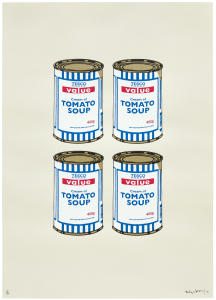
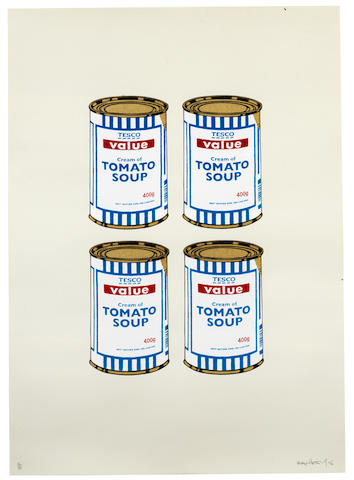
In 2006, Banksy released a version with Four Soup Cans in various colorways.

Four Soup Cans
Editions
Blue and Red on Grey: 2 signed
A Familiar Icon, Recast
The composition immediately recalls Warhol’s legendary Campbell’s Soup Cans, with their clean lines, frontal presentation, and graphic simplicity. Yet upon closer inspection, the American brand has been replaced by a Tesco Value label: a symbol of budget consumption in the UK.
The shift is subtle but decisive. Warhol’s original image, once associated with the rise of consumer culture and the democratization of art, is here recontextualized within a system defined by cost efficiency and standardization. The elegance of Pop Art gives way to the blunt reality of discount branding.

Banksy adopts a deliberately clean and controlled visual language, echoing the aesthetic precision of Pop Art while maintaining the immediacy of his own stencil-based approach. The composition is stripped down, almost clinical, reinforcing the industrial nature of the object it depicts. As a screenprint, the work maintains a strong graphic presence, allowing the image to function both as an artwork and as a visual statement on reproduction itself. This duality, between art object and consumer product, is central to the work’s impact.
Few works illustrate Banksy’s sharp understanding of art history and consumer culture as effectively as Soup Can. By reinterpreting one of the most iconic images of 20th-century art through the lens of British mass retail, Banksy creates a work that is both homage and critique—bridging Pop Art and contemporary consumerism with precision. Soup Can stands as a direct and highly intelligent engagement with the legacy of Andy Warhol. Where Warhol elevated everyday consumer goods into the realm of fine art, Banksy reverses the gesture: bringing the language of high art back into the reality of low-cost, mass-produced consumption. The result is a work that questions not only what we consume, but how we assign value.
Value, Branding, and the Collapse of Distinction
Soup Can is a meditation on value: both economic and cultural. By replacing Warhol’s already commercial subject with a budget alternative, Banksy pushes the logic of Pop Art to its limit. If Warhol blurred the boundary between art and consumer goods, Banksy suggests that the distinction may have disappeared entirely.
The Tesco Value branding introduces a new layer of meaning. It reflects a culture increasingly defined by price, efficiency, and accessibility: where identity is shaped not by aspiration, but by consumption at its most basic level.

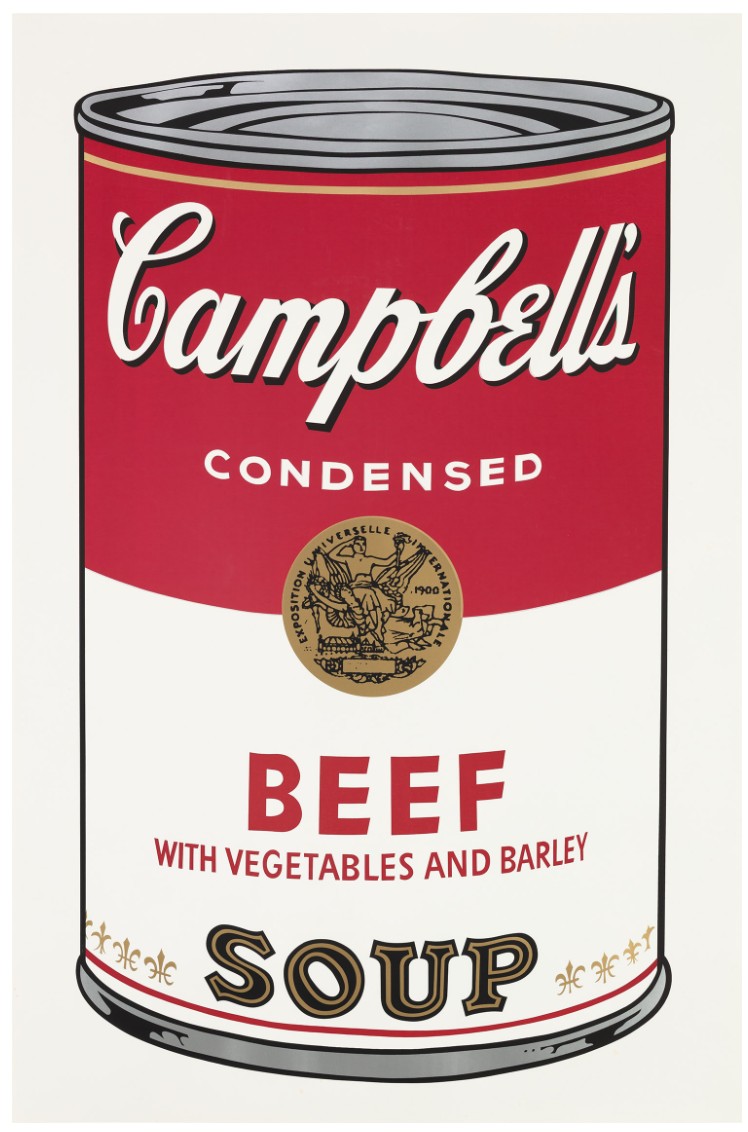
Beef, from Campbell’s Soup I, 1968
Screenprint on wove paper
Edition: 250 + 26 AP

Soup Can Colorways
Pictures on Walls Release Screen

Edition: 10 signed

Edition: 10 signed

Soup Can (Banana/Orange, Hot Pink), 2005
Edition: 10 signed

Soup Can (Lilac/Emerald, Purple), 2005
Edition: 10 signed

Edition: 10 signed

Edition: 10 signed

Edition: 10 signed

Soup Can (Pale Lilac/Lime/Dark Blue), 2005
Edition: 10 signed

Edition: 10 signed

Edition: 10 signed

Soup Can (Pink/Lime/Hot Pink), 2005
Edition: 10 signed
Soup Can (Purple/Orange/Blue), 2005
Edition: 10 signed
Soup Can (Sage Green/Cherry/Tan), 2005
Edition: 10 signed
Soup Can (Sage Green/Lime/Cherry), 2005
Edition: 10 signed

Soup Can (Violet/Blue/Tan), 2005
Edition: 10 signed

Soup Can (Violet/Cherry/Beige), 2005
Edition: 10 signed

Soup Can (Violet/Orange/Mint), 2005
Edition: 10 signed

Soup Can (White/Blue/Hot Pink), 2005
Edition: 10 signed

Edition: 12 signed

Edition: 10 signed

Four Soup Cans (Blue and Red on Cream), 2006
Edition: 10 signed
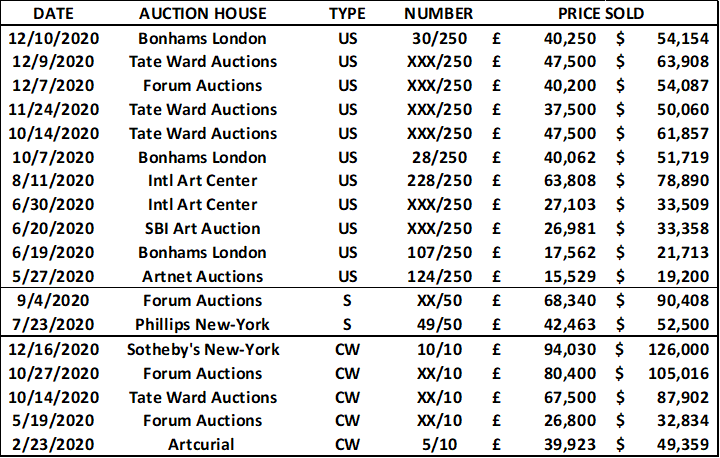
Auction Results
PLEASE CLICK BELOW FOR AUCTION RESULTS