Winnie The Pooh
Year: 2003
Medium: Stencil spray-paint on canvas
Dimensions: 51×51 cm (20 1/16 x20 1/16 inches)
Edition: 25
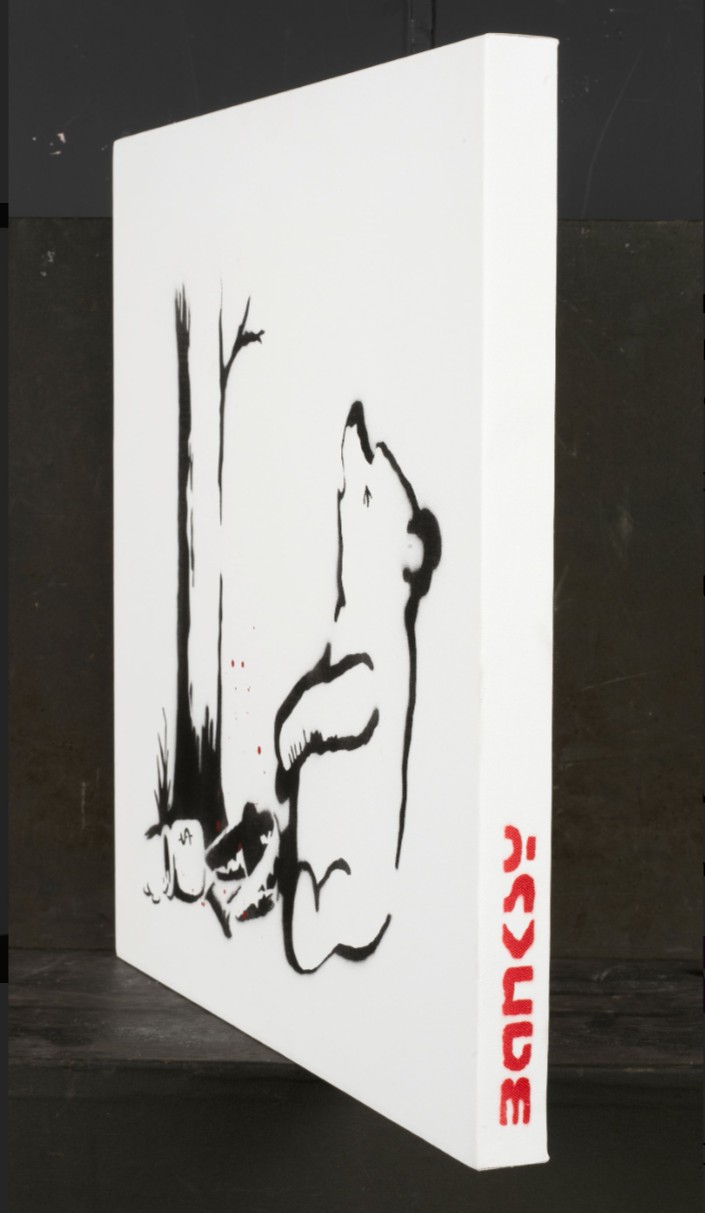
Stenciled “BANKSY” in red spray paint on the turnover edge
Further signed, dated, and numbered /25 in black ink on the reverse of the stretcher
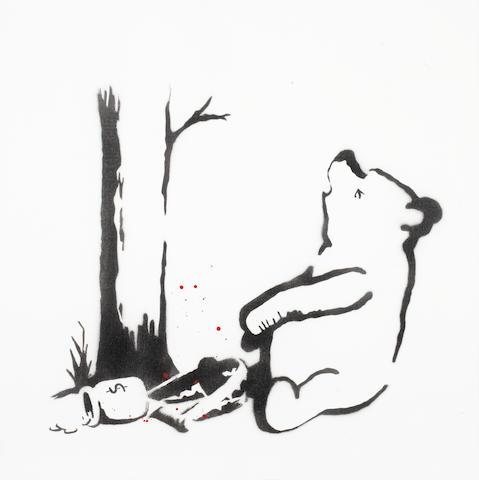
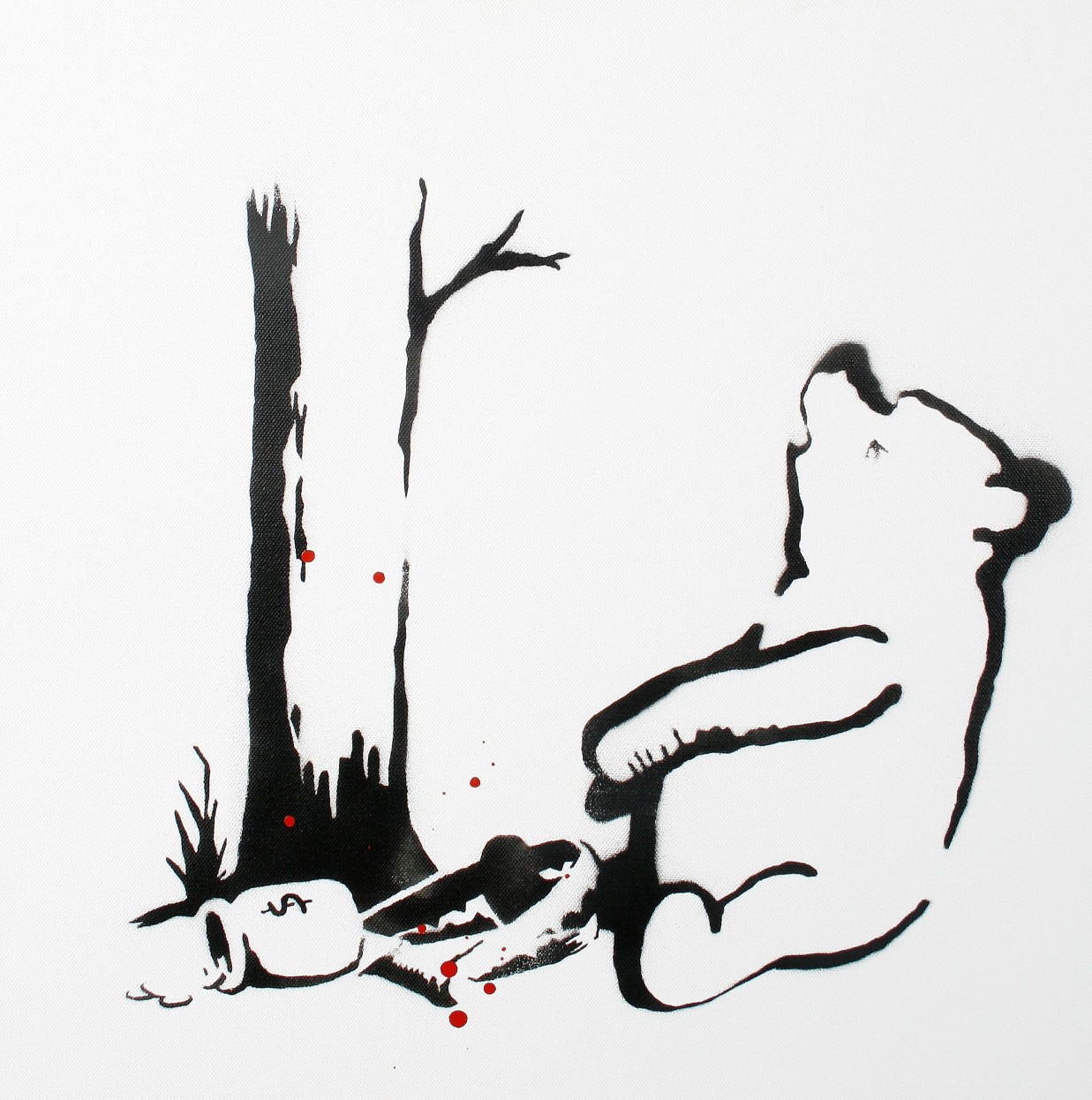
First painted as a mural in Banksy’s hometown of Bristol in 1999, Winnie the Pooh was later adapted into one of the artist’s earliest editioned canvases in 2003. Executed in stencil spray paint, the composition depicts A. A. Milne’s beloved bear seated beneath a barren tree, his foot trapped in a bear trap while clutching a pot of money in place of his famous honey pot. Small splashes of red punctuate the otherwise monochrome composition, introducing a subtle but unsettling sense of violence. By replacing one simple object, Banksy completely transforms the meaning of one of literature’s most universally recognized characters.
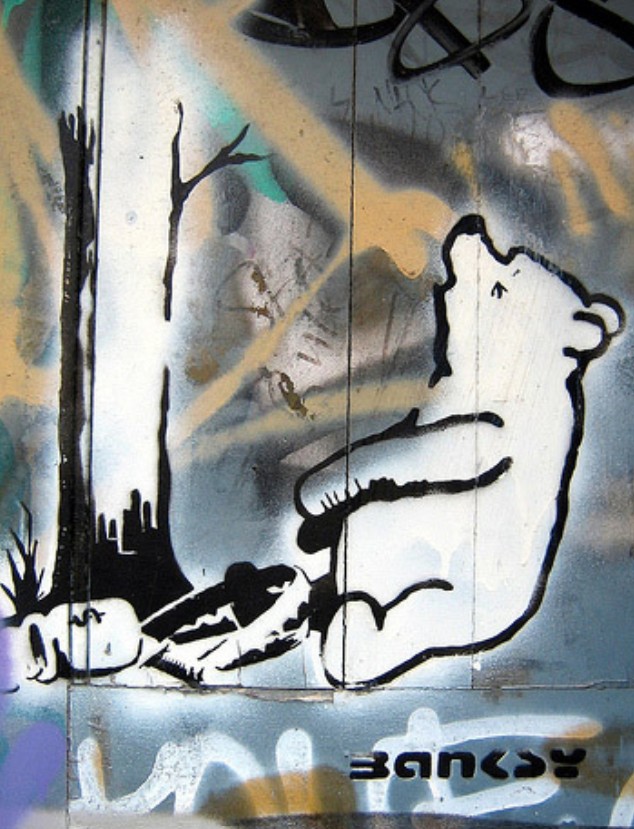
Throughout his career, Banksy has repeatedly appropriated icons of childhood to expose the contradictions of adult society. Here, Winnie the Pooh (long associated with innocence, kindness and uncomplicated happiness) becomes a victim of temptation. The honey pot, a symbol of simple pleasure and contentment, has been replaced by money, and it is this substitution that leads to his downfall. The metaphor is both immediate and universal. Pooh is no longer trapped by circumstance but by desire. In abandoning the modest pleasures that once defined him, he falls victim to the same pursuit of wealth, status and material success that so often entangles modern society. Banksy suggests that greed possesses a remarkable power to corrupt, affecting not only the cynical or ambitious but even the purest and most innocent among us.
The bear trap reinforces this idea with characteristic subtlety. It is not merely a physical trap but a psychological one. The promise of material reward becomes the mechanism through which freedom is surrendered, turning one of childhood’s most gentle characters into a quiet symbol of human vulnerability.
Winnie the Pooh belongs to an important body of work in which Banksy reimagines familiar cultural icons to confront uncomfortable social realities. Like the Disney characters in Save or Delete or the fairy-tale imagery later explored in Dismaland, the work dismantles the comforting narratives of childhood and replaces them with observations about contemporary life.
It also reflects Banksy’s enduring fascination with consumerism. Throughout his career he repeatedly questioned society’s obsession with wealth, branding and material success, exposing the illusion that happiness can be acquired through possession. Here, that critique is distilled into a single, devastating visual substitution.
Winnie the Pooh is one of Banksy’s most elegant reflections on the corrupting influence of money. Rather than condemning greed through slogans or overt political imagery, he entrusts the message to one of the most innocent characters in popular culture. The work reminds us that temptation rarely appears in threatening form. More often, it disguises itself as opportunity, prosperity or success. By replacing Pooh’s honey with money, Banksy transforms a cherished childhood memory into a timeless allegory of modern society, quietly asking whether the things we pursue are truly worth the price we ultimately pay.
Auction Results
PLEASE CLICK BELOW FOR AUCTION RESULTS