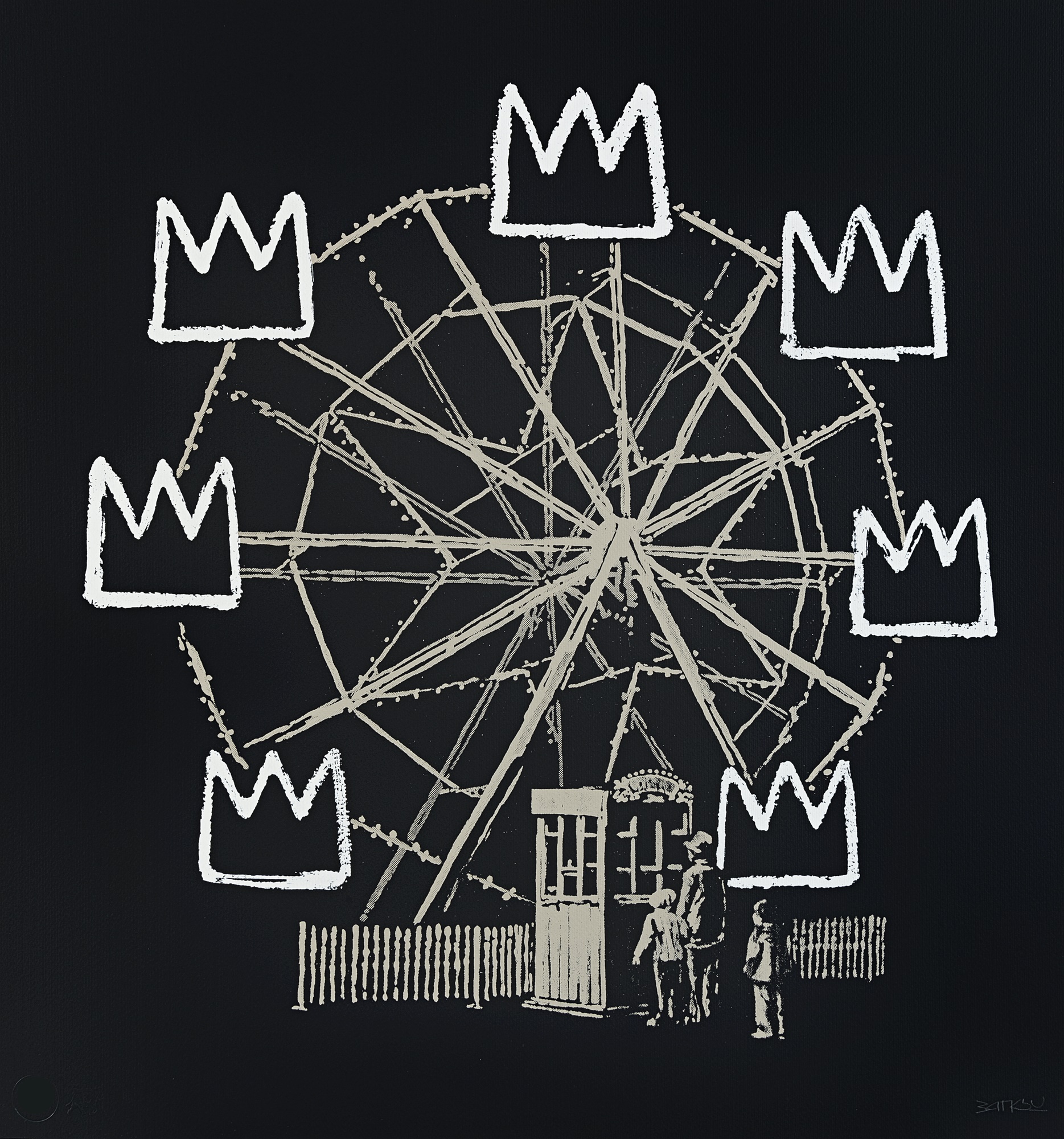
Banksquiat (Black)
Banksquiat
Editions
Banksquiat (Black): 300 signed
Banksquiat (Grey): 300 signed
Signature and numbering
Signed in white crayon lower right
Numbered in white crayon lower left with the artist’s blindstamp
Banksquiat (Grey)

Banksquiat stands as one of Banksy’s most intellectually layered works. It moves beyond simple visual contradiction to engage directly with art history, institutional critique, and the lifecycle of artistic identity. The image remains accessible, even playful, yet its implications are far-reaching. In placing Basquiat on a carousel, Banksy does not diminish him: he reveals the system that continues to carry him, endlessly, in motion.
The Crown in Rotation
Banksquiat presents a carousel installation in which the traditional fairground horse is replaced by a monumental crown, rendered in the unmistakable visual language of Jean-Michel Basquiat. The form is raw, skeletal, and immediate, echoing Basquiat’s characteristic line: urgent, fragmented, and expressive. Positioned at the center of the ride, the crown becomes both structure and subject, rotating mechanically within the circular system of the carousel.
Surrounding it, a small group of children, accompanied by a single adult, queue calmly to participate. There are no operators, no visible authority figures overseeing the scene. The atmosphere appears ordinary, almost benign. Yet the composition quickly reveals a more complex dynamic: a powerful symbol of identity and assertion placed within a system of repetition, quietly entered and accepted.
A Direct Dialogue with Basquiat
The crown is one of the most defining and recurrent symbols in the work of Jean-Michel Basquiat. Often rendered with three jagged points, it functions as a mark of elevation, a visual assertion that reclaims space for figures historically excluded from dominant narratives. It is not ornamental, it is declarative. In Basquiat’s hands, the crown frequently appears above Black athletes, musicians, and historical figures, positioning them within a lineage of power and recognition. The gesture is both symbolic and corrective, challenging the hierarchies of Western art history. The phrase “BLACK IS KING” resonates within this practice, not as a slogan, but as a persistent and necessary affirmation.
Red Kings, 1981
Sold at Sotheby’s New-York on 20 November 2024 for USD 7,200,000
Red Kings | The Now and Contemporary Evening Auction | 2024 | Sotheby’s
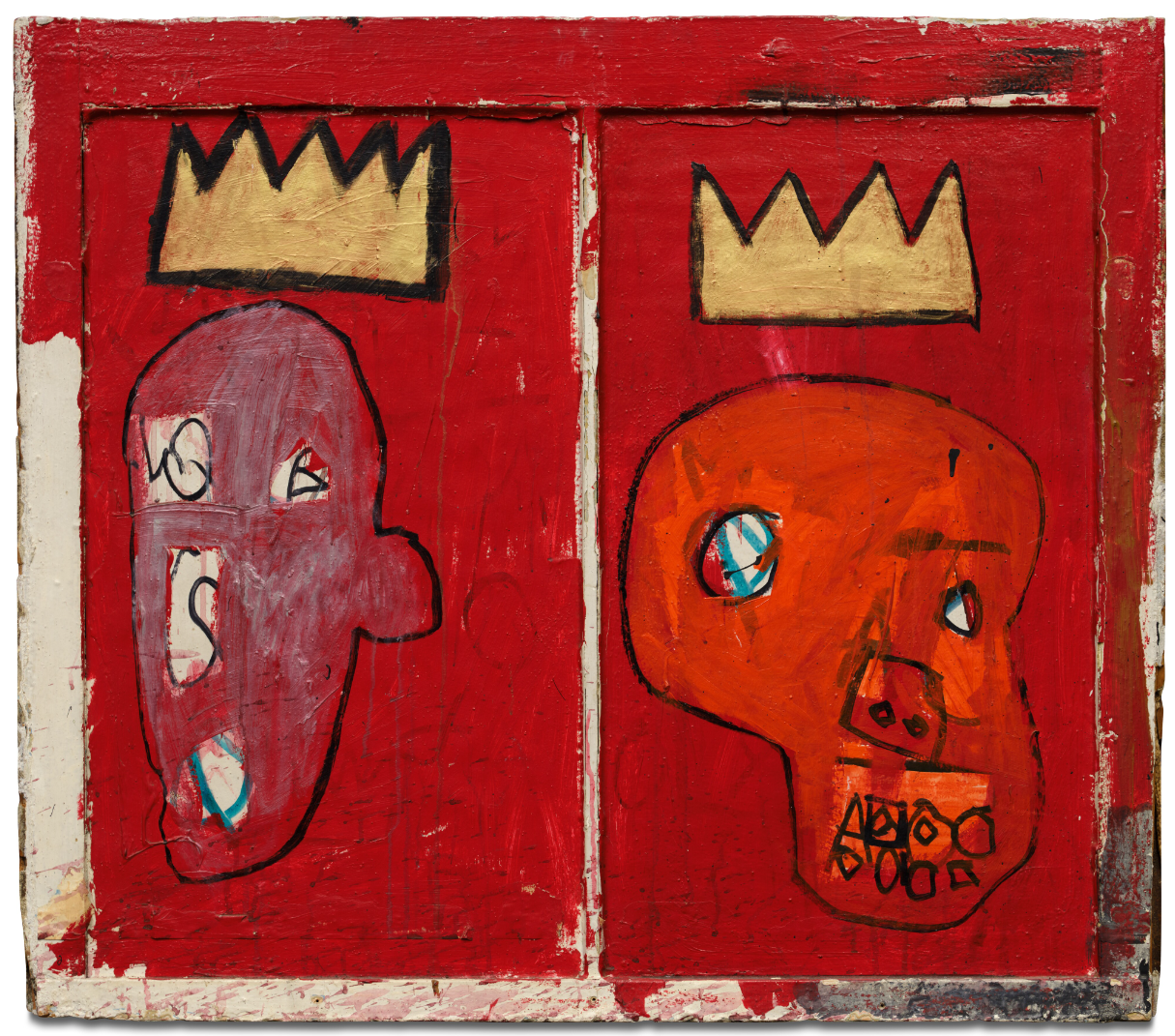
JEAN-MICHEL BASQUIAT (1960 – 1988)
Red Kings, 1981
Acrylic on wood and glass
32×37 inches (81.3 x 94 cm)
Signed, dated 1981 and inscribed NYC (on the reverse)
At the same time, the symbol carries a certain fragility. Its rough execution, often sketched quickly or imperfectly, resists the polished authority of traditional emblems of power. It reminds the viewer that this assertion is not institutional—it emerges from the street, from urgency, from necessity. The crown is both celebration and resistance, a symbol of sovereignty that refuses to be formalized or contained.
In Banksquiat, this symbol is not worn: it is mounted. It is no longer attached to a figure, but transformed into an object, a structure, something to be experienced rather than embodied. This shift is subtle but profound. The crown, once a tool of empowerment, becomes part of a system of circulation. It rotates, endlessly, within the closed loop of the carousel. The children waiting in line do not question the structure: they engage with it. The symbol remains intact, but its function has changed. It no longer elevates an individual; it becomes an attraction, something external, repeatable, and shared. Banksy does not diminish Basquiat’s gesture. He reframes it. The question is no longer what the crown means, but how it operates once it enters broader cultural systems.
From the Subway to the Institution
By referencing Basquiat so openly, Banksy seems to be aligning himself with the tradition of street art as high art, which arguably has its origins in the work of Basquiat whose career was launched by his many interventions in the urban environment.
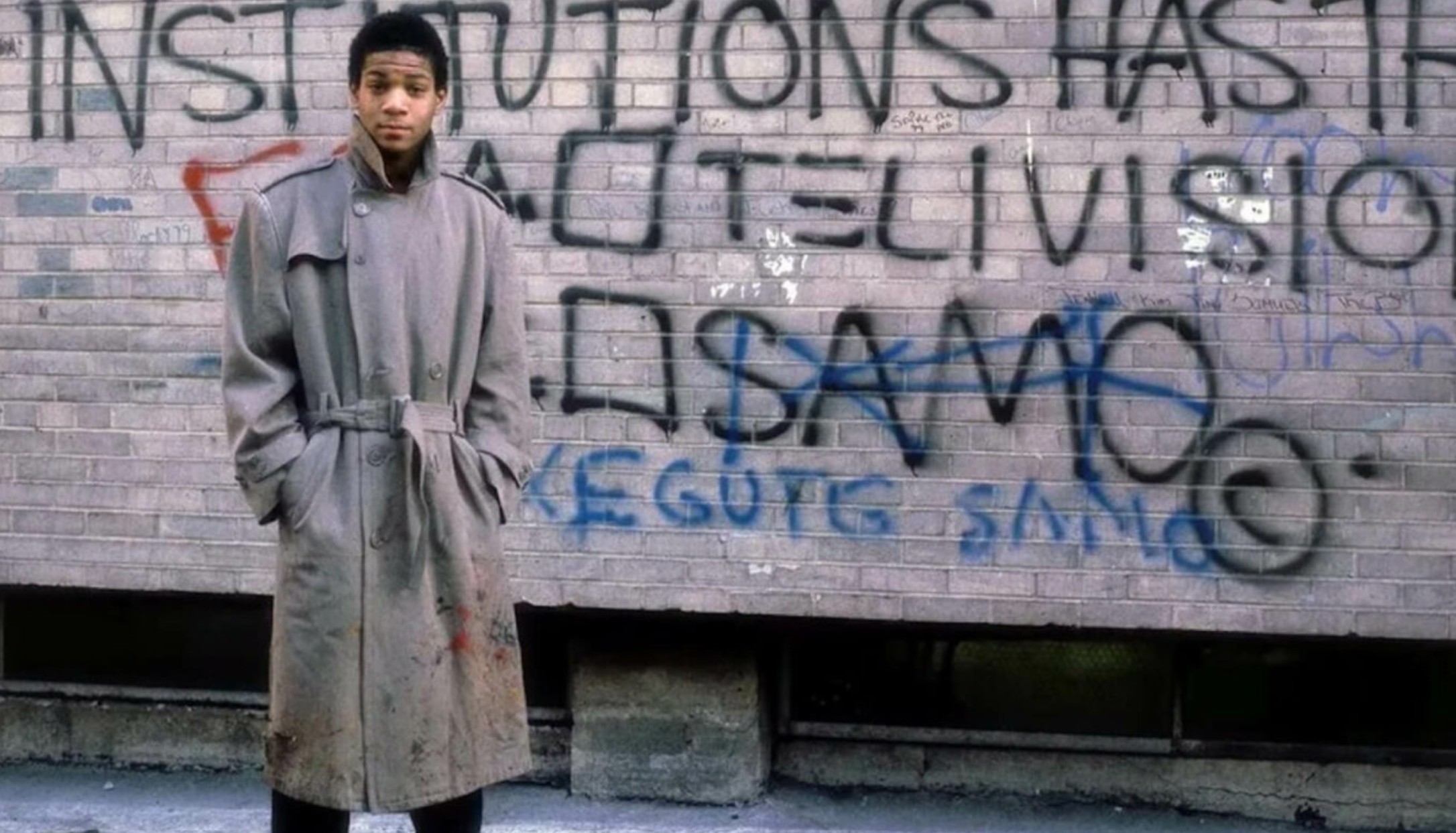
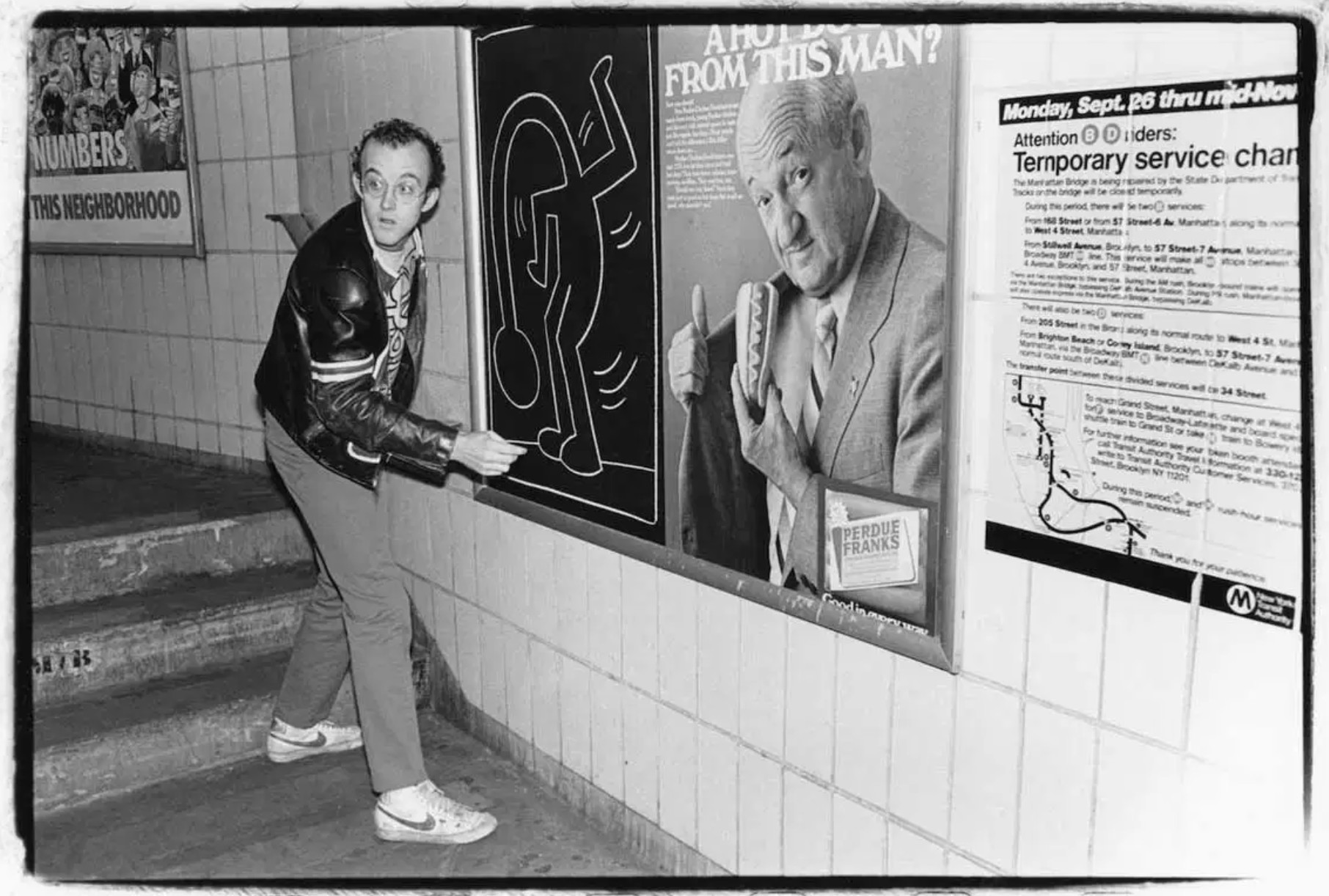
Their work was immediate, unauthorized, and inseparable from the urban environment. It resisted containment.
Banksy positions himself within this lineage yet introduces a critical distance. Banksquiat is not only about that moment of freedom: it is about what follows. What happens when that energy is recognized, collected, exhibited, and ultimately systematized.
Barbican, 2019: Context and Release
Banksquiat was unveiled in 2019 outside the Barbican Centre, coinciding with a major exhibition dedicated to Basquiat. This placement is essential. Banksy does not simply reference Basquiat—he intervenes within the institutional celebration of his work.

Installed in direct proximity to the exhibition, the piece operates as both homage and commentary. It acknowledges Basquiat’s significance while questioning the frameworks through which his legacy is presented and consumed.
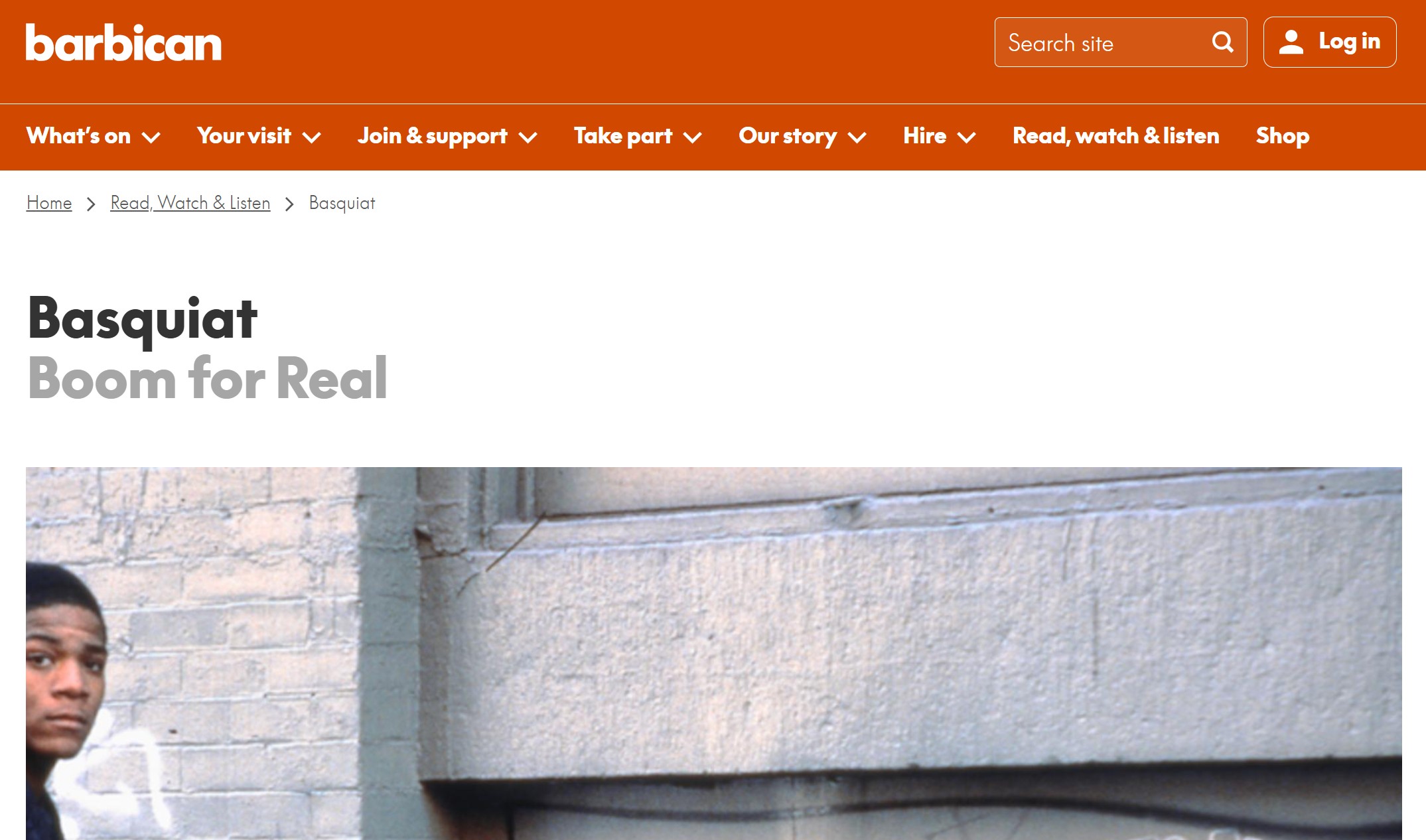
The timing transforms the work into a dialogue—not only with Basquiat, but with the institution itself.
Banksquiat: Boy and Dog in Stop and Search
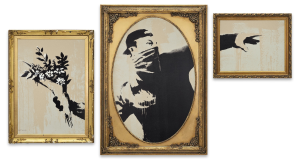
A closely related and particularly significant original work is Banksquiat: Boy and Dog in Stop and Search (2018), in which Banksy develops this dialogue further through a more direct and confrontational composition. In this piece, a Basquiat-inspired boy and dog are subjected to a police stop-and-search, their expressive, fragmented forms placed in stark contrast with the rigidity of authority.
Banksquiat. Boy and Dog in Stop and Search, 2018
Phillips New-York: 17 May 2023
Estimated: USD 8,000,000 – 12,000,000
USD 9,724,500
Banksy – 20th Century & Contemporary Art… Lot 13 May 2023 | Phillips

BANKSY
Banksquiat. Boy and Dog in Stop and Search, 2018
Acrylic and wax marker on birch wood, in 3 parts
243.8 x 344.5 cm (96 x 135 5/8 inches)
Signed “Banksy” lower right
Here, the tension is no longer symbolic—it is immediate. The work addresses control in its most visible and physical form, extending the conversation beyond the art world into broader social realities.
A Dialogue Across Generations
Banksquiat is ultimately a conversation between artists. Banksy does not imitate Basquiat, he engages with him, reflecting on what his work has become within contemporary culture. By invoking both Basquiat and Haring, Banksy situates himself within a lineage of artists who began outside the system and were eventually absorbed by it. The difference lies in awareness. Banksquiat is not only part of that trajectory—it exposes it.
Today, Banksquiat stands as one of Banksy’s most intellectually developed works. It moves beyond immediate visual contradiction to engage directly with art history, institutional critique, and the lifecycle of artistic identity. The image remains accessible, even playful, yet its implications are far-reaching. In transforming Basquiat’s crown into a rotating structure, Banksy does not diminish its power—he reveals the system that now carries it, endlessly, in motion.
Gross Domestic Product

Banksquiat comments on the excesses of late capitalism that allows artworks to be commodified. At the same time, there is a paradox at play; in order for art to be accessible to all – which is perhaps central to Banksy’s mission as an artist, as well as that of Haring and even also Basquiat – art must be reproduced and shared rather than held ransom by a handful of the elite who own the original artwork or the intellectual property. In this way, Banksy cleverly comments on, as the original website description puts it, “the relentless commodification of Basquiat in recent times – by crassly adding to the relentless commodification of Basquiat in recent times.”
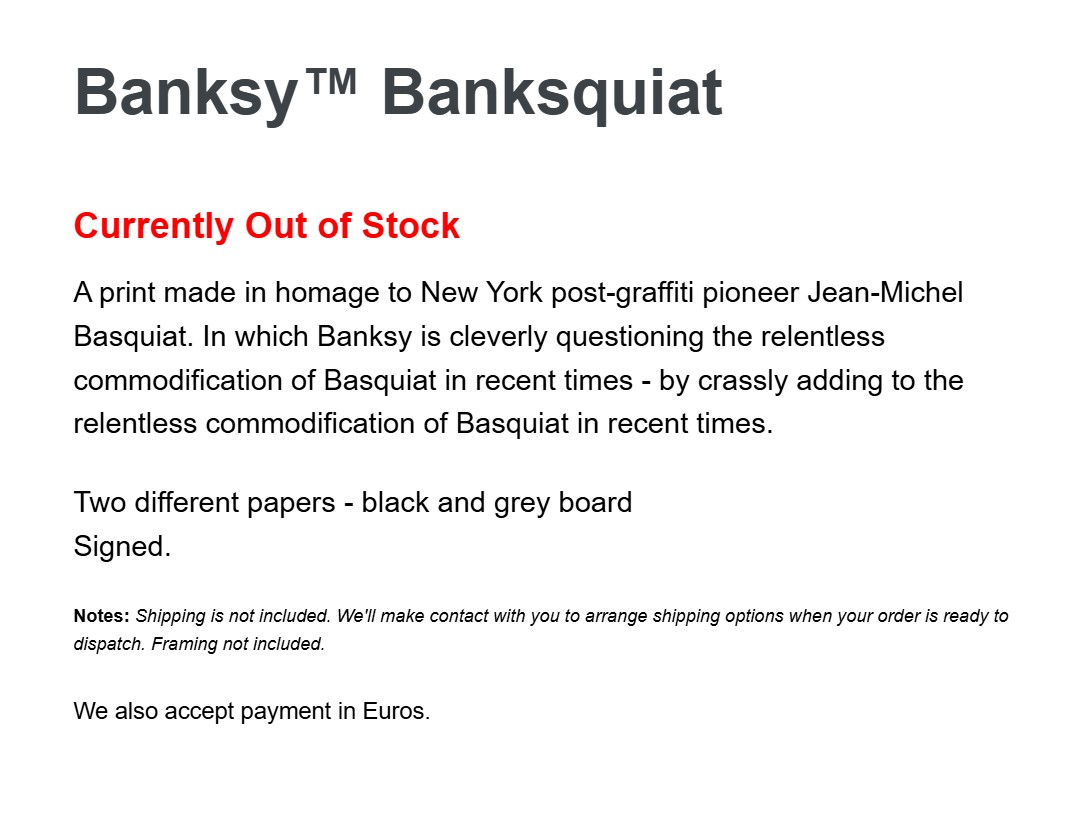
This commodification of artworks was exemplified by the opening of Gross Domestic Product itself, which began life as a showroom in Croydon in October 2019, intended to publicize the launch of a new online Banksy “homewares brand.” While thousands of fans attempted to buy something from the store, many were disappointed as they found that GDP did not operate as a traditional retail model but instead required the prospective buyer to enter a lottery system in order to acquire one of the products. In this way, Banksy opened the floodgates to the commodification of his own work while still retaining a certain amount of control over who his primary sales went to.
Auction Results
PLEASE CLICK BELOW FOR AUCTION RESULTS